
After historic education funding increase, some Alaska lawmakers aim to boost the BSA again
Legislators say the increase would offset the budget deficits in school districts, including Mat-Su.
What you need to know:
- A state House bill proposed this week would increase Alaska’s base student allocation, the state’s per-student school funding, by $630, from $6,660 to $7,290, totaling about $158.6 million statewide.
- Supporters say the increase is needed to help school districts facing large deficits and rising costs. Mat-Su is considering school closures, staff cuts and other reductions as it faces a $23 million funding shortfall.
- Minority Leader DeLena Johnson, whose district includes Palmer, said the state already raised funding last year and faces a budget deficit, so any new spending may require cuts elsewhere.
- Short on time but need the local news scoop? Get free weekly news in your inbox for Mat-Su, from Mat-Su.
By Corinne Smith
Alaska Beacon
Alaska lawmakers introduced new legislation in the House of Representatives that would raise the state’s per-student funding for schools. They say it is critical to help school districts struggling with rising costs and ballooning deficits.
The House Education Committee introduced House Bill 374 on Wednesday. It would raise the state’s per student funding, known as the base student allocation, by $630 per student. That would increase the current per student total — from $6,660 to $7,290. Lawmakers increased the BSA by $700 per student last year.
“We can’t lose ground right now,” said Rep. Rebecca Himschoot, I-Sitka and co-chair of the House Education Committee on Wednesday. “We continue to look at all the different ways to support the schools, and the BSA is one way to do it.”
The education funding increase would total $158.6 million statewide, and Himschoot said it would offer districts more stability by raising funds within the state’s complex funding formula.
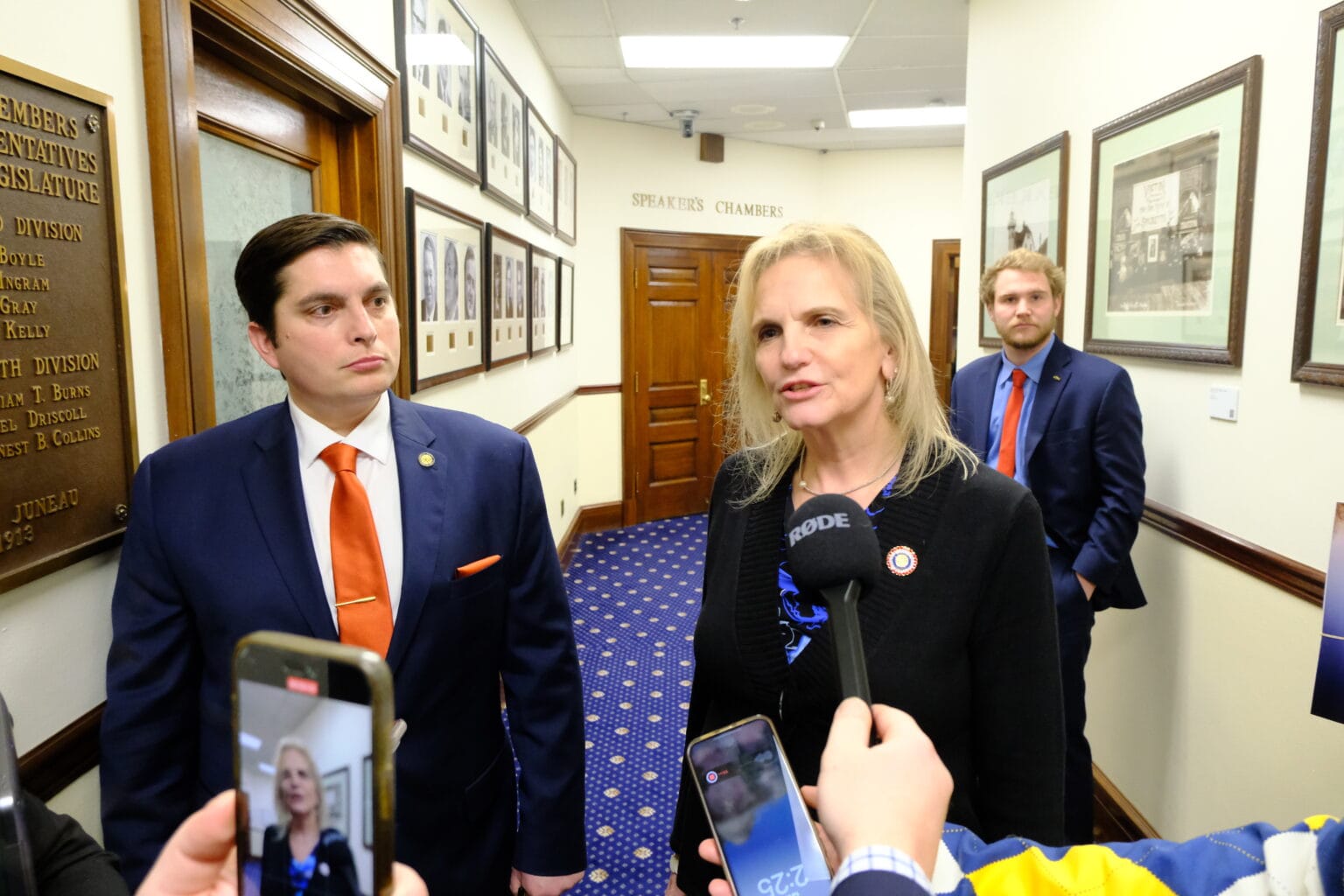
Rep. DeLena Johnson, R-Palmer and House Minority Leader, expressed skepticism at adding state funding for schools this year. “No discussion about adding additional money can be had without deciding what program you want to cut,” she said Wednesday.
Himschoot said lawmakers decided on the $630 per student figure after assessing the current budget deficits of the state’s five largest districts by student population. The proposed funding increase would provide a partial stopgap for those budget shortfalls.
The Anchorage School District is facing a $90 million budget deficit, and is advancing plans to close three schools and cut 500 teachers and staff. The Matanuska-Susitna Borough School District is confronting a $23 million deficit, and considering closing three schools. The Kenai Peninsula Borough School District is looking at an $8.5 million budget shortfall and considering ways to cut costs. The Juneau School District has a $6.7 million budget shortfall.
While the Fairbanks North Star Borough School District has a current budget surplus of $2.5 million this year, that comes after it closed three schools last year — totaling seven school closures in the last five years, Himschoot noted.
“They have class sizes approaching 40 in the high school and 26 in their elementary schools even now. And they’ve downsized a lot of different staff, including a total of 300 teaching positions since 2019,” she said. “So they’ve had to do … some challenging things in their district to get to the black.”
Himschoot noted the state has revenue challenges but said lawmakers should make education a priority.
Last year, lawmakers faced a bitter political battle with Gov. Mike Dunleavy who twice vetoed education funding increases, citing the need for education policy changes to improve student outcomes. Lawmakers overrode Dunleavy’s veto and passed a $700 per student increase with some policy items, but the governor then vetoed its funding. Legislators then returned for a special session and voted to override the budget line veto. That resulted in an additional $51 million for schools.
But Dunleavy has said he is dropping his push for education policy changes this year, and focusing on a state fiscal plan and proposed oil and gas development projects.
Minority Leader Johnson, whose district includes the east side of the Matanuska-Susitna Borough, including Palmer, Butte and Lazy Mountain, said after the funding increase last year districts should manage their budgets accordingly.
“We added a significant amount of money last year,” she said. “I think that we need to take a little while to let the districts figure out what they actually need, and let that money go through the process. If they have to make corrections, I don’t know what to say — if they have to close schools — they have to do whatever they have to do to manage their budget.”
Johnson expressed concern that the state is reckoning with a projected deficit, as lawmakers await a state revenue forecast due out in March. “We’re in deficit spending, and I don’t know where the money’s going to come from. And I think we need to have a lot more data on school spending,” she said.
School officials, teachers and students have testified to the House Education Committee this year that state funding has not kept pace with classroom needs, particularly with rising costs for keeping schools open, including fuel, insurance and transportation, as well as deteriorating school facilities.
The proposed state education funding increase would help fill some of those gaps, and prevent more severe cuts to teachers and classrooms, said Rep. Andi Story, D-Juneau.
“I want families to know that we care about education in the state of Alaska, and you can raise your kids here and they’re going to have a decent education. And so I think we have to seriously look at what investment is that going to take from the state,” she said Wednesday.
Himschoot said that BSA increase is one important step, and lawmakers are open to negotiating with members of the minority caucuses and the governor’s office to make it happen. “Everyone has schools in their district,” she said. “People call it a fight for the BSA. I prefer to call it a dance.”
Alaska Beacon is part of States Newsroom, a nonprofit news network supported by grants and a coalition of donors as a 501c(3) public charity. Alaska Beacon maintains editorial independence. Contact Editor Andrew Kitchenman for questions: info@alaskabeacon.com. Follow Alaska Beacon on Facebook and X.