
Alaska officials impose statewide ban on two kinds of invasive trees
The ban impacts ornamental trees found throughout Mat-Su.
By Yereth Rosen
Alaska Beacon
What you need to know:
- Alaska has issued a quarantine banning the import, transport and sale of two invasive tree species: European bird cherry, also known as Mayday, and chokecherry. Once popular as ornamental plants, the trees now threaten native ecosystems.
- They spread aggressively, displacing native vegetation, disrupting wildlife habitats and producing berries that may be toxic to moose. The trees also may be spreading black knot, a fungal disease that affects other species.
- Officials across the state are working to remove these trees and replace them with native species, though complete eradication is difficult because the trees can regrow from their roots.
State officials have barred the import, transport and sale of two fast-growing invasive species that were once popular garden ornamentals but have now wreaked havoc on natural vegetation.
The Alaska Division of Agriculture on Friday said it issued a quarantine for the two species: Prunus padus, commonly known as the European bird cherry tree or mayday tree, and Prunus virginiana, commonly known as the Canada red or chokecherry tree.
[Related: A swath of trees vanished from outside the Wasilla library. Here’s why.]
The order went into effect Monday.
In essence, it will extend through the state a ban that was imposed in 2017 in Anchorage. The trees have become a particular nuisance in Alaska’s largest city, where they have proliferated in greenbelts and other spaces and crowded out native species like birch and spruce.
State and local officials have been trying to remove these non-native trees, and the new policy should help that effort, said Division of Agriculture Director Bryan Scoresby.
“This quarantine prohibits the importation, transport, and sale within the state of these two trees and their parts,” Scoresby said in a statement. “Many agencies continue to pursue control measures with the goal of eliminating these invasive trees. With this quarantine, the flow of trees into Alaska will stop, making this goal more attainable.”
The ornamentals quickly spread, displacing native vegetation, impeding animals’ access and upsetting natural food webs, according to the University of Alaska Fairbanks Cooperative Extension Service.
Their berries can be toxic to moose, causing cyanide poisoning that is sometimes fatal.
Along with those problems, the invasives might be spreading disease to other trees, according to the Division of Agriculture. A fungal disease called “Black Knot” was recently discovered on chokecherry trees on the University of Alaska Anchorage campus, making the invasive trees potential disease spreaders, the division said.
The two tree species are prime targets of annual Anchorage “weed smackdown” invasive-removal events. There is also a concerted effort to remove the trees from Fairbanks, including on the UAF campus, where officials have been methodically replacing them with native trees.
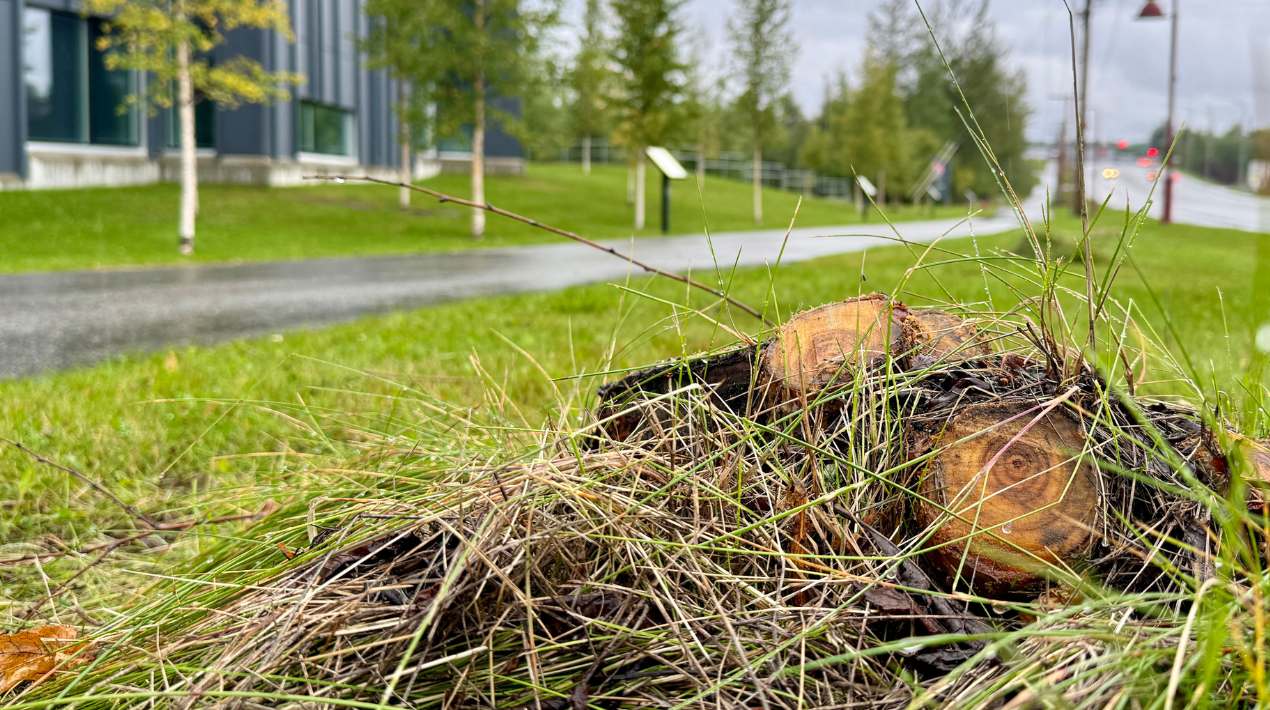
Eradicating the trees might require more than simply cutting them down because new trees can grow out of root systems below stumps, according to the Cooperative Extension Service.
For all the damage the two invasive tree species cause in Alaska, however, some people have found ways to benefit from them. The toxin in their berries can be neutralized and eaten by people.
Alaska Beacon is part of States Newsroom, a nonprofit news network supported by grants and a coalition of donors as a 501c(3) public charity. Alaska Beacon maintains editorial independence. Contact Editor Andrew Kitchenman for questions: info@alaskabeacon.com. Follow Alaska Beacon on Facebook and X.