
Mat-Su bus service faces cuts under proposed borough budget
Valley Transit officials say reduced funding could lead to major service reductions
What you need to know:
- Mat-Su’s primary public bus service could shrink under a proposed borough funding plan. Changes could include eliminating Saturday service, cutting routes in half and dropping rider technology tools.
- Valley Transit provides commuter and local rides and receives about half of its funding from borough taxpayers.
- Assembly members said they are weighing cuts to control spending. Transit officials say reducing commuter service could hurt the local economy and limit residents’ ability to work in Anchorage.
- Short on time but need the local news scoop? Get free weekly news in your inbox for Mat-Su, from Mat-Su.
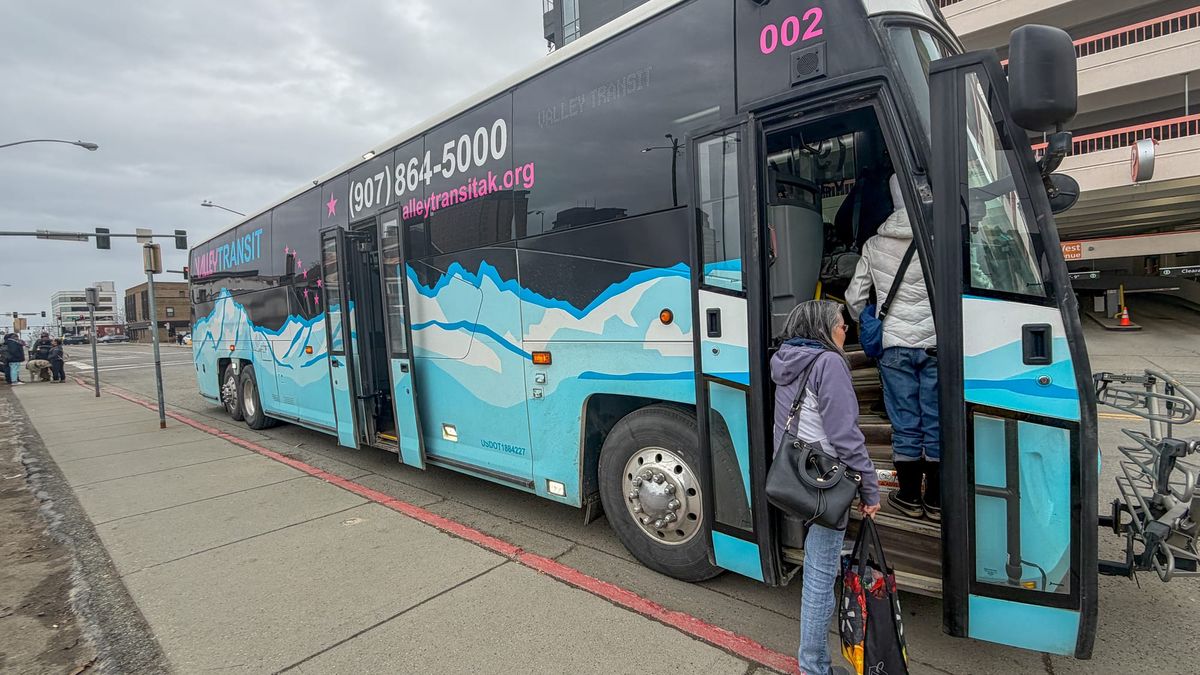
PALMER – Public bus service in Mat-Su, including commuter routes to and from Anchorage, could shrink under a proposed budget cut headed before the Matanuska-Susitna Borough Assembly this week.
Borough Manager Mike Brown proposed $750,000 in local funding for the service for next year, about $250,000 less than officials with the region’s public bus contractor, Valley Transit, say they need from Mat-Su to ensure they can keep current services going.
Valley Transit annually receives a combined $3 million in local funding and federal grants. Because the federal funding is tied to how much local officials are willing to pay, the borough’s proposed drop would mean an overall loss of about $750,000 in funding for the system, transit officials said.
If approved, cuts could include canceling all Saturday service, cutting all bus routes and operations by half, and eliminating technology support such as fare payment apps and real-time bus tracking, Valley Transit officials said.
The proposed cuts do not affect Sunshine Transit, which operates from Houston to Talkeetna, or the Chickaloon Area Transit System, which operates from Sutton.
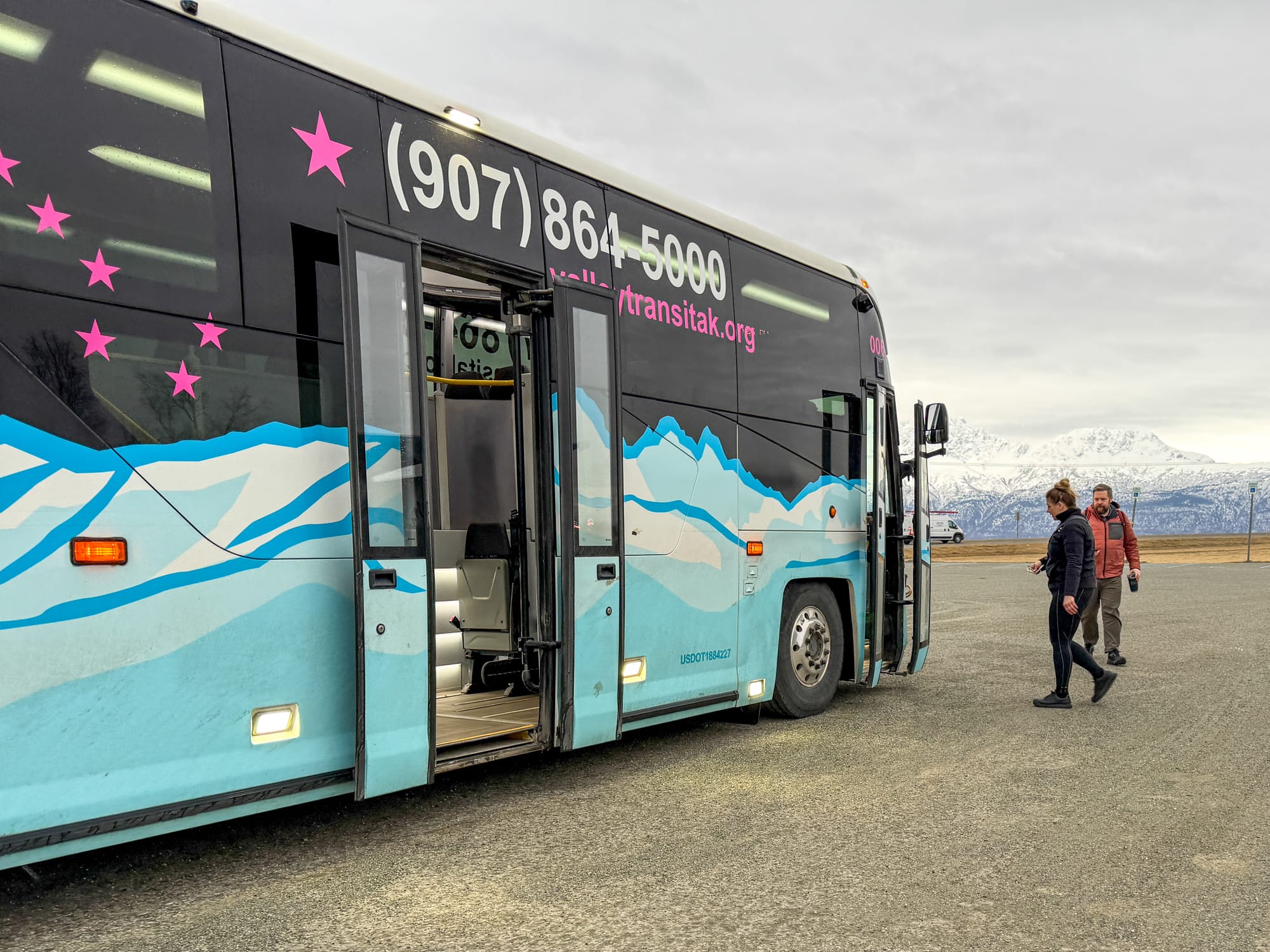
Valley Transit is the only public passenger bus service in Mat-Su’s core area. It includes 14 weekday and four weekend trips to and from Anchorage on six motorcoaches, with an average of about 55 round-trip rides per day, or about 34,580 rides per year, according to Valley Transit data. Each bus has a capacity of about 50 riders per trip.
The bus makes scheduled stops at park-and-ride facilities in Mat-Su and at the transit station in downtown Anchorage. Drivers can also make unadvertised by-request stops on Glenn Highway off-ramps to pick up or drop off individuals during the commuter route. Those pickups can be booked in advance or requested at boarding, transit officials said.
A separate “demand-response” service offers point-to-point rides within Mat-Su, booked on a case-by-case basis through the Valley Transit website. Rides are provided on a fleet of seven Valley Transit-owned shuttle buses, vans or small SUVs.
About 24,700 riders use that demand-response program each year, including disabled individuals, seniors, students and others who are not able to drive themselves, transit officials said. Rides can be booked about two weeks in advance.
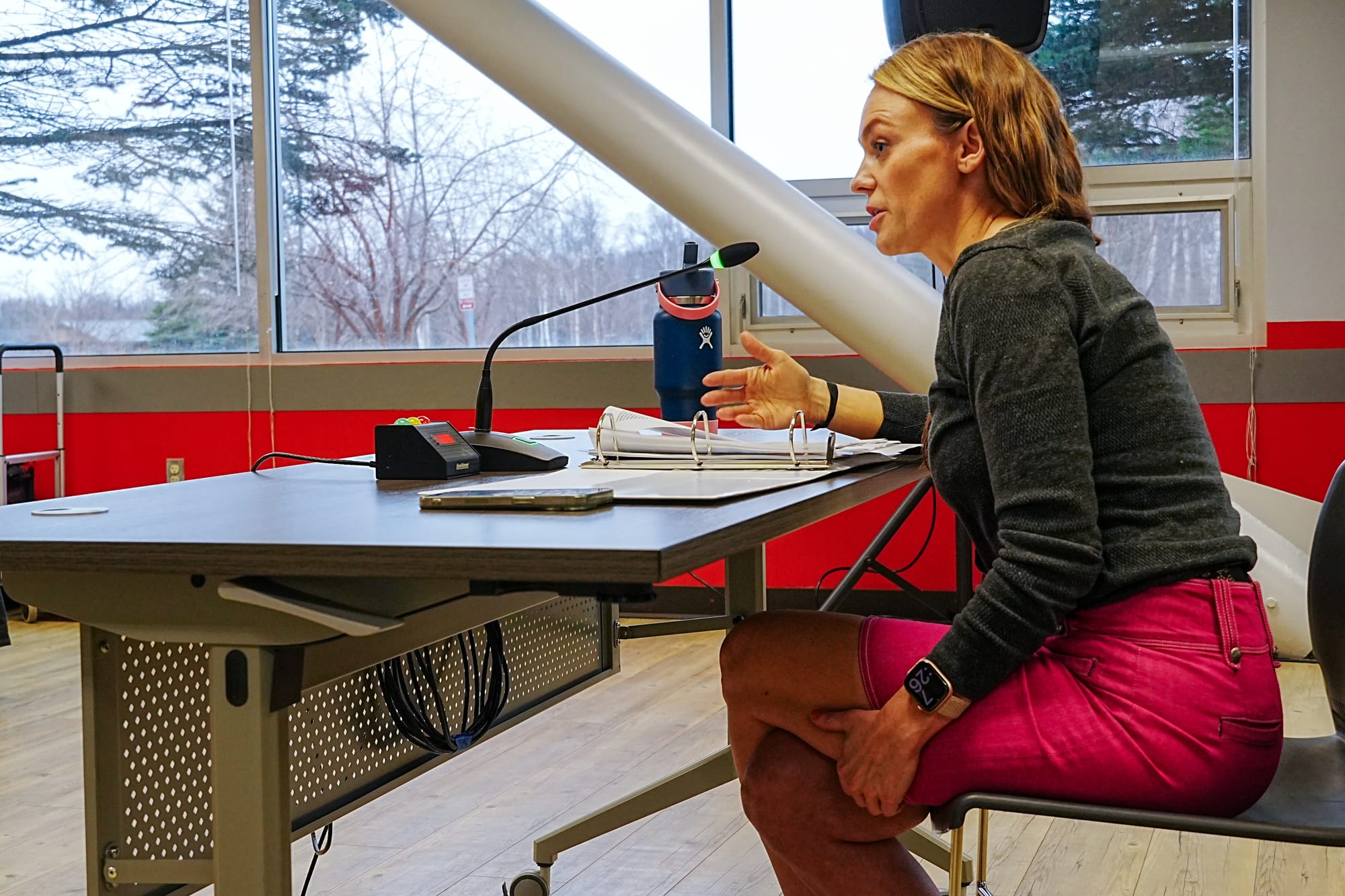
The service typically has a waitlist of about five people each day who are unable to get a ride because the system is full, Valley Transit Executive Director Jennifer Busch told the Assembly during a hearing last month. The recent school bus worker strike pushed that daily waitlist much higher, with more than 50 riders unable to get service on some days as parents relied on it to shuttle students to and from school.
Users traveling to and from Anchorage pay $7 one way, $10 per day or $120 per month. On-demand rides start at $3, with total fees based on the distance traveled. Discounts or free rides are available to students, seniors, veterans and employees of some partner companies, according to Valley Transit’s website.
Rider payments make up about 6% of the system’s funding, Busch said. That’s common for public transit services nationwide, which typically receive heavy government subsidies and operate as a public good, she said.
A planned budget review
The proposed cuts come as Assembly members look for ways to slash borough spending, lower the mill rate and keep local tax bills steady despite inflation and rising property values. Borough officials proposed a 7.966 areawide mill rate for tax bills sent in July, or about $797 per $100,000 in property value. The Assembly is set to vote on the proposal by late next week.
Operating a public bus service is a new task for the borough, which only took on the job last year due to the region’s growing population. Until then, Valley Transit received nearly $3 million in annual federal funding processed through the state with no borough oversight of day-to-day operations. The borough did not contribute any money to the service.
But the population shift moved Mat-Su into a new set of federal grant rules that require local governments to cover about half the cost of public transit, or lose federal funding entirely. And instead of sending the money directly to the bus provider, it must be administered by the borough through either a contract or a municipal-run system.
Mat-Su officials chose to go the contract route, putting the service out to bid last year. Valley Transit submitted the only bid, according to contract documents. Assembly members voted at the time to piece together full funding for the program, but some said they planned to reevaluate the service this year and consider possible cuts or changes.
Continued demand, limited dollars
Discussion of how to fund bus service occupied a central place at a series of budget hearings last month, with Busch speaking before the Assembly several times and offering rides to users who want to come and testify about how they use the service.
Some Assembly members said they would like to implement the cuts by reducing or eliminating commuter service and instead boosting the number of point-to-point rides offered through the demand-response service.
The decision on whether to make cuts to the service isn’t about a lack of demand or a question about whether both commuter and in-valley service are needed and useful, they said. Instead, they said it’s a matter of limited money paired with many local needs.
“Sometimes we have to make tough choices up here in terms of where funds get spent — because there’s not unlimited funding — and trying to prioritize what is the most important for people in the valley,” Assembly member Stephanie Nowers said during an April 28 budget hearing.
Busch said shifting away from commuter service to offer more rides within Mat-Su will hurt the local economy by making it impossible for people who can’t make the drive to live in the area and work in Anchorage.
“It’s a horrible idea — all of these people depend on it to get to jobs,” she said in an interview. “There’s not enough jobs here — we need that connection.”
Bus rider Michelle Scott is one such user. She said she takes the shuttle to and from Anchorage a few mornings a week to commute to her property management job. Her family decided to move to Mat-Su last year because they knew they could rely on the bus.
“A part of my decision was knowing I was going to be able to ride the bus — I do not like driving at night or in the winter with the snow and roads,” she said during a commute ride last month. “I’m going to that night or in the winter with the snow and the road. I’m going to be really sad if it goes away.”
Busch said she hopes to work with the Assembly during the budget debate to find creative ways to keep buses running at their current level, including working with the borough to apply for other types of federal grants or asking the state for a rule update so Valley Transit can receive multiple types of federal transit funds.
Assembly debate, with a possible final vote on the budget, is scheduled for Thursday, May 12, and 14 at 6 p.m. at the Assembly chambers in Palmer. While testimony on the budget is closed, members of the public can still speak at each meeting during general public comment.
-- Contact Amy Bushatz at contact@matsuentinel.com
This story was updated May 5 to correct the percentage of income from rider fares and to clarify the flow of federal funding to Valley Transit and past borough oversight of the system.