
Palmer to run its own golf course after contract talks fail
The shift ends an almost two-decade-long relationship with the city’s golf course contractor.
What you need to know:
- Palmer officials plan to take over operations of the city’s municipal golf course for the first time in decades after negotiations with longtime contractor Eagle Golf Course Management ended without an agreement by an early March deadline.
- Eagle Golf Course Management owner George Collum said the new contract proposal included operational changes he ultimately could not accept. The negotiations followed months of City Council debate about extending the agreement and whether the golf course must update operations to comply with certain federal aviation rules because its land is owned by the city’s airport.
- City officials said they hope to hire some of the employees who worked for Eagle Golf Course Management and plan to open for the 2026 season, which typically starts in May. The golf course has brought the city an average of $66,000 in profit annually since 2022, according to city budget documents.
- Short on time but need the local news scoop? Get free weekly news in your inbox for Mat-Su, from Mat-Su.
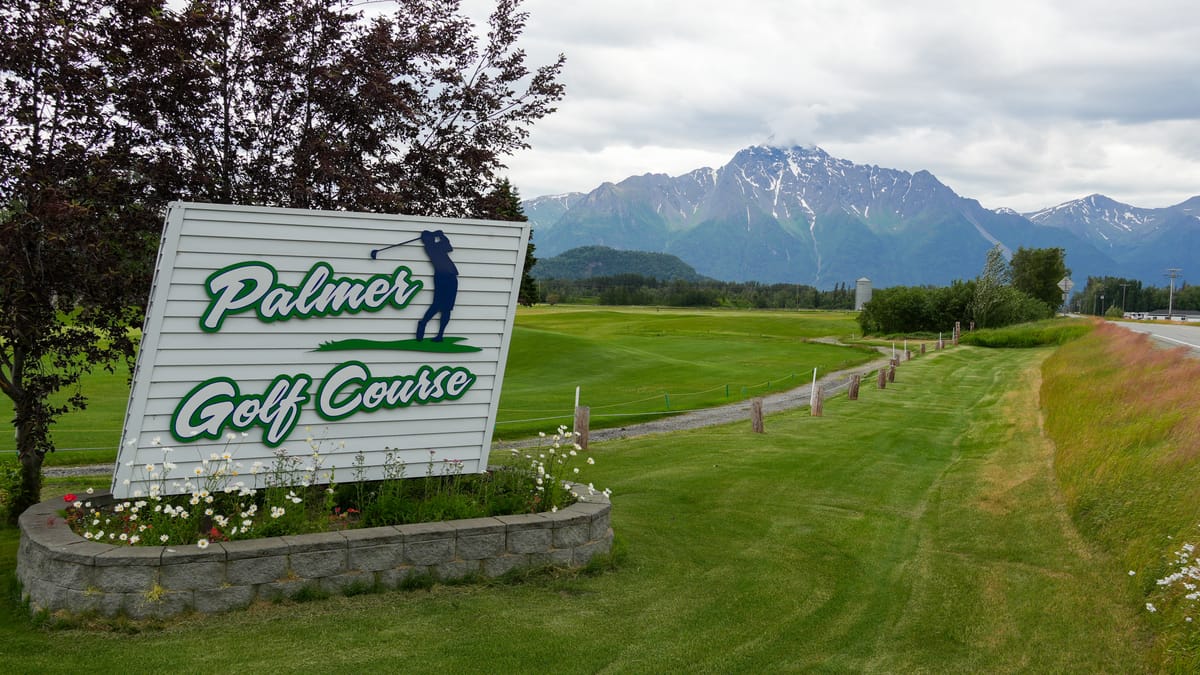
PALMER -- The City of Palmer will take over operations of its golf course for the first time in decades after officials and the facility’s longtime operator did not reach a new contract agreement by a deadline early last week.
The shift follows months of controversy and debate on the city council and in the community over whether an operations agreement with longtime contractor Eagle Golf Course Management Inc. should be extended, how the contract should be updated to comply with what city officials said are required or standard practices, and whether the land used for the golf course but paid for by federal aviation funds must someday be bulldozed and absorbed into the city’s nearby airport.
George Collum, who owns Eagle Golf Course Management and has overseen the 7,200-yard facility and clubhouse since 2007, said he was notified last week that negotiations are off because he did not meet a March 2 deadline. Collum first started working at the golf course in 2001 as an assistant manager, he said.
The change was announced in a statement from Palmer Mayor Jim Cooper published to the city website Wednesday.
Rather than hire a new contractor, the city plans to run the facility itself through its community development department, City Manager Kolby Zerkel announced Friday in an interview with Radio Free Palmer.
“The administration worked very hard to negotiate a new contract with the previous contractor, and unfortunately, their legal counsel and our legal counsel couldn't come to terms,” Zerkel said in the interview. “So the city is going to keep the golf course open as a municipal department.”
A summer season opening date for the golf course has not yet been announced. No information was immediately available on the city’s website regarding pass sales for the 2026 season. The city hopes to rehire staff who worked for Collum, Cooper said in an interview.
Rather than extended negotiations, the city upheld the March 2 deadline so it can move on with getting ready for the 2026 season, Cooper said.
“As negotiations did not result in an executed agreement, the City will proceed with planning to ensure the golf course opens for the 2026 season,” Cooper wrote in his statement.
The city last directly operated the golf course after it first opened in the early 1990s, Collum said. He said he was surprised by Zerkel’s announcement because he hoped he still had a chance of reaching an agreement with the city.
“I felt like there was still a window that we could get through to make this work out,” he said. “And apparently, maybe not.”
Collum’s previous contract paid his company $425,000 to operate the golf course, according to city budget documents. The city brought in an average of about $754,000 in green fees, cart rentals, driving range fees and trail fees annually since 2022 for an average profit of $66,000 after contract, equipment and other administration expenses, the documents state.
Collum’s company covered the cost of about 50 employees, course maintenance and operations costs and kept the profits from food and drinks, beer and wine and merchandise sales and club rentals. All transactions were processed through one customer system, with credit card fees paid by the city. Operations income was delivered to the city, after which the city finance team would split off the golf course income, deduct sales tax and return the proceeds of Collum’s sales.
Collum first started renegotiating his contract with the city late last summer as officials grappled with a controversy over whether the golf course, which was originally purchased with a federal aviation grant, must ultimately be converted to hangar space under the rules of that grant and how much rent the golf course is required to pay the airport for the land’s ongoing use.
He said he expected his negotiations to be simple and was surprised by discussions in late fall over whether his contract with the city is in compliance with those federal rules.
That discussion sparked a series of heated city council meetings regarding whether Collum’s contract could be renegotiated and extended — a step taken every three to five years since 2007 — or must be put out to bid. The council ultimately instructed Zerkel late last year to forgo the rebid process and instead renegotiate with Collum.
Collum said he expected his extended contract to include three changes approved unanimously by the city council in early January: a $50,000 value increase to $475,000 — the first such increase since 2019 — a requirement that the city directly pay for fuel used at the golf course for city-owned equipment, and a pause in alcohol sales because of new limits to a city-owned liquor license. The council also asked during the that meeting that “details of the contract … would be negotiated directly with the city manager,”
But the contract Collum was ultimately given looked more like an entirely new document than an extension, adding a series of changes that he could not agree to, he said.
Those included a requirement that he use two sales systems, one for city golf fees and one for his sales, keeping his income entirely separate from the city but adding complications to customer transactions and new credit card fees for his business, he said.
It also added a line requiring him to follow a series of federal regulations for monitoring a bald eagle’s nest on the course, which he said does not exist. He was also told the city plans to update green and use fees for the facility, a step that could trigger significant cost increases for users, he said.
“I personally think it is a mistake, because part of getting people to come to Palmer — besides a beautiful golf course — is the fee structure and making sure it’s a competitive price,” he said. “The idea of a municipal golf course is that it's kept affordable for the community, it’s an asset for the community.”
Fees at the Palmer course are typically set below those of other golf courses in the region, Collum said.
For example, in 2025 adults using the Palmer Golf Course paid $46 for 18 holes, while seniors paid $43 and juniors 17 and under paid $20, with no special fees for weekends, Alaska residents or playing less than 18 holes, according to a now-removed Palmer Golf Course website operated by Collum. Individual adult season passes were $850, while family passes were $1,125.
Settlers Bay Golf Course near Wasilla uses a “dynamic pricing” structure for adult green fees, with totals varying by demand; juniors paid $15, according to their website. Season passes are $1,599 for individuals, and family passes are $2,999, the website states.
The Anchorage Golf Course charges $82 per visit for nonresidents, about $56 for residents, about $53 for seniors and $17 for juniors, with special rates for fewer holes, according to its website; the Moose Run Golf Course near Joint Base Elmendorf-Richardson charges nonmilitary adult users $56 on weekends and holidays, $53 for seniors and $15 for juniors, its website states. Neither facility offers season passes.
The city’s takeover of the course also comes as city officials work to update a master plan for its municipal airport. That process is required if officials want to request a waiver to federal grant rules that mandate the golf course ultimately be converted to airport property, Zerkel told the council earlier this year.
Without such a waiver, the city must either use the land for the airport or permanently designate it as a golf course by reimbursing its airport operations fund millions of dollars as payment for the property, officials said.
Collum said he wishes the city good luck but now believes its time for him to move on.
“I don’t like to see the city torn apart over it – and that seems to be what is happening,” he said. “The city has made its decision to move on from my contract or my company as the operator, and I wish them the best.”
-- Contact Amy Bushatz at contact@matsusentinel.com