
That new towering plume over Mat-Su’s landfill? It’s filtered water from decomposing trash
Soupy black trash water, once trucked south and dumped into Cook Inlet, is now treated and vaporized above the landfill.

What you need to know:
- The Mat-Su Central Landfill near Palmer has installed a state-of-the-art system that filters and vaporizes murky runoff known as leachate, eliminating the need to truck it to Anchorage for treatment and discharge into Cook Inlet.
- The system captures pollutants, including PFAS and zinc, and is powered by methane from the landfill. It is expected to save the borough about $270,000 annually.
- Since late October, the evaporator has processed 600,000 gallons of runoff. Anchorage plans to install a larger version at its landfill next year to treat 40 million gallons of annual leachate.
PALMER — A large vapor plume now periodically visible over the Mat-Su Central Landfill near Palmer is caused by a new, state-of-the-art evaporator system that scrubs and pumps decomposing trash water into the air instead of leaving it to be trucked to Anchorage for treatment and release into Cook Inlet, borough officials said this week.
The vapor will be released from the top of the new evaporator system for up to several hours on weekdays on about 200 days a year, depending on how much runoff needs to be processed, Matanuska-Susitna Central Landfill Manager Jeff Smith said during a tour of the facility Wednesday.
Residents near the landfill may notice the plume shooting about 20 feet into the air, he said. It is particularly visible on cold days because it is so much warmer than the air it is entering, Smith said.
The vapor carries no measurable air pollution because of the way the runoff is processed by the machine, Smith told the Mat-Su Assembly during a regular meeting Tuseday. While it does carry a slight odor, any especially trashy smells residents notice from the landfill are most likely due to unrelated gas from decomposing solid waste and the liquid awaiting processing in the evaporator, landfill officials said during the event Wednesday.
The evaporator is the first of its kind in the region powered by methane produced by the landfill, Smith said. An evaporator operated in Kenai relies on natural gas.
The system represents a significant shift in the environmental impact of the landfill because it puts a stop to hauling the liquid 40 miles down the highway to the Anchorage Regional Landfill in Eagle River for processing and ends the practice of dumping it into the inlet, he said.
“In Anchorage, they pull out the solids, and then the liquid goes out into the Cook Inlet. That’s what goes into our fish and we eat it. It’s treated, but you can’t really take everything out of it — it’s still not good stuff,” he said. “There’s zinc and there’s other particulates in there.”
Known as leachate, the black trash soup is created by the landfill’s household waste cells as refuse breaks down and combines with rain and snow. About 5 million gallons of leachate is pumped annually from the bottom of the cells and into a series of collection ponds on the landfill property, Smith said.
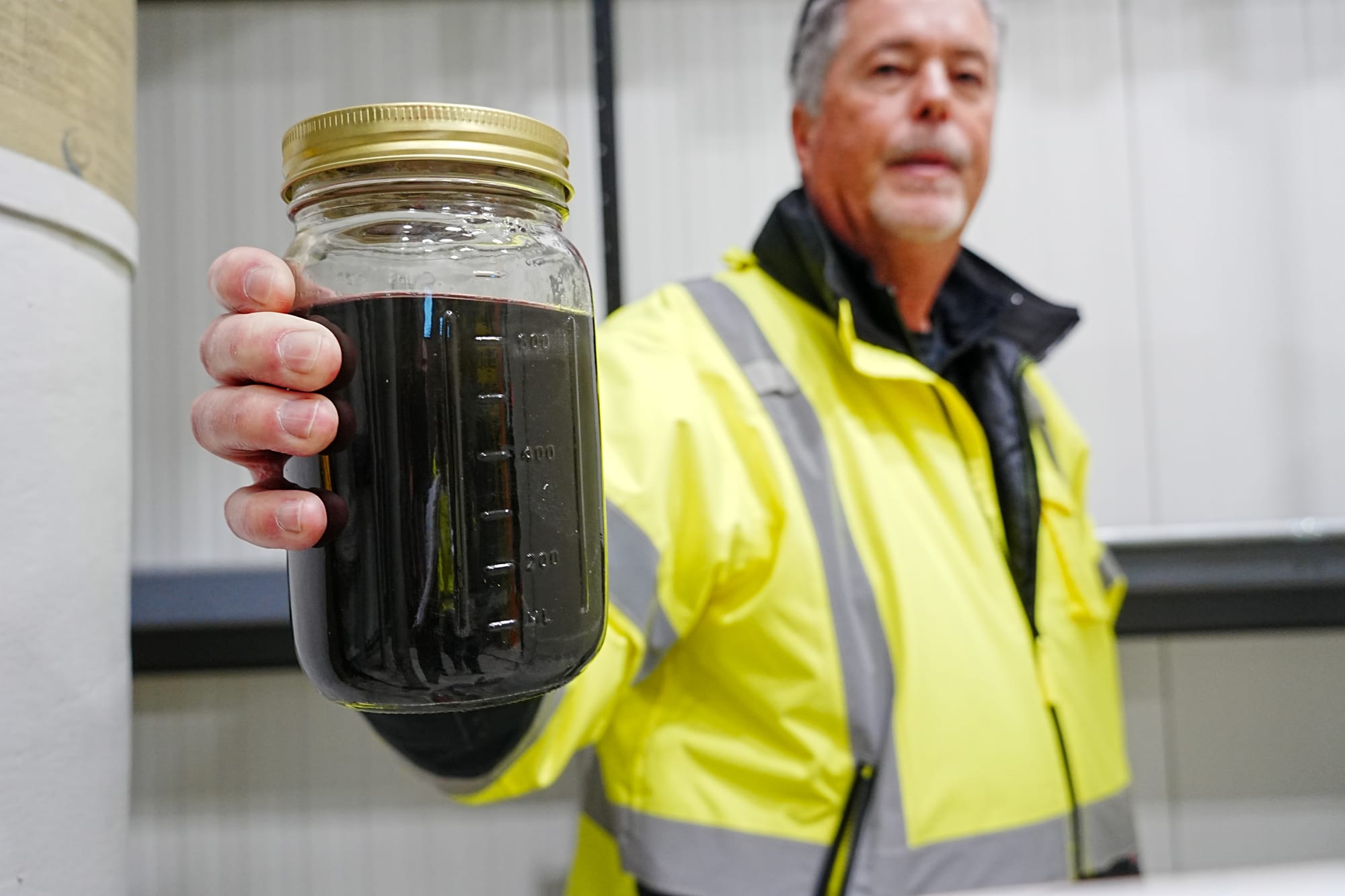
Until late October, that pooled liquid was moved into trucks, hauled to Eagle River, processed by Anchorage officials and then released into the inlet as treated effluent, Smith said. The work required for that system — including hauling, complicated permitting and environmental monitoring — cost the borough about twice as much per gallon of leachate, he said.
The new $6 million evaporator captures and removes a wide variety of pollutants, including a group of chemicals known as PFAS, Smith said.
Those chemicals and other toxins, including zinc, are not removed to the same extent when the runoff is treated and released into the inlet, he said, but can be successfully captured before it is released as hot vapor.
The evaporator pumps the sludgy, toxin-laden leftovers into a containment tub, and it is ultimately dumped back into the landfill’s trash cells, where it eventually integrates into the new leachate headed back into the processing system, he said.
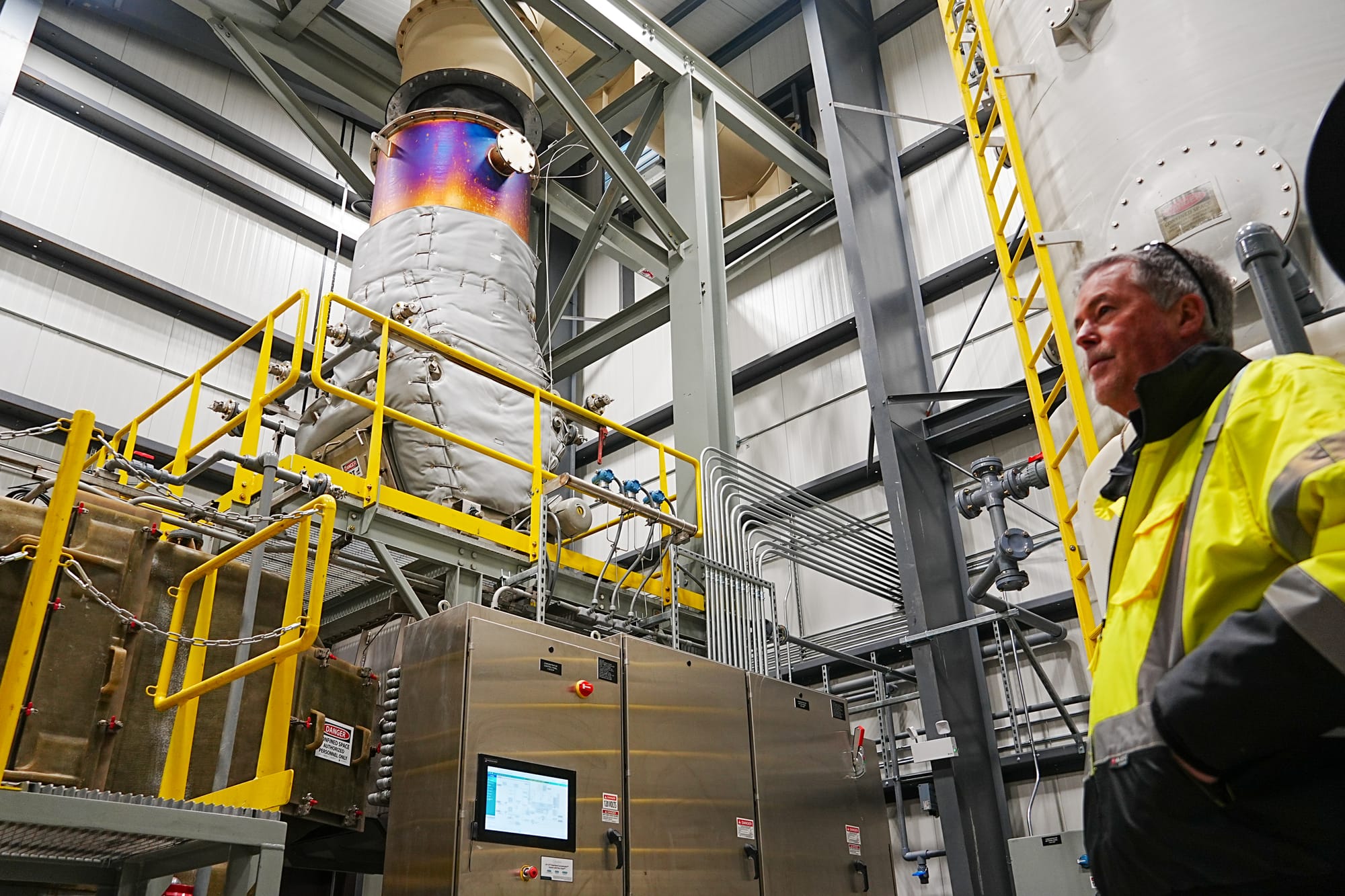
After operations and related staffing costs, use of the machine is expected to save the borough $270,000 a year, he said.
Over the last month, the machine has processed 600,000 gallons of leachate that would have otherwise been shipped to Anchorage over about 100 individual trips, Smith said.
Anchorage officials said they plan to install a larger version of the system at their facility next year, Ian Goodwin, an operations superintendent for Anchorage Solid Waste Services, said during the Mat-Su facility tour.
Anchorage currently treats 40 million gallons of leachate created by its municipal waste each year before funneling it into the inlet, he said.
The new treatment facility does not process all of the borough’s liquid waste. Millions of gallons of sewage are pumped from Mat-Su septic tanks and trucked into Anchorage for treatment, filtration and disposal into the inlet each year. A sewage plant for the landfill was last discussed in 2015 but was put on hold.
-- Contact Amy Bushatz at contact@matsusentinel.com
This article was updated Nov. 21 to clarify the previous cost of running the landfill’s leachate disposal program and to clarify that Kenai also operates an evaporator.