
Wasilla museum turns to whale exhibit to drive visitors
The newly rebranded Museum of Alaska opens its summer season this week.
What you need to know:
- The newly rebranded Museum of Alaska in Wasilla is preparing for its summer opening after acquiring a 40-ton fin whale carcass that washed ashore near Anchorage in 2024.
- The museum is expanding beyond transportation and industry exhibits by adding community events, cultural programming and new attractions aimed at increasing visitor and community engagement.
- Museum director James Grogan led the effort to retrieve the whale bones, which are currently buried in horse manure as part of a cleaning process before they become a permanent exhibit.
- Short on time but need the local news scoop? Get free weekly news in your inbox for Mat-Su, from Mat-Su.
Renewed excitement surrounding the newly rebranded Museum of Alaska in Wasilla is not a fluke. It’s the whole whale.
The small-town museum on the outskirts of Wasilla was previously known as the Alaska Museum of Transportation and Industry. It recently earned international attention when it took possession of a 40-ton female fin whale carcass that washed ashore near downtown Anchorage in late 2024 as part of its expansion and refocus.
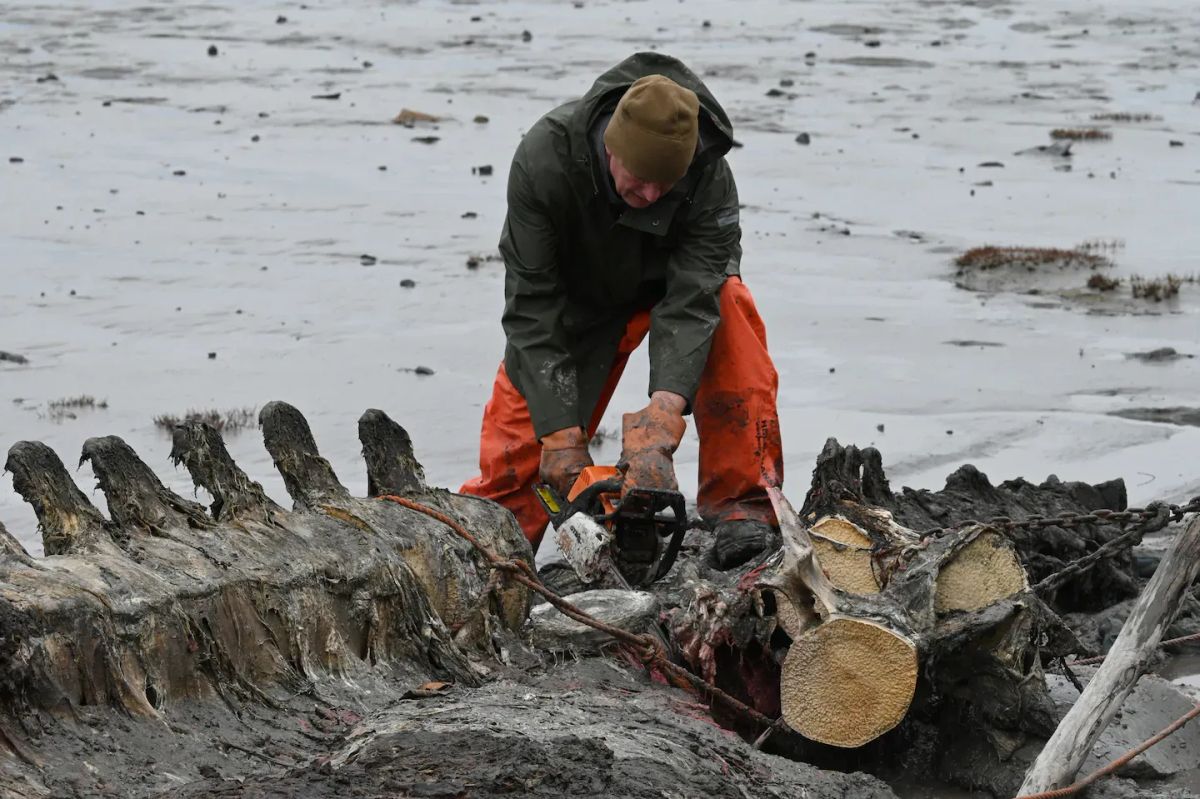
Today, the bones live on the museum grounds, buried under 20 tons of horse manure. It’s part of a process called “maceration” that promotes the growth of bacteria, which cleans the bones and prepares them for bleaching.
According to museum director James Grogan, obtaining the manure may have been the easiest part of the entire operation.
“We started calling all the different horse farms to see if they had extra manure, and boy, a lot of people came forward,” Grogan said.
Last year, Grogan led a team of volunteers who retrieved the whale bones from the tidal mudflats and transported them to the museum near Mile 47 of the Parks Highway.
It was a painstaking process that required multiple layers of permission from state and federal agencies, as well as numerous trips between Anchorage and the Mat-Su, often to the bemusement of fellow highway commuters.
“Her cranium weighs about 2,000 pounds. The mandibles still had flesh all over them, and they weigh about 1,000 pounds each,” Grogan said. “They were strapped down in my trailer with flesh dangling over the side.
“If you drove up behind me, you didn’t stay there very long.”
The whale bone retrieval operation attracted the attention of The Guardian, which ran a lengthy article detailing Grogan’s enthusiastic embrace of the project.
Grogan said he’s proud of the effort to bring the whale to the Mat-Su and believes it will become a key component of the facility’s educational programs.
“It would be a great educational tool. I thought it would be amazing to have a whale here in the valley that people could look at and see,” said Grogan, a retired Air Force veteran who has volunteered at the museum for about a decade and took over as director four years ago.
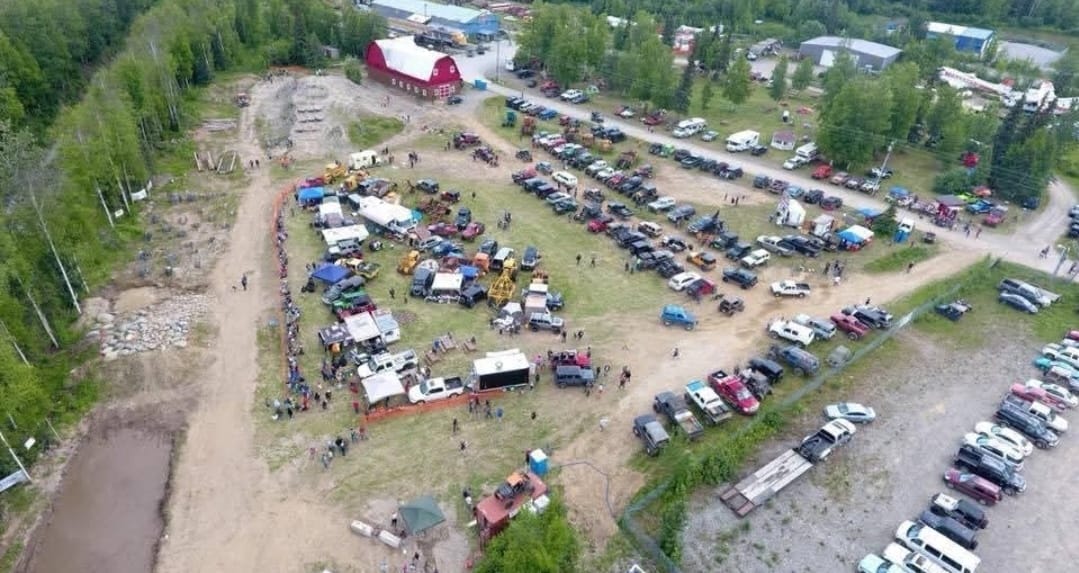
The whale retrieval is the most visible way Grogan is trying to revive interest in the facility.
“Museums just aren’t making it today by just being a sleepy little museum. We have to have something else to get people in.”
The museum has several community events planned, including a Father’s Day 4x4 mud course, a forging and blacksmithing event planned for July, and a haunted hayride set for Halloween. The facility is also open for birthday parties and special events.
Then there are the exhibits, both indoors and outdoors, including vintage military equipment, bush planes, mining and oil equipment, railroad cars, steam tractors and Colony-era farm implements.
“If you like tractors, trains, museums, airplanes, snowmachines, chainsaws — all that kind of stuff — we’ve definitely got all that out here,” Grogan said.
While the exhibits have traditionally been industry-heavy, Grogan said the museum has worked to expand its collection in recent years.
“We’ve really diversified out from just transportation and industry. We’re doing a lot more cultural things, a lot more things for the community, a lot of events,” he said.
The museum opens for the summer on Monday, which Grogan said coincides with International Museum Day. The facility is open seven days a week from 10 a.m. to 5 p.m. and also offers guided tours by appointment. General admission is $10, seniors are $8, and children younger than 5 are free. There’s also a picnic area on the museum grounds, which are billed as the largest in Alaska.
“We just have the smallest budget,” Grogan quipped.
The facility survives thanks to donations from local businesses and individuals, as well as the support of a core group of volunteers, Grogan said. The interior recently got a much-needed coat of paint thanks to a donation from a pair of local Vietnam veterans who wanted to remain anonymous.
“It hadn’t had a facelift in 20 years,” he said.
But by far the biggest new attraction is the whale, which Grogan said will eventually be removed from the museum’s manure pit, cleaned and reassembled as a permanent exhibit, a process that won’t be complete until next year.
“We’ll do all the cleaning and degreasing, seal the bones with a natural sealant, and rearticulate her,” he said. “Then she’ll be displayed in the museum.”
Grogan encouraged anyone who hasn’t visited the museum in a while to visit the facility — and its new resident — this summer.
“Everything you can imagine Alaska is out here.”
Matt Tunseth is a freelance writer from Southcentral Alaska. Write to him at matthew.tunseth@gmail.com
This story was updated May 19 to correct a reference to when the whale will be on display.