
30 years later, Big Lake remembers devastating Millers Reach Fire
Community members will gather Saturday to mark the anniversary of the disaster.
What you need to know:
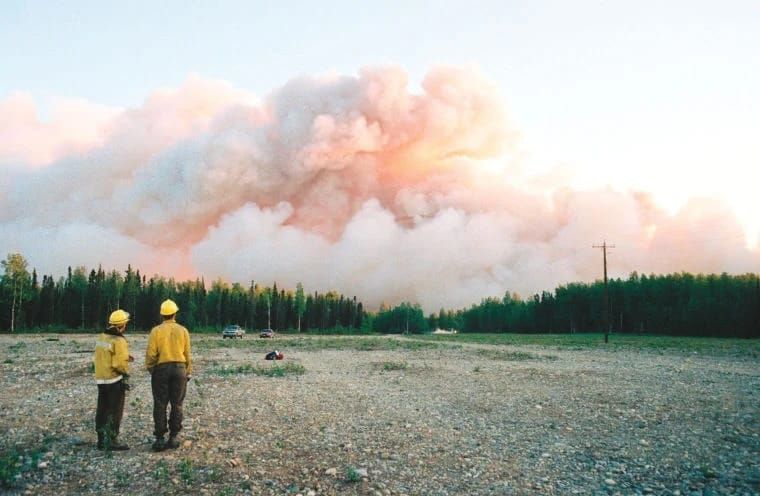
- Big Lake is commemorating the 30th anniversary of the 1996 Millers Reach Fire, one of Alaska’s most destructive wildfires, which burned 37,336 acres, destroyed 344 structures and forced about 35,000 people to evacuate.
- A Millers Reach Fire 30th anniversary “Big Lake Block Party” is scheduled for Saturday from 11 a.m. to 3 p.m. at the Big Lake Lions Recreation Center. The event will feature survivor and firefighter interviews, wildfire safety presentations, firefighting equipment displays, vendors and free food.
- The fire helped spur wildfire mitigation efforts such as the Firewise program, which encourages homeowners and communities to create defensible space around structures and reduce fuels that can feed fast-moving fires.
- Short on time but need the local news scoop? Get free weekly news in your inbox for Mat-Su, from Mat-Su.
In June of 1996, Cathi and Bill Kramer left the site of their new dream home in Big Lake and returned to Anchorage to attend their going-away party.
It was the start of a nightmare.
“My husband received a phone call from one of our neighbors telling us about the fire,” she recalled this week..
The Kramers learned a small fire that had started June 2 near Millers Reach Road in Houston was flaming up fast. High winds from the north were rapidly pushing the fire south into black spruce and directly toward their neighborhood. Evacuations were underway.
Bill Kramer immediately flew to Big Lake. He hurriedly grabbed whatever belongings he could and helped evacuate an elderly couple who lived up the road. But that was all he or anyone else could do.
The Kramers’ home on Horseshoe Lake was destroyed alongside hundreds of others in one of the most devastating wildland fires in Alaska history.
“We were four days away from moving into our home when it burned.”
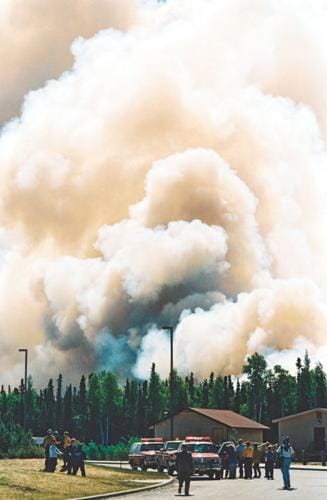
What became known as the Millers Reach Fire eventually burned 344 structures, ripping through 37,336 acres of land between Houston and Big Lake before it was brought under control on June 15. An estimated 35,000 people were forced to evacuate during a massive relief effort that at one point involved a third of all Alaska State Troopers.
“We were fortunate that no lives were lost, which is pretty significant,” she said.
The fire ranks as one of the worst natural disasters the Mat-Su has ever seen. But Kramer said the lessons learned during the burn of ‘96 have helped to strengthen Alaskans’ understanding of – and ability to fight – wildfires in the future.
“It could happen again, so we all need to be vigilant and do our part,” she said.
In the 30 years since the fire, Kramer has worked alongside her neighbors and area firefighters to help keep her community safe. She’s been actively involved in the Firewise program, a nationwide effort to clear brush and debris from around homes in order to make the spread of fire more difficult.
And she’s helping plan a Millers Reach Fire 30th anniversary Big Lake Block Party scheduled for Saturday at the Big Lake Lions Recreation Center from 11 a.m. to 3 p.m.
The event will include an 18-minute video produced by the state featuring interviews with fire survivors and firefighters, a discussion of how firefighting tactics have changed, displays of firefighting equipment, a children’s safety presentation, vendors, free food and more.
While it might seem strange to celebrate an event that caused so much devastation, Kramer said she prefers to look at the positives.
“We’re celebrating that we made it through,” she said.
Everyone is invited to the event. A similar 20th anniversary in 2016 attracted about 400 people, she said. Saturday’s event is a chance to learn more about wildfire and remember the lessons learned at the turn of the century.
“A lot of people have heard about it, but they don’t really know about it,” she said.
The spring of 1996 was unusually dry after a low snow year. According to an incident recap written by Tom Boatner for the “100 Fires” project, the fire started on the afternoon of June 2 and was initially knocked down by local firefighters. Smokejumpers from Palmer were deployed that night and by midnight appeared to be rapidly bringing the 60-acre fire under control.
Things changed dramatically the next night. Wind gusts off Denali,140 miles to the north, were ripping through the area at up to 35 MPH, pushing the fire into black spruce and igniting the tall, spindly evergreens like matchsticks. The fire spread four miles in less than four hours. Soon much of the entire north shore of Big Lake was burning.
Some homes were saved by their owners, some were spared by luck, but many others were destroyed within hours.
According to a timeline of the fire compiled by the University of Alaska, the fire broke control on June 3, and by June 4 had burned 10,000 acres and destroyed 50-100 homes – including 14 in a single hour. On June 5 it jumped the Parks Highway and was creeping toward Wasilla as firefighters from across the nation raced to the scene.
On June 7 – and with 1,300 now firefighters working the blaze – a change in the weather helped firefighters take the upper hand and on June 15 it was declared under control.
The devastation was massive. Gov. Tony Knowles declared a state disaster on June 4, a declaration that was followed on June 8 by a Federal Disaster Declaration by President Bill Clinton. An exact cause was never pinpointed, but the fire is thought to have been started by fireworks.
Lessons learned
In the aftermath of the blaze, major changes were made in how wildland fires near structures are fought. According to Boatner, the incident was a watershed moment for firefighting in Alaska.
“From this incident, Alaska fire managers and elected officials learned they were not immune from large destructive wildland urban interface fires,” Boatner wrote. “The state began to more aggressively plan for the future by improving fuels mitigation and defensible space efforts around towns and villages, improving evacuation plans, and educating the public about the risks of wildfire in rural neighborhoods.”
As an example of those changes, Kramer pointed to training. She said that in 1996, structural firefighters weren’t typically trained in wildland firefighting – and vice versa.
“They did one or the other, they didn’t cross over.”
Today, such cross-training is common, especially in areas like Houston and Big Lake where urban and wild areas are mixed.
“It’s very important because now they’re basically mutual aid to each other, where before they weren’t able to do that,” she said. “The training was very different.”
Other changes include the implementation of the Firewise program, which began two decades ago with Big Lake as one of the nation’s first program communities. The program encourages and facilitates the removal of dead and downed trees and helps homeowners and communities create “defensible” space around homes and buildings. In Big Lake, that has meant creating buffer trails around public buildings, holding “chipping days” to destroy tree limbs and educating the public on how to keep their homes safe. Kramer also helped create a local directory to help folks evacuate quickly if the need arises.
“Simple things like cleaning your gutters and keeping leaves and twigs raked up around your home are really important, particularly within the first 15 feet of your house,” she said. “We also show people how to trim up their trees, anything that’s spruce or evergreen, we teach people to limb those trees up five or six feet.”
The Kramers eventually rebuilt their home on Horseshoe Lake, where they still live today. Though she’s pleased with the progress made in the past 30 years, Kramer said she wishes she knew then what she knows now. She said in the late 1990s, a neighbor named Bob Royal owned two homes that survived the flames in part because of the owner’s hatred of the spindly black spruce that grew on his property.
“He had no black spruce on his property, and the two houses he owned, right next door to each other, survived the fire,” she said.
Royal’s clearing of his property showed the value of being proactive to others living in fire country.
“You look back on it now and go, ‘Yeah, he was an early example of Firewise before Firewise was a thing.’”
Matt Tunseth is a freelance writer from Southcentral Alaska. Write to him at matthew.tunseth@gmail.com