
Alaska ‘Copper Ammo Challenge’ pays hunters to change their habits
Shooters can receive up to $120 in rebates.
What you need to know:
- Hunters can receive rebates of up to $80 for rifle ammunition and $50 for bullets used in reloading by switching from lead to copper under a program led by a Chickaloon resident.
- Rebates are issued as Visa gift cards.
- Copper ammunition is effective for hunting and helps protect scavenging birds, particularly bald and golden eagles, from lead poisoning caused by ingesting bullet fragments in animal remains left by hunters, experts say.
- Short on time but need the local news scoop? Get free weekly news in your inbox for Mat-Su, from Mat-Su.
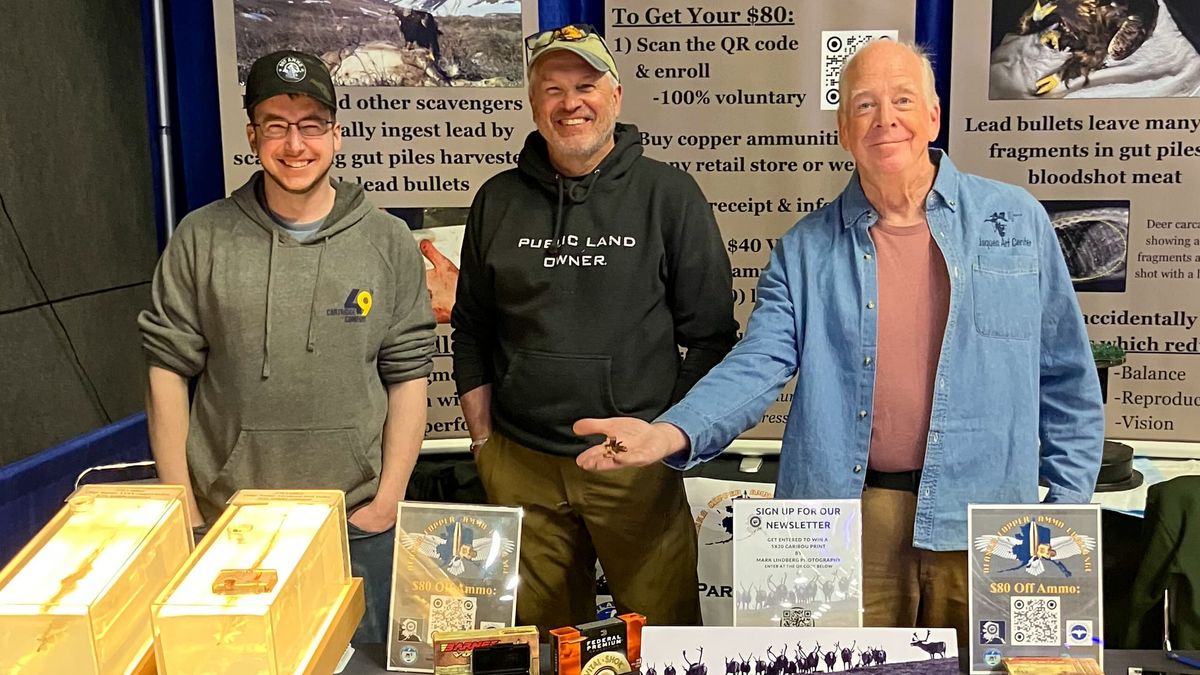
A grassroots program led by a Chickaloon resident gives hunters gift cards when they use copper rifle ammunition or copper bullets for reloading instead of lead.
The Alaska Copper Ammo Challenge promotes the use of copper ammunition to protect scavenging species, particularly bald and golden eagles, from lead poisoning caused by ingesting bullet fragments in animal carcasses.
The program offers hunters rebates of up to $80 when they buy copper rifle ammunition or up to $50 when they buy copper bullets for reloading.
“As a falconer, especially as a falconer, birds of prey have, in my mind, inherent value,” said Chickaloon resident Ron Clarke, a major force behind the Alaska Copper Ammo Challenge who previously worked as the assistant director of the Alaska Department of Fish and Game’s Wildlife Conservation Division. “They’re a part of the whole system and they’re worthy of our concern and our protection. And if some damage has befallen them inadvertently to things we’re doing, and there’s a simple solution to turn that around, that really appeals to me.”
Getting the rebate is easy, Clarke said. Individuals can upload a photo of their copper ammunition purchase receipt to the challenge website and receive $40 per box, up to $80 for two boxes of copper ammunition, or $25 per box, up to $50, for copper bullets for reloading. Participants must also hold an active Alaska hunting license and have an Alaska mailing address.
Rebates are issued as Visa gift cards and administered by partner organization Conservation Science Global. Funding for the program comes from the federal Pittman-Robertson program, which collects an excise tax on sales of firearms, ammunition and archery equipment.
That means the program is taking funds used to purchase ammunition and giving them back to the purchaser, Clarke said.
“This is money that has been collected in the form of an excise tax from everybody who’s ever bought ammunition, and we’re giving it back to people to buy more ammunition,” Clarke said. “It’s like the perfect little ecosystem.”
So far, it has distributed more than 1,500 rebates to ammunition purchasers in coordination with the Alaska chapter of Backcountry Hunters and Anglers, the Alaska Falconers Association, the Alaska Department of Fish and Game and the North American Lead-Free Partnership.
“I think it’s a good, leave-it-better-than-you-found-it kind of effort,” said Mary Glaves, a program manager for Alaska Backcountry Hunters and Anglers. “If you’re going to go out and you’re using the resource, you want to be consuming the best resource possible and you also don't want to leave behind something that’s not going to harm anything else.”
Clarke said the response from shooters is rewarding because it shows hunters are willing to change after seeing that copper ammunition is effective for taking down big game, rather than in response to new laws or restrictions.
“It’s not a matter of trying to change the rules or outlaw anything or ban anything,” Clarke said. “We’re just trying to encourage people to try it. And what we’re finding is that once people try copper, they don't go back. They like the way it performs.”
Glaves has conducted her own ballistics tests on copper ammunition. The bullets’ effectiveness and ability to retain weight after impact have convinced her to switch to copper bullets, with satisfactory results in the field, she said.
“If you are into the ballistics, it’s a really solid option,” Glaves said.
Glaves encourages hunters to share their experiences and is working to collect as many accounts as possible.
“We think it’s powerful for people to be able to talk and or hear from other hunters that have tried it. There’s no better way to learn about how something works and how it might work for you than people that have used it,” Glaves said.
‘Know your target and what’s beyond’
Travis Booms is a raptor biologist who works for the state Department of Fish and Game in its threatened, endangered and diversity program. He partners with Clarke and Glaves to promote the Alaska Copper Ammo Challenge.
A lifelong hunter, Booms grew up using lead-based ammunition, as many hunters did. He said he realized how prevalent lead contamination was in the blood of large birds of prey while working on a nationwide golden eagle study with other researchers. They found that many of the captured birds had been exposed to high levels of lead.
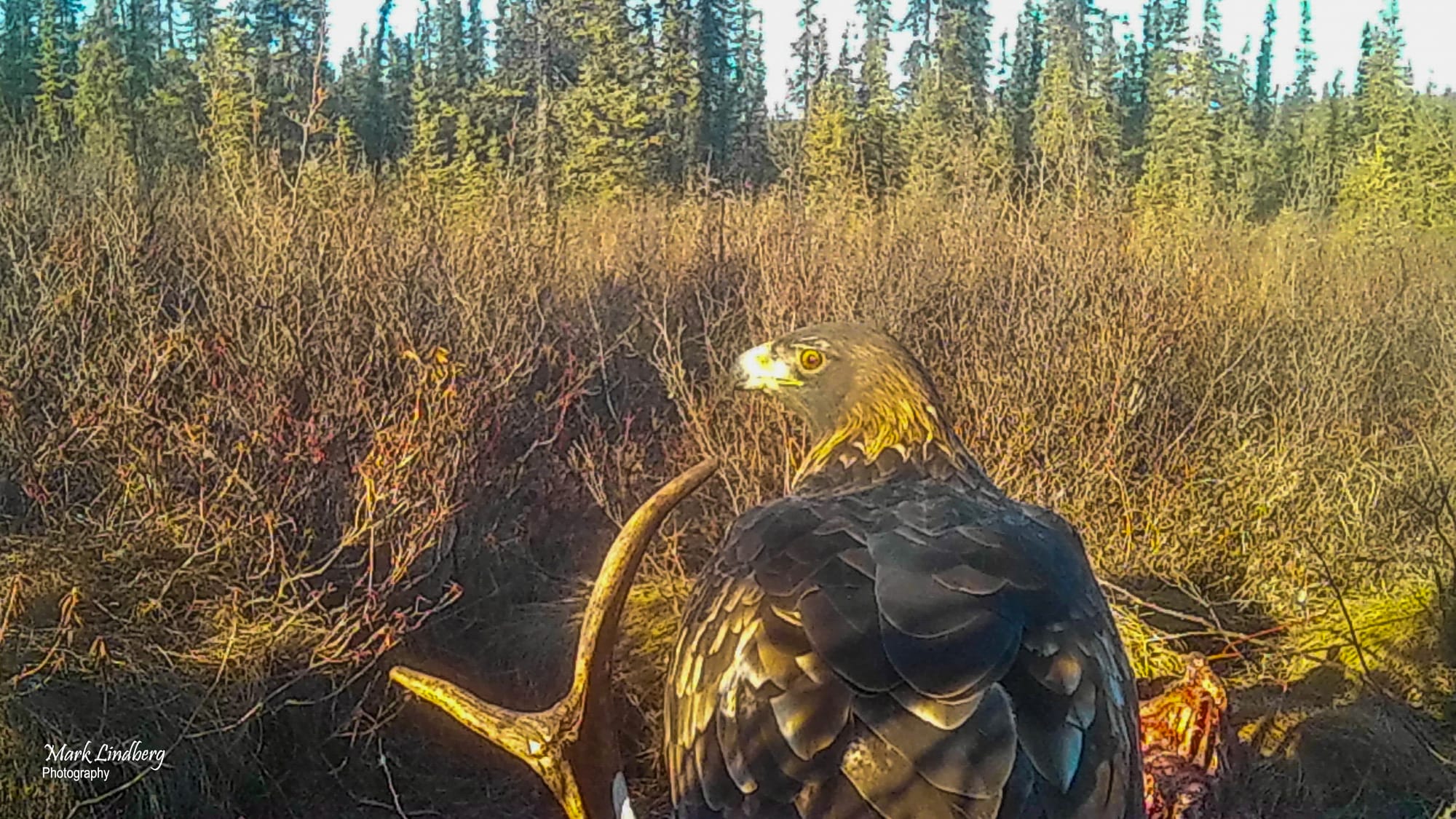
“We knew that lead poisoning was an issue for eagles, but I don’t think we had a full appreciation of how common it was,” Booms said. “One of the big take-home results of that nationwide research project was that half of eagles, both bald and golden eagles in the U.S., are chronically exposed to lead.”
Lead bullets designed to fragment on impact leave behind small pieces, known as petals, and dust. Using laboratory techniques that examine the molecular signature and the ratio of heavy to light lead isotopes, researchers can determine the origin of lead found in blood samples from captured birds, he said.
“Based on quite a bit of research, it’s pretty conclusive that eagles are getting lead from gut piles in hunter-harvested remains that used lead bullets,” Booms said.
Booms co-authored a paper presenting the findings, published in the journal Science in 2022.
Other studies that tracked blood lead levels in scavengers throughout the year have corroborated that lead levels spike during hunting season, Booms said.
One study in the Lower 48 that focused on ravens showed distinct peaks in lead levels during the fall, he said. Because lead remains detectable in the blood for only about 30 days, researchers could link the peaks to hunting season.
“There’s both the molecular evidence and then temporal evidence that strongly ties the lead in the blood of eagles and other scavengers to hunter’s bullets,” Booms said.
Lead rapidly dissolves in eagles’ stomachs because of their acidity, he said. Research shows that blood lead levels above 0.6 parts per million can be lethal to golden eagles. Two specimens in his study had lethal levels, he said.
Studies have also shown that in bald eagles, amounts of lead as small as one-tenth the weight of a paper clip — roughly the size of a grain of rice — can be lethal, he said.
“The range is anywhere from 20-130mg of lead if consumed by an eagle, and assimilated, can kill that eagle,” Booms said.
Further research in Alaska will include monitoring lead levels in captured ravens throughout the year to determine when spikes occur, Booms said.
Booms said it is personally rewarding to have tangible evidence of how lead bullets affect scavengers and to work alongside hunters to make a difference.
Copper ammunition can be hard to find, especially in rural stores, and some hunters are skeptical about how well it works.
The reasons many hunters are ultimately willing to switch vary, Booms said. Those who enjoy seeing eagles and other scavengers on the landscape may want to preserve a resource integral to the ecosystem. Better bullet performance on big game may be a major factor for others, while some simply want to be responsible stewards of natural resources.
“Using copper ammunition is an extension of one of those primary tenets in hunter education: know your target and what’s beyond,” Booms said. “When you put a bullet into an animal, you’re responsible for that. When you pull the trigger, you are 100% responsible for what the bullet does. And it’s not only the day of the hunt, but what that bullet does after you leave its remnants in the field.”
-- Contact Mat-Su Sentinel at contact@matsusentinel.com