
Early results show close Mat-Su races, possible upsets
One Mat-Su area state House incumbent was trailing and several others held narrow leads late Tuesday.
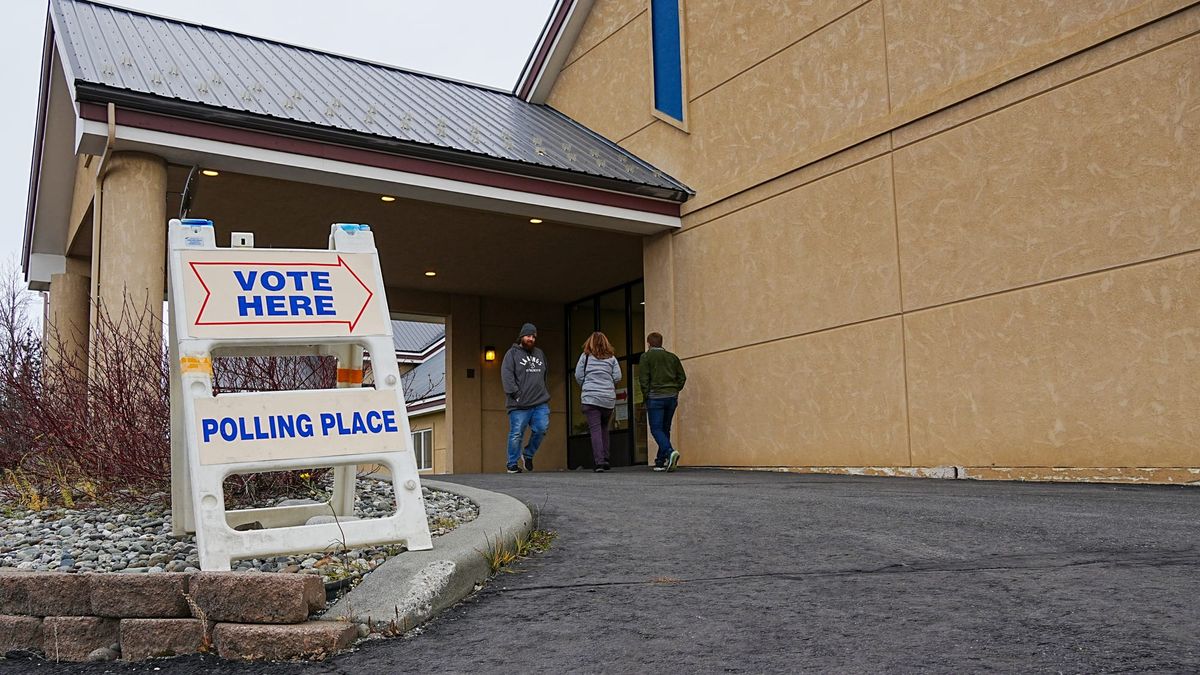
What you need to know:
- Several Mat-Su legislative races remained close Tuesday night, with Republican incumbent Elexie Moore trailing challenger Stephen Wright by 135 votes in House District 28. Four other House incumbents led by fewer than 140 votes.
- Republican incumbents Cathy Tilton and George Rauscher led their state Senate races. Tilton was ahead of Ryan Berry by 120 votes in Senate District M, while Rauscher led Ryan Sheldon by 1,438 votes in Senate District O.
- Borough election results were still unavailable as of 10:30 p.m. Tuesday. State results did not include absentee ballots, and final unofficial results were not expected until Nov. 18, after absentee ballots were counted and any necessary ranked-choice tabulations were completed.
- Short on time but need the local news scoop? Get free weekly news in your inbox for Mat-Su, from Mat-Su.
One Mat-Su area state House incumbent was trailing and several others held narrow leads just after 10 p.m. Tuesday as results rolled in from precincts across the region.
Early results for Matanuska-Susitna Borough Assembly and School Board races and four ballot propositions were not yet available as of about 10:30 p.m. Tuesday. While the state uses electronic tabulation to quickly count votes, the borough relies on a slower hand-counting process conducted by election workers.
Mat-Su area state House and Senate results
Unlike in 2024, when candidates ran unopposed in multiple Mat-Su area state House and Senate races, this year’s ballots featured a series of hotly contested seats with no single-candidate districts.
In Senate District M, incumbent Cathy Tilton, a Republican, was ahead of Republican Ryan Berry 3,813 to 3,693. Democrat Patricia Chesbro had 3,257 votes, and Republican Zane Vrvilo had 554. Senate District M includes Butte, Fairview, Gateway and portions of Palmer.
In Senate District O, incumbent George Rauscher, a Republican, was ahead of Republican Ryan Sheldon 5,030 to 3,592. Democrat Peter Bauer had 3,036 votes. Senate District O includes Willow, Talkeetna, Houston, Big Lake and Valdez.
In House District 25, which includes Butte and portions of Palmer, incumbent DeLena Johnson, a Republican, was ahead of nonpartisan candidate Steven Merritt 1,790 to 1,675 with just over half of precincts reporting. Republican Michael Bowles had 1,421 votes.
In House District 26, which includes Fairview and portions of Gateway, Republican Steve St. Clair led Democrat Jeanne Troshynski 4,695 to 1,709.
In House District 27, incumbent Jubilee Underwood, a Republican, led Republican challenger David Eastman 2,701 to 2,566. District 27 includes Meadow Lakes and Wasilla.
In House District 28, Republican Stephen Wright led incumbent Elexie Moore, a Republican, 2,257 to 2,122. Kathleen “Kit” Kennedy, a Democrat, had 1,624 votes. District 28 includes Tanaina, North Lakes and portions of Gateway.
In House District 29, which includes Sutton, Glacier View and Valdez, incumbent Garret Nelson, a Republican, was ahead of Republican Steve Menard 2,294 to 2,166. Democrat Kimberly Slone had 1,207 votes, and nonpartisan candidate Jessica Kusner-Kalarchik had 752.
In House District 30, incumbent Kevin McCabe, a Republican, led Republican Doug Massie 2,079 to 1,940. Democrat Sandra Loomis had 1,375 votes. District 30 includes Houston, Big Lake, Willow and Talkeetna.
Tuesday night’s state count does not include absentee ballots.
Final unofficial state results will not be available until Nov. 18, after the deadline for mailed absentee ballots has passed and the Alaska Division of Elections has conducted any necessary ranked-choice tabulations.
Alaska’s election system allows voters to rank candidates in order of preference. If a candidate receives more than 50% of the first-choice votes, that candidate wins, and no further tabulation is needed.
If no candidate reaches that threshold, the candidate with the fewest first-choice votes is eliminated, and votes for that candidate are transferred to the voters’ next-ranked continuing candidates. The process continues until two candidates remain, and the candidate with the most votes wins.