
Experts urge caution as warm weather delays ice formation in Mat-Su
Warmer-than-usual temperatures mean delayed ice formation
What you need to know:
- Warmer-than-usual weather has delayed typical ice formation by weeks, prompting public safety officials and outdoor experts to urge caution.
- Officials recommend at least 4 inches of ice for human travel, but thickness can vary even within a few feet. Experts urge people to test ice frequently and turn around if conditions are unsafe.
- Experts recommend carrying flotation devices and rescue ice picks, wearing protective gear and checking ice conditions before heading out. If someone falls through, bystanders should call emergency services and avoid venturing onto unsafe ice, they said.
- Short on time but need the local news scoop? Get free weekly news in your inbox for Mat-Su, from Mat-Su.
Outdoor experts and public safety officials warn that people should be careful near or on area lakes and streams until temperatures drop and the region experiences a deep freeze.
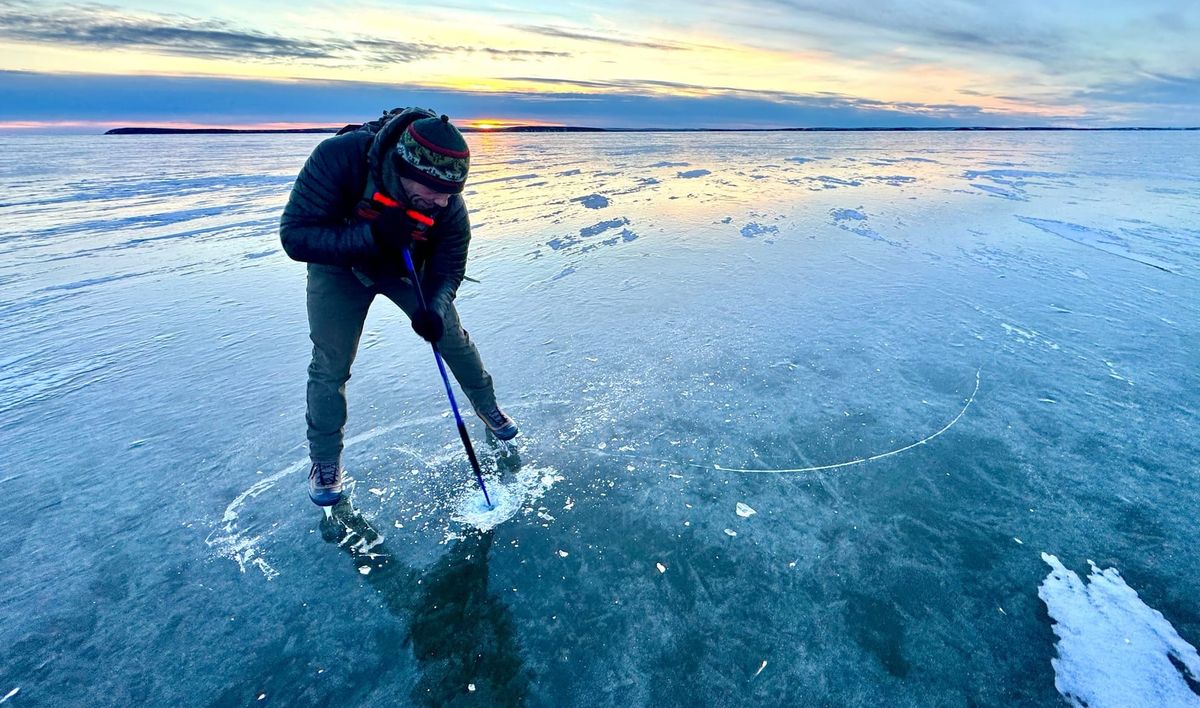
Warmer-than-usual temperatures brought by an El Niño weather pattern have delayed typical ice formation by weeks, said wild ice skater and outdoor instructor Luc Mehl. He said skaters have grown accustomed to early, strong ice in recent years, and he thinks they are beginning to push the limits of what is safe.
“Of course everybody is eager to get out, myself included,” Mehl said. “It means a lot of people are getting out on ice that’s thinner than they normally would.”
Mat-Su Borough public safety officials strongly caution against traveling on new ice. Changing weather conditions, combined with currents, water depth and wildlife, prevent ice from forming uniformly this time of year, said Brian Davis, the borough’s deputy fire and rescue director. Ice thickness can vary on the same body of water, even just feet apart, he said.
“You can’t tell ice conditions or strength just by looking at it,” Davis said. “The only for sure way is to make sure you know the ice thickness and understand the conditions which it was formed.”
Davis recommends a minimum of 4 inches of ice to safely support a person for extended periods. Mehl agrees, saying 4 inches is not only safe but also provides a comfortable buffer beyond what the ice can support for human travel.
“When I’m going out on thinner ice, I’m never relaxed,” Mehl said. “It takes away some of the fun for me because I’m on edge.”
First ice and last ice are the two most dangerous times of the season. Mehl said his safety precautions fall into two categories: prevention and response.
Waiting until ice is thick enough to support a person's weight is the best preventive practice. Mehl said he uses an ice probe to strike the ice and test its response close to shore before venturing farther out.
“This time of year, I’m testing a lot,” Mehl said. “I’ll stay right on the edge of the lake where it’s shallow. If something went wrong, it’s not a big deal and I’m just testing, testing, testing.”
Having the right equipment to respond to a plunge through the ice is paramount, Mehl said. He suggests carrying safety gear, such as a dry bag or personal flotation device, to provide buoyancy if someone breaks through the ice. He also recommends keeping rescue ice picks accessible.
While breaking through the ice can be frightening, Mehl said that injuries from simple falls are much more common. He recommends wearing protective pads or a helmet to reduce the risk of injury.
Mehl suggests following the Wild Ice Skating Club of Alaska Facebook group for regular updates on ice thickness.
Travelers should also be prepared to turn around if the ice doesn't meet safety standards, he said. Turning around is far better than falling through the ice, a danger he understands from leading rescue courses.
“I’ve been there when things have gone wrong and it’s a big deal. It’s really hard to recover from,” Mehl said.
Davis said people should contact emergency services immediately if someone falls through the ice. Bystanders can assist by throwing a long rope but should not venture onto the ice to attempt a rescue, which could create additional emergencies for trained responders.
“The best thing you can do is just stay off the ice until you know conditions are adequate,” Davis said.
-- Contact Amy Bushatz at contact@matsusentinel.com