
Fish Creek dipnet fishery open; coho arrive in Mat-Su
Fish Creek is open through July 31.
What you need to know:
- The Fish Creek personal use dip net fishery remains open through July 31, while the lower Susitna River fishery has produced below-average harvests because of low salmon numbers and high, debris-filled water.
- King salmon counts indicate several Northern Cook Inlet river systems are unlikely to meet spawning escapement goals, while the first ocean-run coho are arriving and fishing is expected to improve as more fish enter Mat-Su streams.
- Heavy rains have flooded weirs, limited aerial salmon surveys and slowed fishing on many rivers, although anglers continue to find success on the Kasilof River.
- Short on time but need the local news scoop? Get free weekly news in your inbox for Mat-Su, from Mat-Su.
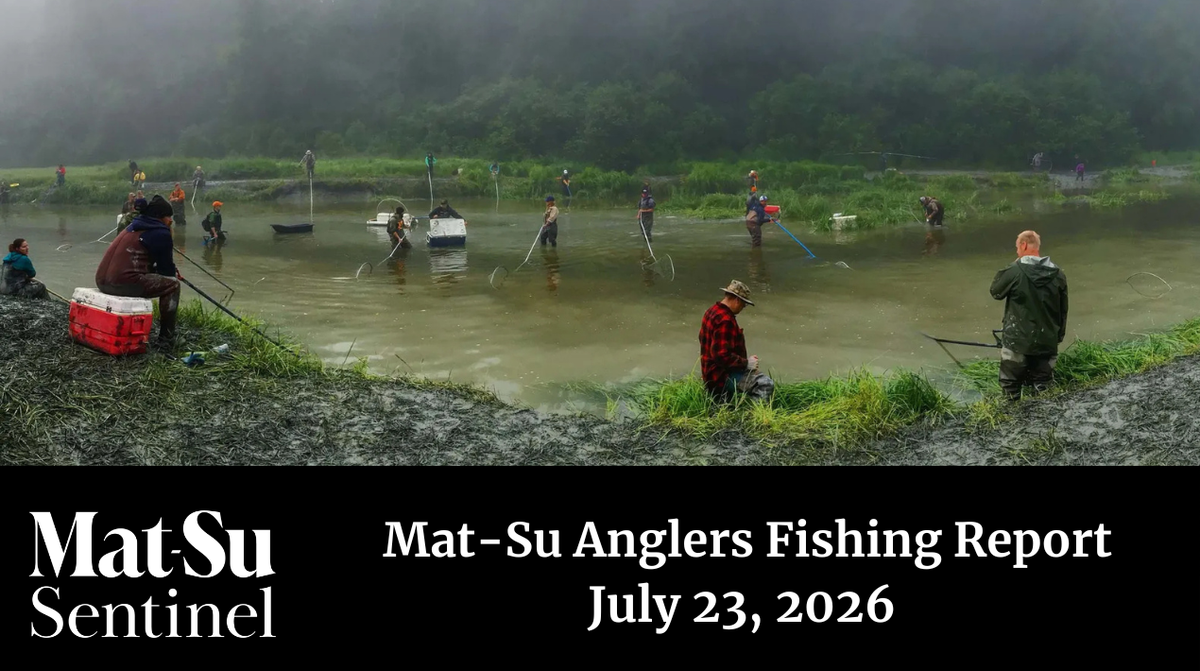
Alaska residents can dip net for sockeye salmon at Fish Creek through July 31 after the Alaska Department of Fish and Game opened the popular personal use fishery by emergency order. The fishing area covers a small section of Fish Creek off Knik-Goose Bay Road.
My friends Dan and Cilla Suprak fished Tuesday, got plenty muddy in the creek's tidal section and enjoyed watching the circus of other dip netters trying to catch sockeye salmon. Dan told me he felt one salmon wiggling in his net, but it slipped out before he could land it. He also watched a boat angler fishing farther downstream catch about 15 salmon and saw a few shore-based dip netters catch fish as well.
The fishery is open daily from 6 a.m. to 11 p.m. through July 31. After this column is published, dip netters will have eight more days to harvest salmon at Fish Creek. A household Upper Cook Inlet personal use permit and an Alaska sport fishing license are required.
Harvests are often best on the incoming and outgoing tides, particularly soon after the fishery opens at 6 a.m.
Private property borders the lower section of the creek, and deep, silty mud along the banks can trap unwary dip netters, especially on a rising tide. For that reason, some anglers use a canoe or small boat to reach areas farther downstream as salmon enter the creek.
Others access the lower end of Fish Creek by crossing Knik Arm from Anchorage or launching at the Knik River Public Use Area off the Glenn Highway. Boaters should cross Knik Arm only when tides are high enough to avoid becoming stranded on shallow mudflats.
Although this fishery often draws large crowds into a relatively small area, late-season openings sometimes offer more salmon and fewer dip netters competing to harvest them.
Lower Susitna River dip net fishery
By the time this column is published, only two personal use dip netting days will remain on the lower Susitna River: Saturday, July 25, and Wednesday, July 29. The fishery will be about two-thirds complete. The fishing area extends from signs about a mile below the Susitna-Yentna river confluence to signs at the upper end of Bell Island.
I took three family members and friends to the fishery by boat Saturday, July 18. They harvested nine salmon — seven sockeye, one coho and one chum — after fishing from shortly after 6 a.m. until early afternoon. Salmon numbers were low.
The Susitna River was high, carrying grass, sticks and other debris downstream, especially below the Susitna-Yentna river confluence. More rain was forecast for Wednesday, July 22. The Yentna River was nearing a record level, and a flood warning remained posted on the Deshka River Landing website. My wife, three friends and I canceled our planned trip that day.
I know other dip netters canceled their trips as well. With relatively few salmon harvested earlier in July, I expect the 2026 personal use harvest from the lower Susitna River fishery to finish below average.
Mat-Su Coho salmon starting to arrive
During the past week, I know of coho salmon harvested from the Little Susitna and Knik River sport fisheries, the lower Susitna River personal use dip net fishery, and Ship Creek in downtown Anchorage.
Ocean-run coho salmon are often the most harvested fish species in the Mat-Su Valley, partly because they are available in so many locations. High water from recurring rain has likely slowed sport fishing, but catch rates should continue to improve as more coho migrate into Mat-Su rivers. Stream systems less prone to flooding or those that maintain good water clarity should offer the best coho fishing during the coming week.
Bait — particularly cured salmon roe — accounts for a high percentage of sport-harvested coho in waters where bait is legal, especially during periods of high, turbid water. Coho are often most active during the early morning and late evening.
Big Lake Pike Derby — Saturday, July 25
This public event should be a fun way to help reduce invasive northern pike in Big Lake. In addition to prizes for the largest fish, organizers will award a prize to the angler who harvests the most pike.
I hope to provide a recap after the event listing the winning anglers and fish. I also hope the coverage helps the derby continue to grow as an annual event for the Big Lake community. Learn more here.
Salmon Counts
Little Susitna River weir — 653 king, 150 sockeye, 47 chum, 0 coho and 0 pink salmon.Counts through July 19. The weir was reported flooded beginning July 20.
Deshka River weir — 6,687 king, 1 chum, 0 coho and 0 pink salmon.Counts through July 14. The weir was reported flooded July 15-20, and no fish counts were available during that period.
Fish Creek weir — 16,111 sockeye salmon through July 20. No other salmon were counted.
Lake Creek sonar — 1,899 king salmon through July 11. Around this time, returning sockeye salmon require additional analysis to produce accurate king salmon counts.
Jim Creek weir — ADF&G installed the weir July 21. No counts were available at publication.
According to State and fish and game Commercial Fisheries Manager Lucas Stumpf on Tuesday, July 21:
Larson Lake weir — Fish-tight as of July 15. No salmon counts were available.
Judd Lake weir — Fish-tight as of July 19 but flooded July 20.
Chelatna Lake weir — Unable to install because of high water.
Another year of documented northern Cook Inlet king salmon shortages
King salmon counts through July 11 at Lake Creek, July 14 at the Deshka River and July 19 at the Little Susitna River confirm low king salmon abundance.
The counts also indicate the Yentna River drainage, the Deshka River — and possibly the entire Susitna River drainage — as well as the Little Susitna River are unlikely to meet established king salmon spawning escapement goals during the 2026 season.
When I attempted to contact state fisheries biologist Samantha Oslund on Tuesday, July 21, she was conducting king salmon aerial surveys at other Northern Cook Inlet streams. However, a series of rain events has created high, turbid water conditions across most Northern Cook Inlet streams, limiting additional king salmon escapement information from aerial surveys this week. Unfortunately, this is the period when those surveys are most valuable.
Upcoming event
Fish Creek Youth Fishery — The annual youth fishery will be held Saturday and Sunday, Aug. 1-2, for anglers younger than 16 in the section of Fish Creek open to salmon fishing near Mile 19 Knik-Goose Bay Road.
Road Trip News
Chitina Personal Use — Lower-than-expected Copper River salmon sonar counts at Miles Lake may reduce personal use fishing opportunities during the last week of July.
Kasilof River Personal Use and Sport — Mat-Su resident Greg Acord said he and his family participated in the personal use fishery this past weekend. Crowds were heavy near the river mouth, so they moved farther upstream. Over three days, they caught the sockeye they wanted. Greg also said he watched a few sport anglers — in the right place, at the right time and using the right technique — catch their six-fish daily sockeye limits in a matter of minutes.
Kenai River Personal Use and Sport — Sockeye returns to the Kenai River remain well below this time last year, and fishing has been considerably slower. Dan Suprak said family members made the trip to dipnet the Kenai last Saturday but caught only two sockeye from the bank.
Good Luck and Fish On!
Andy Couch has guided fishing trips in the Mat-Su Valley for more than 40 years and is a member of the Matanuska-Susitna Borough Fish and Wildlife Commission and the Matanuska Valley Fish and Game Advisory Committee. Statements and quotes in this column represent those organizations or other individuals only when specifically noted.