
Mat-Su Assembly to consider new alcohol tax, higher marijuana tax for November ballot
The taxes could generate more than $16 million each year in new revenue, according to the measures.
What you need to know:
- The Mat-Su Borough Assembly will consider ballot questions that would double the borough’s marijuana sales tax from 5% to up to 10% and create a new alcohol sales tax of up to 10%. If approved, the measures would potentially appear on the November ballot.
- Assembly member Ron Bernier said the taxes are intended to help fund borough operations, including schools, while reducing reliance on property taxes.
- The Assembly is also set to consider a pair of additional tax proposals in June, including a boroughwide sales tax plan from Assembly member Michael Bowles and a proposed gravel tax from Assembly member Stephanie Nowers.
- Short on time but need the local news scoop? Get free weekly news in your inbox for Mat-Su, from Mat-Su.
PALMER — A pair of ballot question proposals will head before the Assembly for a vote early next month as the first in a series of sales tax measures designed to reduce the Mat-Su Borough’s dependence on property taxes.
If approved for the ballot, the measures would ask voters whether the borough may double Mat-Su’s current marijuana sales tax, boosting it from 5% to up to 10%, and whether the borough may levy an alcohol sales tax of up to 10%.
The questions would appear on the November ballot. Assembly member Ron Bernier proposed the measures. Bernier represents District 7, which includes Talkeetna.
Mat-Su has levied a 5% voter-approved sales tax on marijuana since 2015. Revenue from that tax peaked in 2021 at more than $1.8 million and fell to slightly below that level in 2025. Increasing the tax to 10% could bring in about $1.5 million, according to the proposal.
Unlike the marijuana tax, a voter-approved alcohol sales tax would be entirely new to Mat-Su. Adding a 10% alcohol tax could bring in as much as $15 million annually, but the borough would need to spend about $240,000 each year on employees to help administer it, according to the measure.
Voters soundly rejected a similar alcohol tax ballot question in 2013 in a vote of 7,276 to 4,205.
Neither proposal would prohibit the borough from collecting property taxes, according to the measures.
Still, Bernier said the pair of so-called “sin taxes” is meant to help the borough bring in the money it needs to fund operations such as local schools while lowering how much it has to charge property owners each year.
“These are luxury-type things,” Bernier said in an interview. “I want to find a way to keep schools going.”
Bernier operated a cannabis grow in 2003 before the activity was legalized and regulated in Alaska and pleaded guilty in 2004 to felony delivery or possession with intent to manufacture or deliver. He said that if he still operated a grow business today, he would support such a measure.
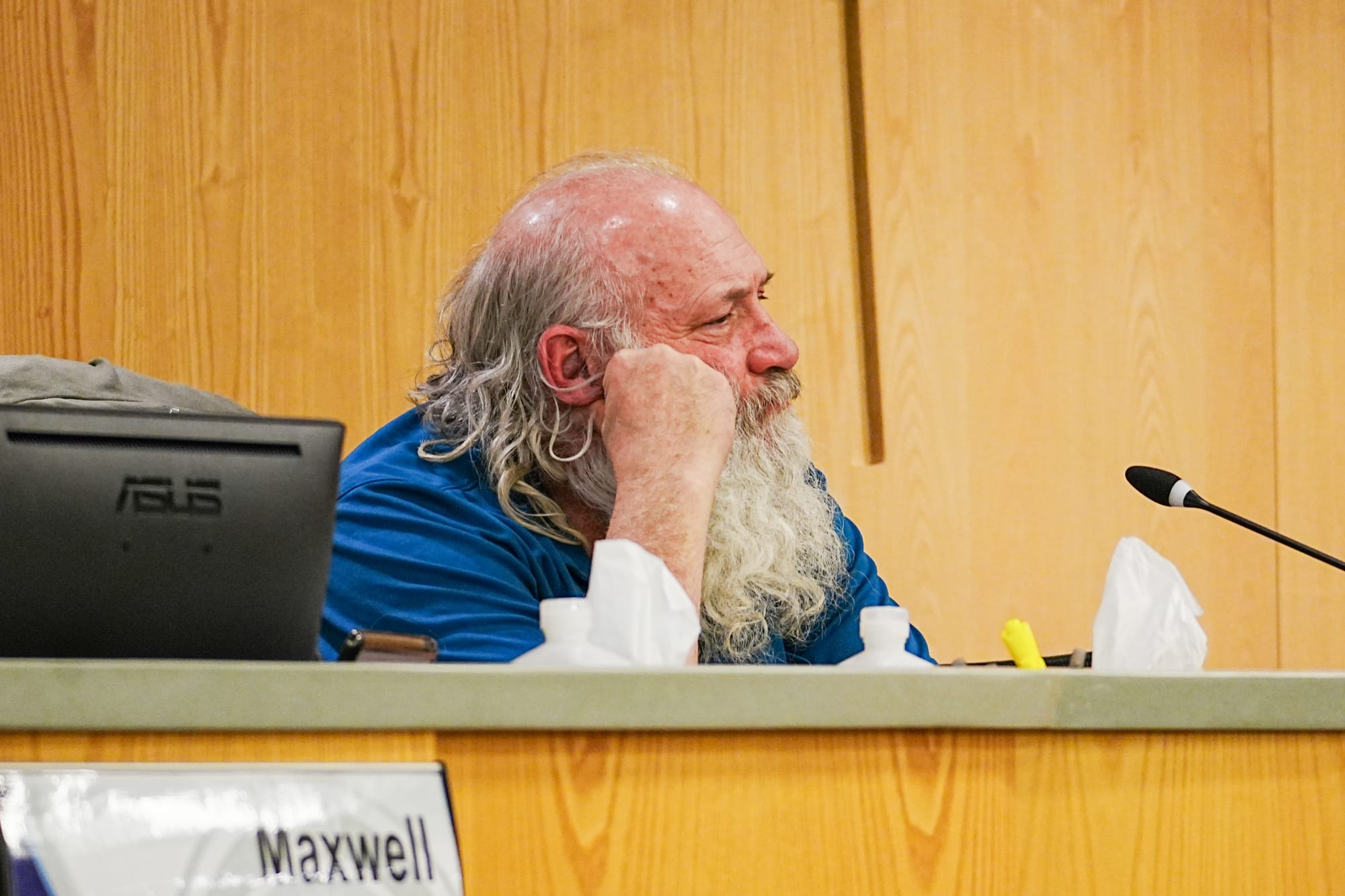
“Those were different types, but yes, if I was able to do it legally, yes, I would have,” he said.
Bernier’s tax proposals will come before the Assembly two weeks before the body takes up another set of tax-related ballot proposals at a meeting scheduled for June 15.
The first, proposed by Assembly member Michael Bowles, would ask voters whether to replace about 60% of the borough’s current average property tax payments with a 6.5% borough sales tax on most goods and services up to $1,000 per purchase, including food. Sales tax rates at stores in Palmer and Wasilla, where most borough residents do their shopping, would rise to 10.5% and 9%, respectively, because the borough tax would be added to rates already charged by the cities.
The proposal would eliminate the borough’s areawide property tax but would leave in place non-areawide, fire service, road service, and special use area property taxes, which make up about 40% of the average property tax bill. Bowles represents District 1, which includes Butte.
A second tax proposal scheduled for consideration June 15 would institute a 25-cent-per-ton so-called “severance tax” on gravel yard operators. Assembly member Stephanie Nowers proposed the measure. Nowers represents District 2, which includes Palmer.
Unlike a sales tax, which is charged at the time of purchase as a percentage of cost, a severance tax is charged against the company that extracts the material and is based on weight, according to borough documents. The proposed severance tax would affect only gravel yards that extract more than 150,000 tons per year, according to the proposal.
Nowers’ proposal is the latest in a series of similar severance taxes rejected by the Assembly over the decades. A 2002 proposal would have charged operators who moved more than 50,000 tons a year 10 cents per ton, but it was rejected. A 2017 measure that would have charged all operators 25 cents per ton regardless of how much they removed was narrowly defeated in 4-3 vote.
Both proposals sparked an outcry from gravel yard operators, according to Frontiersman news stories published at the time.
-- Contact Amy Bushatz at contact@matsusentinel.com