
Mat-Su eyes high career, tech grad rate to close gap for homeschoolers
Mat-Su students who take a series of career and technical education courses are 17% more likely to graduate than those who do not.
What you need to know:
- Mat-Su students who take a series of career and technical education, or CTE, courses are 17% more likely to graduate than those who do not. School district officials hope to leverage that success to help raise graduation rates among homeschool students.
- CTE students tend to be more successful because they are more engaged, officials said. Connecting more homeschool students — and their parents — with such courses could help motivate them toward graduation, they said.
- Expanding access to CTE courses could also help keep more homeschool students enrolled in the district, according to Mat-Su Sentinel polling data.
- Short on time but need the local news scoop? Get free weekly news in your inbox for Mat-Su, from Mat-Su.
PALMER — Matanuska-Susitna Borough high school students who participate in a series of technical courses are 17% more likely to graduate than those who do not, according to district data released this month.
District officials say they hope to use that data to improve homeschool graduation rates by encouraging participation in the courses.
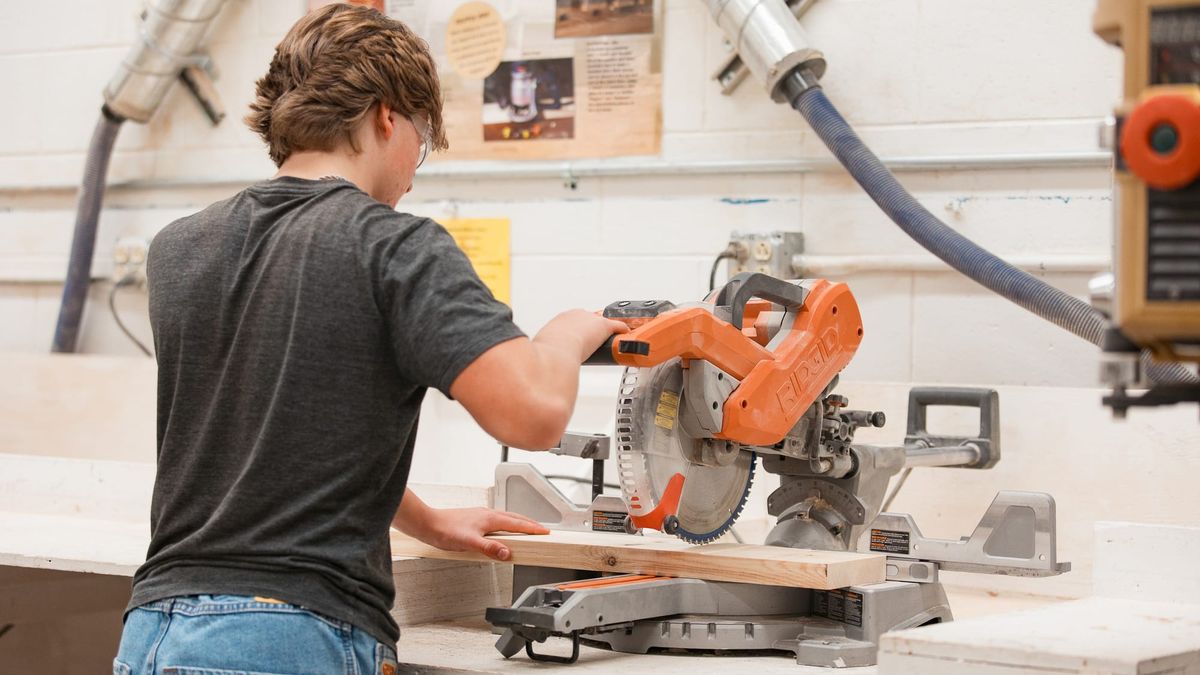
Of the about 4,530 Matanuska-Susitna Borough School District enrolled in Mat-Su high schools last year, about 1,120 earned 1.5 credits from classes focused on career and technical education, or CTE, such as welding, aviation, nursing, carpentry and animal science.
The graduation rate for so-called CTE concentrators in Mat-Su is 98%, Superintendent Randy Trani told the school board last week, compared to the overall rate of 84%. That rate is similar to the statewide average, district officials said.
About half of all students participate in some kind of CTE course during high school, but don’t take enough such classes to meet the 1.5 credit “concentrator” benchmark, according to district data. Students can take CTE classes to fill general elective and core education requirements, according to the district diploma policy.
The high graduation rate among CTE-focused students is tied to the hands-on engagement and sense of purpose found in those courses, officials said.
Mat-Su Sentinel thanks its sponsors. Become one.
“Graduation rates for this group have consistently been remarkable,” district spokesperson John Notestine said in a statement. “That’s not surprising, as these students are engaged and connected to a class or pathway they truly enjoy.”
Trani said he hopes to expand CTE course offerings and related parent support to boost the graduation rate among the district’s homeschool correspondence students.
While 89% of students in Mat-Su’s brick-and-mortar schools earn their diplomas, only 68% of homeschool correspondence students enrolled with the district the entirety of their senior year receive a Mat-Su diploma, he said.
“All of the CTE courses that we’re able to stand up this year are filled with students who are in our correspondence schools, and I’m wondering if we can keep growing that to maybe address the difference in graduation rate between our correspondence students and our brick-and-mortar students,” Trani told the board. “I think that maybe what we need to look into is establishing systems of support for parents in those schools, because the parents are the teachers — they’re the principal, basically, of the school. It’s homeschool.”
Data regarding the number of homeschool students who don’t graduate with the district but instead earn their diploma through the GED high school equivalency exam was not immediately available.
Increasing access to CTE options for area homeschoolers could also help retain students — and the state funding they bring — within the Mat-Su district, according to Mat-Su Sentinel data.
About 40% of participants polled at Mat-Su Sentinel’s Flip the Script event ranked “add more CTE programs” as their top choice for keeping more students in the district, while about 28% ranked it as their second choice.
Last year, about 3,000 Mat-Su students enrolled in outside correspondence programs, such as Raven and IDEA. If those students had enrolled locally, they would have generated more than $20 million in state funding for the district, Trani said earlier this year.
-- Contact Amy Bushatz at contact@matsusentinel.com
This article was updated Oct. 27 to clarify the homeschool graduation statistic and Oct. 28 to correct the spelling of Mat-Su District Superintendent Randy Trani's name.