
Mat-Su road officials want tougher penalties for illegal motorized vehicle use on pathways
A resolution approved by a road board asks for trooper enforcement and vehicle impoundment.
What you need to know:
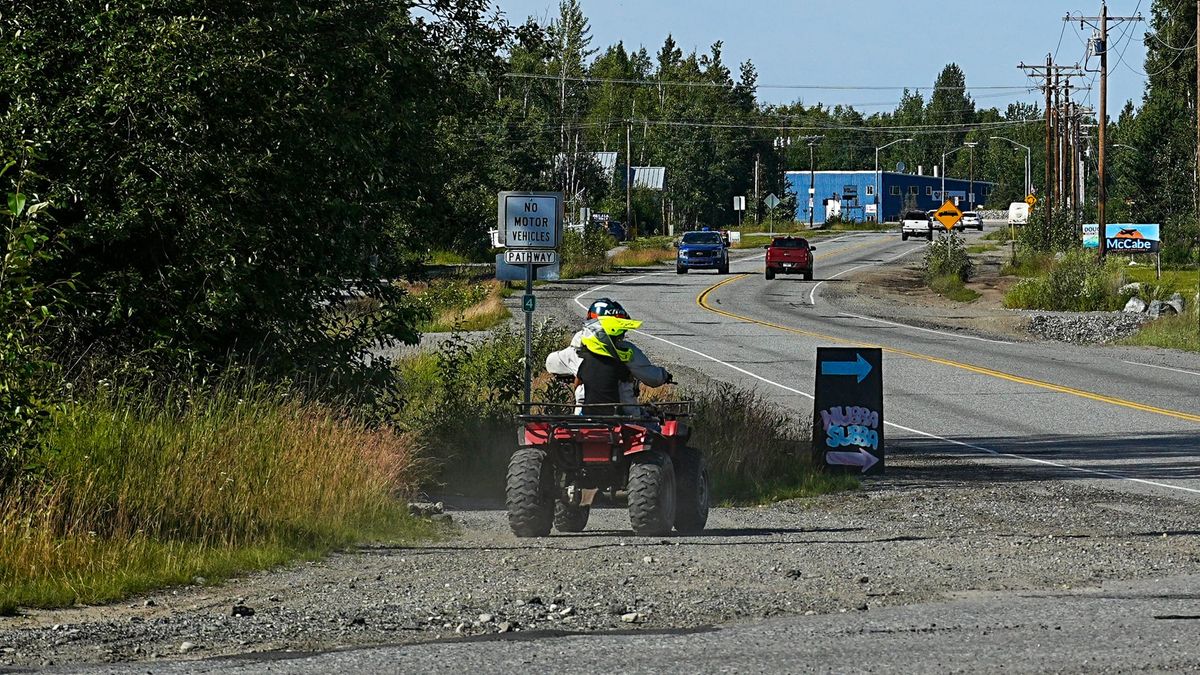
- Mat-Su road board officials are pushing for tougher enforcement of illegal off-road vehicle use on bike paths, including increased penalties, vehicle impoundment, more signage and safety education.
- Conflicts between motorized and nonmotorized path users are increasing as Mat-Su grows and expands its pathway network. Officials and residents report dangerous encounters. In 2024, a Big Lake pedestrian was killed after being struck by a dirt bike rider on a path.
- Officials disagree over how to address the problem. Troopers and some local leaders support more signage and enforcement, while others say the borough should focus on identifying safe, legal routes for ATV riders rather than imposing additional restrictions.
- Short on time but need the local news scoop? Get free weekly news in your inbox for Mat-Su, from Mat-Su.
BIG LAKE — Mat-Su Borough road board members want the state to increase penalties for individuals who illegally use off-road vehicles on the region’s bike paths and to seize the vehicles of offenders as a way to boost public safety.
A resolution approved by Mat-Su’s Local Road Service Area Advisory Board this summer asks troopers to boost enforcement against illegal use of separated pathways, add new penalties that include impounding vehicles until completion of a safety class, review new signage and encourage public safety education.
Under current state law, individuals who use an off-road vehicle on a pedestrian pathway may receive a minor offense citation that carries a $50 fine, state public safety officials said last month. Similar infractions in Wasilla city limits also carry a $50 fine, while the fine in Palmer is $75, according to city documents.
The road advisory board approved the resolution recommending new pathway safety measures, enforcement and legislation in a 7-5 vote in late May. Representatives from Fairview, Caswell, Lazy Mountain, Gold Trail and Greater Talkeetna voted against the resolution. Representatives from Knik, North Colony, Meadow Lakes and Alpine, which includes Sutton, were not present at the meeting.
The resolution is similar to one approved by the Big Lake Road Service Area Board earlier this year. It will not be sent to state public safety officials or legislators until a version is drafted and approved by the Matanuska-Susitna Borough Assembly. Such a measure has not yet been introduced or considered.
Conflicts among motorized and nonmotorized users across Mat-Su have increased as the region’s population has grown and the borough and state have laid paved pathways along or on top of routes previously used for off-road vehicle travel, state public safety officials said in an interview last month.
Mat-Su is home to about 90 miles of separated pathways that run along busy thoroughfares, including the Old Glenn Highway in Butte, Talkeetna Spur Road and Palmer-Wasilla Highway.
A bicycle and pedestrian plan approved by the assembly in 2023 calls for more than 130 additional miles of such routes. Sections recently finished or under development include a miles-long stretch of Palmer-Fishhook Road between Trunk Road and Hatcher Pass and a path along Edgerton Parks Road from Palmer-Fishhook Road to Government Peak Recreation Area.
Illegal use of pedestrian paths can have tragic consequences, officials said. In 2024, 79-year-old Big Lake resident Nadara Williams was killed on a Big Lake path when she was hit by a dirt bike driven by 19-year-old Anchorage resident Brendan Clark.
Clark was ticketed for operating an off-highway vehicle in an area intended for pedestrians and charged with criminally negligent homicide. A trial is scheduled for next year.
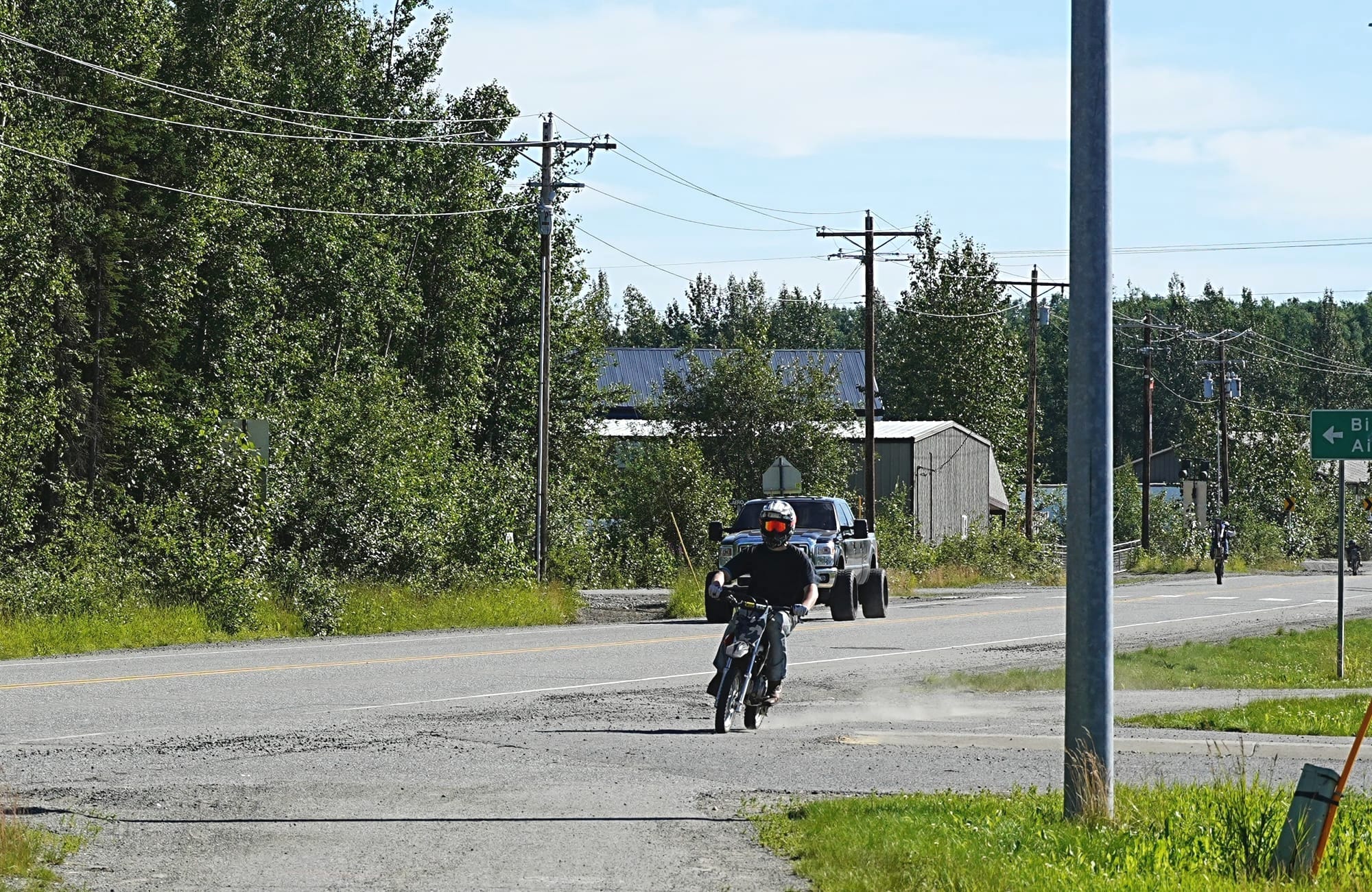
Path users, off-road enthusiasts and drivers across Mat-Su said in interviews that they regularly see motorized users, who typically appear to be teenagers, barreling dangerously down pathways, crossing in front of traffic or performing wheelies on dirt bikes, resulting in near misses with pedestrians, cars and other off-road vehicles.
In June, a driver traveling down Knik-Goose Bay Road said she witnessed a young teen traveling on the bike path on an ATV lose control of his vehicle, veer into traffic and narrowly miss being hit by two cars and another ATV.
Residents in the Ranch subdivision in Wasilla said young users there nearly collided with them this summer as they were using a sidewalk.
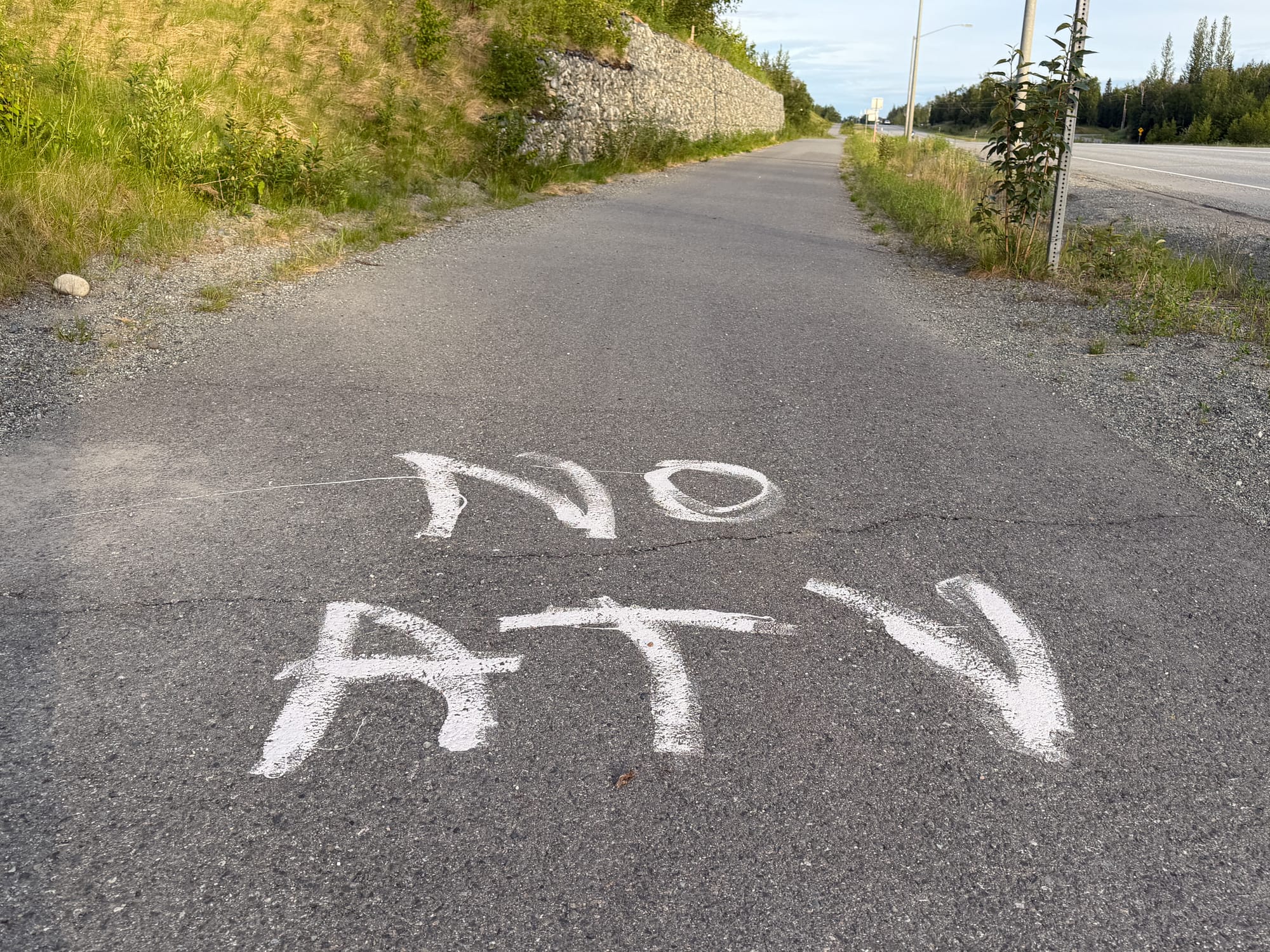
On a bike path along Bogard Road, an individual used white paint to illegally write a series of “No ATV” messages on a more than 1-mile stretch. Within days, four of the markings were covered with asphalt sealer in an apparent attempt to hide them.
The conflicts also bring challenges for off-road riders who want to travel safely but struggle to navigate Mat-Su’s rules, those users said.
While many roads have ATV trails near or across the street from the paved path, accessing them can involve extra road crossings at busy intersections, which can bring their own dangers, they said.
For example, ATVs often travel the paved path between the Three Bears grocery store and the intersection of Trunk Road and Palmer-Wasilla Highway to avoid crossing traffic at a spot prone to fender benders and near misses with pedestrians as traffic turns right on red.
On sections of Bogard Road, crossing from neighborhoods or navigating a roundabout can mean traveling on or directly next to the bike path for short distances even if the driver would rather avoid doing so.
Alaska public safety officials said they typically won’t stop riders they see carefully using the paths for safe crossings. While stops can result in a citation, troopers said they instead often use the interaction for education rather than a penalty. Most stops involve minors, and tickets are less common than warnings or visits to the individuals’ parents, said Lt. Ryan Anderson, deputy commander of Alaska State Troopers Detachment B.
Data on how often troopers stop off-road vehicle users on pathways is not available because of the way such contacts are tracked.
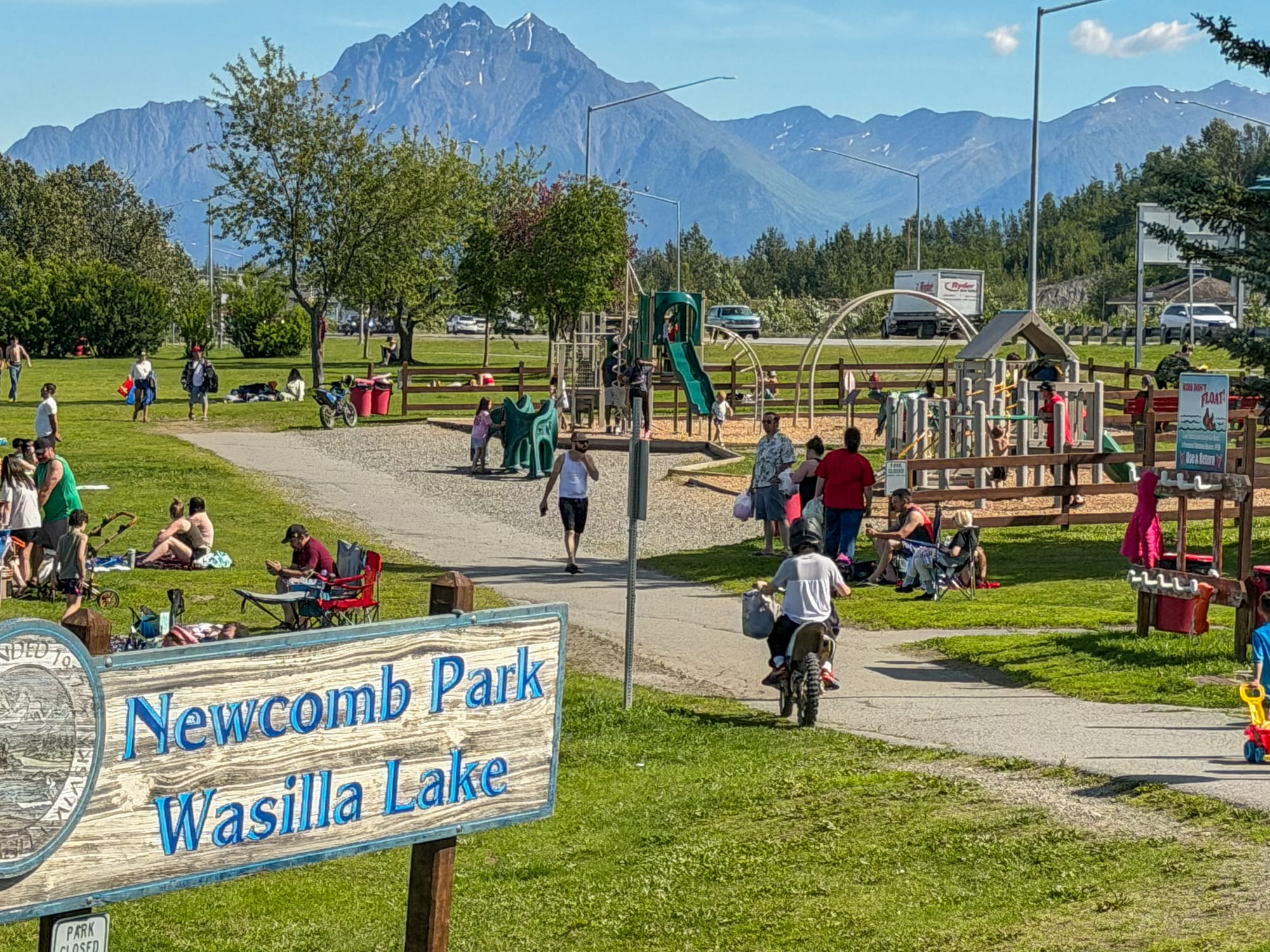
Officials in Palmer and Wasilla said they also typically use the stops for education. Wasilla police have issued 30 related citations since 2020, officials there said. Citation data for Palmer was not immediately available.
Anderson said he would like to do more enforcement around the issue and other traffic violations, but staffing levels tied to state funding keep his team from focusing on such stops because patrol officers are typically focused on responding to calls.
He said adding more pathway signage warning that motorized vehicles aren’t allowed could help because it would support consistently issuing citations instead of warnings when riders have passed multiple signs telling them the activity is illegal.
“Ignorance isn’t an excuse at all,” he said. “You don't necessarily need a sign or shouldn't need a sign to know whether something's illegal or not. But I think when it comes to smaller regulatory stuff like this, it is a little harder.”
Matanuska-Susitna Borough officials said such signage is coming soon through a federal grant issued as part of the Safe Streets for All plan approved by the assembly last year.
Assembly member Bill Gamble, whose district includes Big Lake, said he agrees pathways need more signage and enforcement. Gamble previously worked as the borough’s emergency services director and personally witnessed injuries caused by off-road vehicle accidents, he said.
“It goes even beyond the bike trails,” he said. “If you drive down Big Lake Road, kids on motorcycles are riding on one wheel down the middle of the road, and I think it’s just a matter of time before we have a fatality.”
But not all local officials think warning signs telling users what not to do are the answer.
Jeremy Hongslo, a Local Road Service Area Advisory Board member who represents RSA 28 Gold Trail, which includes Shrock Road, voted against the recent board resolution. He said he did so because he wants officials to tell motorized users where they can go, not where they can’t. He said he also disagrees with asking troopers to seize the vehicles of repeat offenders.
“We would be better off if we were to use our energy telling ATV users where they can ride legally,” he said.
-- Contact Amy Bushatz at contact@matsusentinel.com