
Shortened comment period for West Susitna road environmental permit ends Tuesday
AIDEA says it needs expedited permitting to advance development at an antimony deposit.
What you need to know:
- A shortened public comment period on a key U.S. Army Corps of Engineers permit for the proposed 78.5-mile West Susitna industrial road closes Tuesday after just 18 days. Public comment periods for such proposals typically run 30 to 60 days.
- The Alaska Industrial Development and Export Authority says expedited permitting is needed to advance development of an antimony deposit. But the deposit remains in the early stages of exploration, and road construction costs and the tolls needed to finance it have not been determined.
- Some road opponents question the safety of mixing heavy industrial trucks with recreational traffic. The project would include bridges, an airstrip and other facilities, while a separate 22-mile public highway and bridge project is proposed at a cost of $227.6 million.
- Short on time but need the local news scoop? Get free weekly news in your inbox for Mat-Su, from Mat-Su.
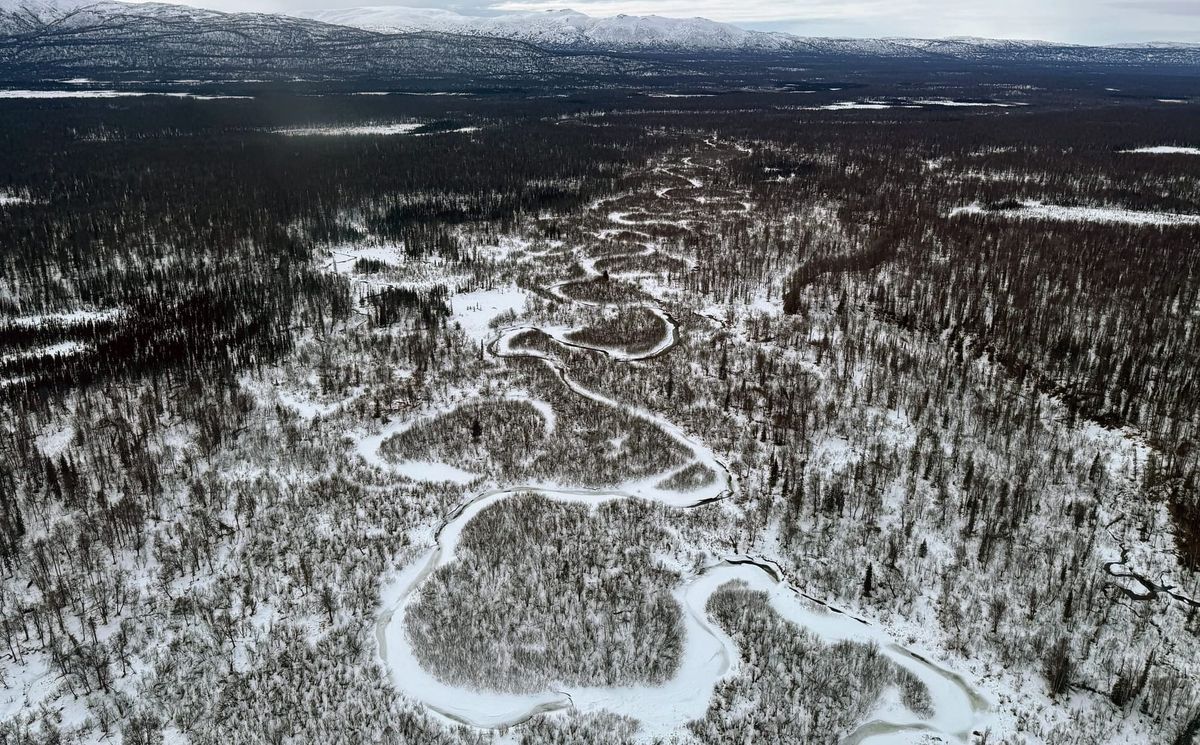
Mat-Su residents are questioning a move by the U.S. Army Corps of Engineers to accelerate a key permit for a proposed 78.5-mile industrial road into mineral exploration areas in the western Mat-Su, leaving the public with a shortened comment period that closes Tuesday.
The Alaska Industrial Development and Export Authority, or AIDEA, the state's development finance corporation, applied for a Section 404 Clean Water Act permit for the road in July 2025. Gov. Mike Dunleavy asked federal officials to expedite the permit under emergency authority for critical minerals development granted by President Donald Trump.
More than a year later, the Army Corps published a public notice on the application Sept. 25, along with information about the project. But the notice allowed only 18 days for public review, compared with the usual 30 to 60 days, drawing criticism from project opponents.
“We’ve never seen anything like this,” said Mike Overcast, owner of Tordrillo Mountain Lodge, which is near the proposed road's route.
“The West Susitna Industrial Access Road is a state-funded giveaway to foreign gold mining companies who want Alaskans to subsidize their mining road,” he said in a news release distributed by the conservation organization Salmon State. “The ‘emergency’ permitting is just code for destroying our public lands and circumventing the laws that protect fish and wildlife habitat.”
But some see the road in a more positive light.
“The West Susitna Access (project) is an exciting opportunity,” state Rep. Kevin McCabe, R-Big Lake, said in a statement supporting the project last year. “It will not only unlock some of Alaska’s extraordinary resource potential but will provide Alaskans new access to the recreation and outdoor opportunities found in the West Su.”
AIDEA said expedited permitting is needed to advance development of an antimony deposit in the western Mat-Su. Antimony is used in munitions manufacturing and other defense technologies. The deposit was discovered by Nova Minerals, an Australia-based company that is also exploring a significant gold discovery in the area.
The antimony deposit remains in the early stages of exploration, however, and it is not yet known whether it contains enough of the mineral to support a mine or justify construction of the industrial road.
Cost estimates for the road are not yet available. Those estimates are needed to determine toll charges that mining companies would pay to haul ore. The tolls are the planned source of funding for the road and a key factor in the economic feasibility of both the road and the mine.
Critics of the road say the use of the emergency order in this situation is inappropriate.
Under federal law, “emergency procedures are intended for situations where the normal federal permitting process could create unacceptable hazard to life, significant property loss, or immediate, unforeseen, and significant economic hardship,” the Army Corps said in its public notice.
That’s not the case here, said Emily Anderson, spokesperson for Defend the West Mat-Su, a group opposing the road. The Army Corps is working on a draft environmental assessment, but it is not yet available to the public, Anderson said in an interview. Without it, people lack information needed to comment on the project, she said.
Anderson’s group asked the Army Corps to allow more time for public review or to hold a public hearing, but the corps said that can't be done until the end of the public comment period.
Many concerns over the proposed road permit center on safety and other issues related to mixed use of a two-lane road where heavy trucks and machinery would share a corridor with smaller vehicles used for public recreation.
The road would be 24 feet wide, with two 10-foot travel lanes and 2-foot shoulders on each side, according to the Army Corps’ public notice.
To improve traffic safety, 100-foot pullouts would be constructed every mile and 300-foot pullouts every six miles, the corps said in its public notice. The corps said the road design meets the American Association of State Highway and Transportation Officials’ standard for a rural recreation and scenic road.
“Although the roadway would be designed for highway-legal vehicles, the design would not preclude oversize or overweight vehicles with proper traffic control and other considerations,” the corps said.
The project would also include 17 gravel and sand material sites, 10 bridges and a 19.5-acre highway maintenance station at Mile 38.
Plans also call for a new 5,000-foot airstrip near Mile 36, close to the maintenance station. The airstrip would be capable of handling C-130 Hercules aircraft.
Currently, the only airstrip at the western end of the proposed road is the 3,000-foot Whiskey Bravo airstrip, which can accommodate DC-3 and smaller aircraft. Nova Minerals uses it to support its exploration camp and other facilities.
A separate but related project would extend public highway access 22 miles westward from the Big Lake area to Alexander Creek, where AIDEA's proposed industrial road would begin. That section would be built by the Alaska Department of Transportation and Public Facilities using federal transportation funds. A major component would be a new bridge across the Susitna River.
The new State Transportation Improvement Plan, or STIP, is out for public review and proposes spending $227.6 million in state and federal funds on the 22-mile road section and bridge.
-- Contact Mat-Su Sentinel at contact@matsusentinel.com