
Sockeye surge at Fish Creek amid tough outlook elsewhere in Mat-Su
Fish Creek was hot, but coho counts remain low.
What you need to know:
- Fish Creek is the Mat-Su fishing bright spot: Strong sockeye returns prompted the Alaska Department of Fish and Game to raise the daily bag limit to six salmon (two coho maximum) through Aug. 15. More than 5,000 sockeye passed the Fish Creek Weir each day over the weekend, making Fish Creek one of the best fishing opportunities in the Mat-Su despite poor returns elsewhere.
- New coho restrictions take effect Aug. 6. An emergency order prohibits bait and limits anglers to one coho salmon per day in the Susitna River drainage and Little Susitna River through Sept. 30. Flooding has disrupted weir operations and reduced in-season escapement data, raising questions about how future management decisions will be made.
- Coho fishing remains inconsistent. Reports range from slow fishing on the Deshka River and other Susitna tributaries to a dramatic improvement Tuesday at the Deshka-Susitna confluence. Rising water levels and damaged monitoring equipment continue to create uncertainty about coho returns and fishing opportunities across the Mat-Su.
- Short on time but need the local news scoop? Get free weekly news in your inbox for Mat-Su, from Mat-Su.
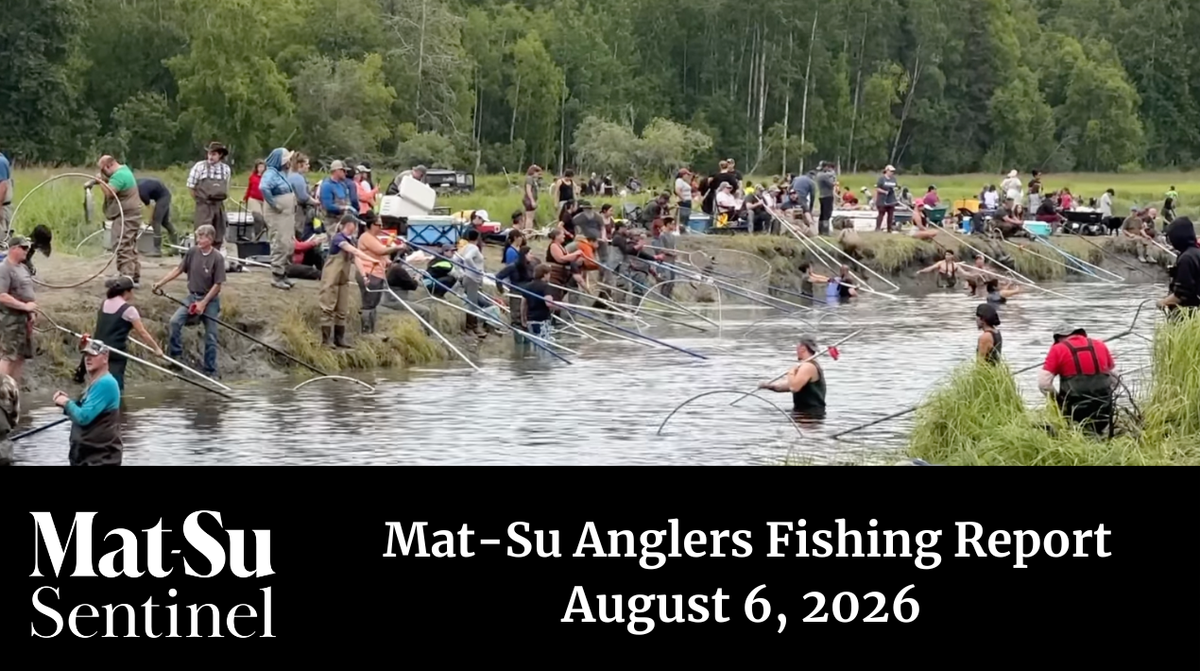
A large return of sockeye salmon to Fish Creek off Knik-Goose Bay Road prompted the Alaska Department of Fish and Game to increase the daily bag limit to six salmon, only two of which may be coho, from 5 a.m. Aug. 1 through 10 p.m. Aug. 15.
Fish Creek has become one of the few bright spots in an otherwise challenging Mat-Su salmon season. With salmon counts low at many other locations, more than 5,000 sockeye passed the Fish Creek weir each day this past weekend while the youth fishery was underway. The fishery is now open to anglers of all ages.
The legal fishing area is relatively small, but the abundance of ocean-run salmon and the larger bag limit will likely continue to draw anglers through mid-August.
Legal fishing hours are 5 a.m. to 10 p.m. daily. Bait and multiple hooks are allowed, and coho have also been moving upstream past the weir. Many anglers prefer to fish within a couple of hours of high tide. Avoid walking or getting stuck in mud below the high-tide line.
Eklutna Tailrace, Knik River and Jim Creek salmon fisheries
Sockeye counts at Jim Creek and fishing success at the Eklutna Tailrace and lower Knik River remain well below last year's levels through Aug. 3.
Even so, most of the Knik Arm drainage, including the weekend-only fisheries, remains open under standard sport fishing regulations. Bait is allowed throughout most of the drainage, and the daily bag limit is two coho. The exception is the Eklutna Tailrace, where anglers may keep three coho a day to take advantage of hatchery fish.
Emergency coho restrictions: no bait, one coho daily
Late Tuesday, Aug. 4, state fish and game officials announced an emergency order prohibiting bait and limiting anglers to one coho per day throughout the Susitna River drainage and the Little Susitna River from Thursday, Aug. 6, through Sept. 30.
The order states: "Additional action may be taken in the sport fishery as more information becomes available during the season."
That makes sense for the Little Susitna River, where the weir is operating again. But the Deshka River weir is no longer providing the in-season coho escapement data managers normally rely on for the Susitna drainage, and without that information, it's unclear what any further restrictions would be based on.
Regardless, the new restrictions will almost certainly reduce both sport fishing effort and coho harvest.
I asked Alaska Department of Fish and Game Director of Sport Fisheries Israel Payton on Monday whether bait fishing would be allowed on the Little Susitna River under standard regulations starting Aug. 6. He said managers were still discussing the issue and had not reached a decision.
Anglers who want to stay current on regulation changes can check the department's emergency order page.
High water that flooded the weirs has created uncertainty about coho returns to the Deshka and Little Susitna rivers. The Little Susitna River weir was back in operation and counting five species of migrating salmon as of Monday, Aug. 3.
For the past three years, the Little Susitna and Deshka river weirs have failed to count enough coho to meet each river's sustainable escapement goal, despite in-season commercial and sport fishing restrictions and closures. That raises an important question: Should bait fishing be allowed when managers lack the coho counts needed to determine whether a river's escapement goal will be met?
Deshka River and Susitna River coho
I talked with Deshka Landing Charters and Lodge owner Jim Tilton on Monday. He reported a couple of very good days of coho fishing over the past week, followed by a slow Monday. Guided anglers, he said, were struggling to catch more than one or two coho per boat on the Deshka River and Parks Highway tributaries of the Susitna River.
Tilton said it rained throughout Monday on the Deshka River and that water levels could rise again, making fishing more difficult. He added that similarly inconsistent fishing had recently occurred on Willow Creek and Little Willow Creek.
I also received a positive fishing report from the Susitna Landing/Sheep Creek area, though I wouldn't conclude that many coho are now available there based on a single trip report.
That inconsistency may discourage some anglers from making a coho trip. It likely won't deter the most dedicated salmon anglers, but below-average fishing opportunities may reduce even their number of trips — and poor coho fishing could have economic effects throughout the Mat-Su Valley.
On Tuesday, Tilton told me coho fishing had improved dramatically at the Deshka-Susitna confluence, with most charter anglers limiting out by 10 a.m. Water levels were also rising rapidly Tuesday throughout the Susitna drainage, a trend that could quickly change fishing conditions.
I also spoke Tuesday afternoon with state fisheries biologist Samantha Oslund. She said the Deshka River weir project — even if it could be reinstalled — would provide only partial information for 2026. Parts of the weir were carried miles downstream during the July flood, high water never fully receded afterward, and recent heavy rain in the headwaters is causing the river to rise again. A sonar counter installed near the weir site this year was also damaged and compromised by the flood.
Montana Creek Campground youth pink salmon derby
A staff member at Montana Creek Campground told me pink salmon were already being caught in Montana Creek ahead of the youth derby, scheduled for Aug. 8-9. Flood warnings and forecasts of additional heavy rain in the Susitna River drainage, however, leave the event's status uncertain.
For the latest information — including whether the derby is canceled — call Montana Creek Campground at 907-733-8255 before traveling.
Federal fishery coho management mishap
A couple of sources told me drift gillnetters fishing in the federally managed portion of Upper Cook Inlet exceeded the total allowable catch, or TAC, for coho salmon after harvesting more than 18,000 fish last Thursday, bringing the federal season total to 27,997 coho. If accurate, the fishery should have closed for the season.
I asked Alaska Department of Fish and Game Commercial Fisheries Manager Lucas Stumpf about the situation Monday. He confirmed the federal coho TAC had been reached during the July 30 federal fishing period. Federal managers, however, were unable to communicate the closure quickly enough to prevent another federal opening Monday, Aug. 3.
What value does a federal coho TAC have if it isn't followed? And what effect will exceeding it have on Northern Cook Inlet and Mat-Su coho fisheries?
An additional 8,619 coho were reported harvested in the federal fishery Monday, Aug. 3, during a year when severe coho sport fishing restrictions take effect in Northern Cook Inlet beginning Aug. 6. The state-managed Northern District commercial setnet fishery will also close that day.
Upper Cook Inlet personal use fishery reporting
The Kasilof River personal use dipnet fishery closes Aug. 7. With the last of the major Upper Cook Inlet personal use fisheries ending, permit holders should submit their harvest and effort reports through the Alaska Department of Fish and Game website as soon as possible. Those who don't file a timely report may lose eligibility for a personal use permit in 2027.
Good luck and fish on
Andy Couch has guided anglers in the Mat-Su Valley for more than 40 years. He is a member of the Matanuska-Susitna Borough Fish and Wildlife Commission and the Matanuska Valley Fish and Game Advisory Committee.
Statements and quotations in this column represent only the organizations or individuals specifically identified.