
Stalled Port MacKenzie rail project to get new life with $249 million federal grant
The grant requires $62 million in local funding that will be partially covered by the value of a borough land transfer.
What you need to know:
- The Alaska Railroad will receive $249 million in federal funding to complete a 32-mile rail link between Port MacKenzie and the railroad’s main line near Houston. The project also requires a $62 million local contribution that officials said will be covered by borough land transfers, gravel for construction and funding from the Alaska Industrial Development and Export Authority, or AIDEA.
- Railroad officials expect to restart work in May and say the rail link could be completed as early as 2029. The state previously spent $180 million on the project before construction halted in 2017 amid budget cuts.
- The project could lower freight costs, support mining and military operations, and spur industrial development at Port MacKenzie, officials said. Borough studies suggest shipping heavy cargo through the port could cost 40% less than shipping it through Seward.
- Short on time but need the local news scoop? Get free weekly news in your inbox for Mat-Su, from Mat-Su.
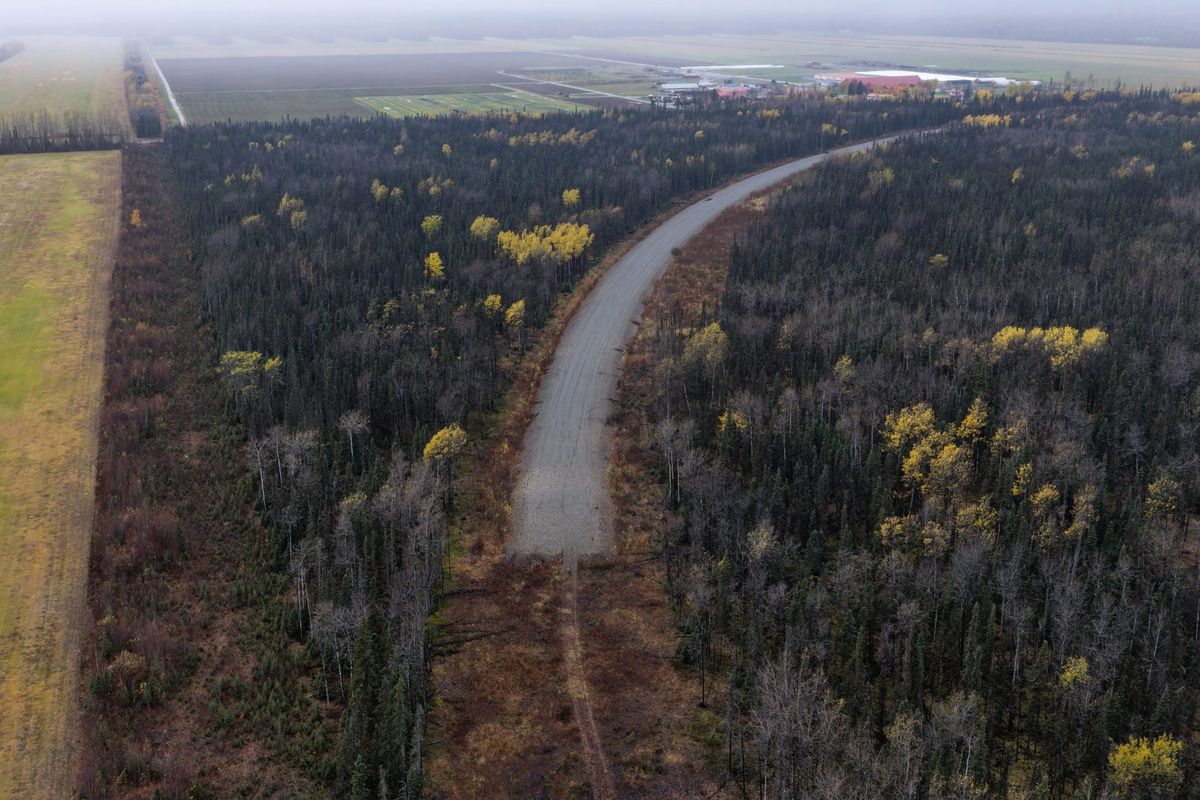
PALMER – The Alaska Railroad will receive $249 million in federal funding to finish work on the stalled 32-mile rail link connecting the Matanuska-Susitna Borough’s Port MacKenzie to the railroad’s main line near Houston, federal and state officials announced Monday.
The new funding requires a $62 million local cost share. The Alaska Industrial Development and Export Authority, or AIDEA, has agreed to cover about half of that, while the borough will contribute land and gravel to cover the remainder, according to an announcement. The railroad will construct and own the link and manage train movements.
Railroad officials expect to start work on the rail link in May and said it could be finished as early as 2029, Alaska Railroad President Bill O’Leary said in an interview Monday. A specific construction timeline will depend on a federal review of a previously completed environmental study and how quickly the project receives the funding, he said.
All needed permits were obtained earlier in the project, said Clark Hopp, the railroad’s chief operating officer.
The rail link has long been part of the Mat-Su Borough’s plan to develop Port MacKenzie to foster industrial development, create jobs and reduce the borough’s dependence on residential property taxes.
The state poured $180 million into the rail line between 2005 and 2017, when work halted amid state budget cuts. Unable to fill the more than $200 million shortfall, the borough looked for other ways to use the unfinished railbed, including a proposal to convert it to a public access road.
Meanwhile, the port has served occasional barge operators and ships bringing in bulk commodities such as cement and road salt. Investments in port improvements have also continued, mostly with federal funds.
Early in the rail link’s initial construction, some officials raised doubts about the project's economic feasibility. But the Alaska Miners Association offered strong support from the start, helping convince doubtful legislators to secure the state’s initial round of funding. More recently, a military buildup in Alaska has highlighted the potential use of a rail link to efficiently move equipment to and from installations in Interior Alaska, a factor in securing final approval for the new funding.
If constructed, the new rail route would provide a shorter, more direct route for moving certain types of freight to the Interior from Southcentral Alaska, currently a main entry point for heavy cargo.
Borough studies show that shipping heavy cargo through Port MacKenzie could cost 36% less than shipping it through Seward. Operators of the large Fort Knox gold mine near Fairbanks previously told Mat-Su officials that using the Port MacKenzie rail link could cut their costs of moving bulk supplies to the mine in half, according to sources familiar with the discussion.
U.S. Transportation Secretary Sean Duffy announced the new rail grant Monday during a ceremony at the Gateway Visitor Center in Palmer. Numerous state and local officials attended the event, including U.S. Sen. Dan Sullivan, Gov. Mike Dunleavy, U.S. Rep. Nick Begich and Borough Mayor Edna DeVries.
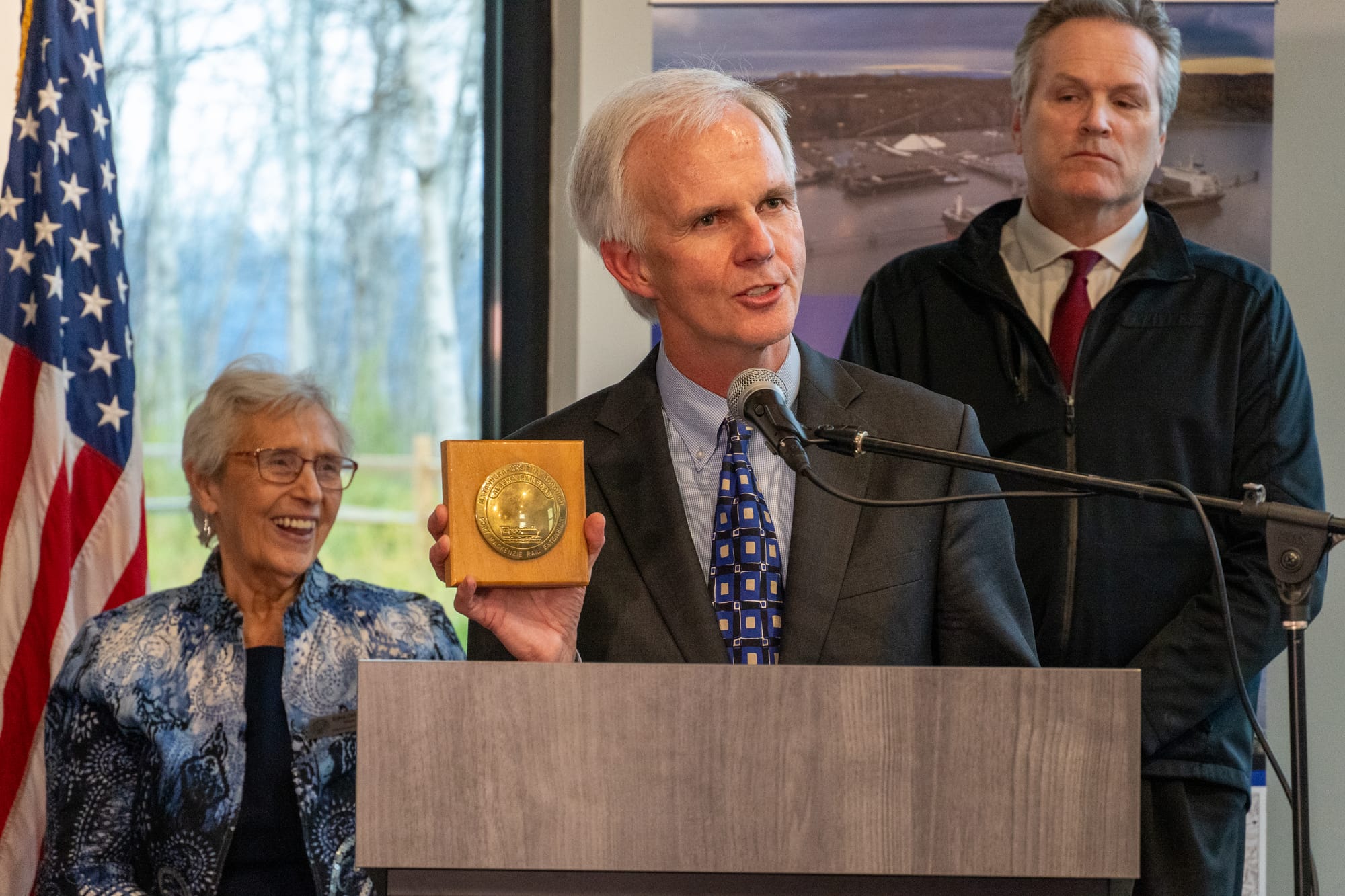
The grant was formally requested by the Alaska Railroad with support from the Mat-Su Borough, borough officials said. Duffy gave credit to Sullivan, Begich and Dunleavy for helping steer the funding through to final approval.
“This is important for America – it's important for America because the senator, and the congressman, the governor, they agree that we want American energy dominance, and if we're going to have American energy dominance, we can't look past Alaska. We have to invest in Alaska,” he said during the event.
Sullivan, a Republican who is in a tight race for reelection against Democrat and former U.S. Rep. Mary Peltola, said the announcement was not timed to coincide with his campaign.
“My advocacy and ability to deliver and relentlessness for Alaska knows no season,” he said during a news conference following the event.
Amy Bushatz contributed to this report.