
State agency plans Houston-area industrial park with data centers, distribution hub
The 30-square-mile parcel sits just outside Houston city limits.
What you need to know:
- Alaska land officials are considering transferring 30 square miles of land near Houston to the state's economic development agency for a proposed industrial and energy development district that could include a freight logistics hub, utility infrastructure, advanced manufacturing sites and data centers.
- The public comment period on the proposed land transfer is open through Aug. 19.
- Some local officials support parts of the plan, while others say it could have significant impacts on recreation and wildlife.
- Short on time but need the local news scoop? Get free weekly news in your inbox for Mat-Su, from Mat-Su.
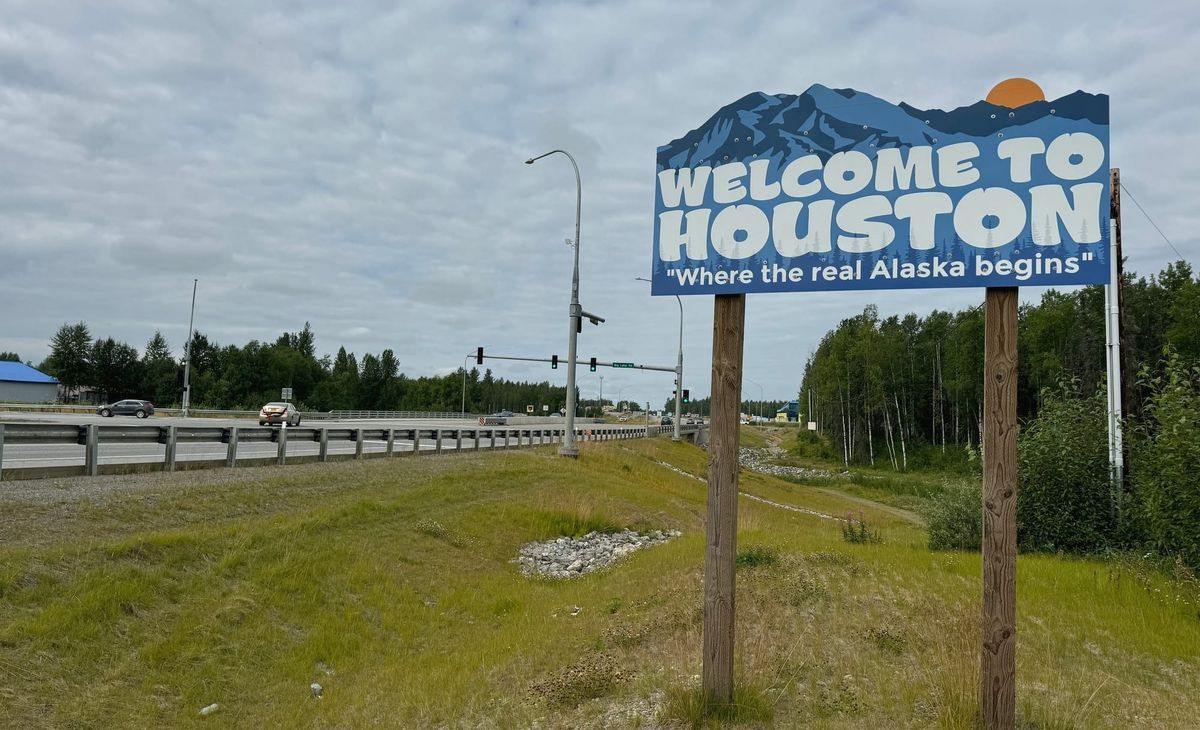
A 30-square-mile parcel of state land just north of Houston could be home to a new industrial park with data centers and a freight hub under a proposal from the state’s economic development agency.
The state Department of Natural Resources last week proposed transferring the parcel to the Alaska Industrial Development and Export Authority, or AIDEA, at no cost for what AIDEA calls a “multi-use industrial and energy development district.”
The new plans from AIDEA, whose other development projects around the state have sometimes prompted harsh backlash, could “foster job creation, attract private investment, and support long-term economic development opportunities in the Mat-Su region,” spokesperson Robyn Reyes said in an email Tuesday.
Multiple aspects of AIDEA’s proposal are a good fit for the area, according to some local officials. But the agency’s hope of hosting data centers is already prompting concerns, as are the potential impacts of the industrial park on a vast network of trails used for mushing and other recreation.
“A development like this? If they take away all of that wildlife and recreational trails, that's it — we don't get any of that back,” said Lisa Johansen, a Houston City Council member who has already proposed a ban on data centers within city limits.
The proposed “noncompetitive sale” by the Department of Natural Resources to AIDEA was first announced last week after AIDEA filed an initial application in December, according to a state land database. The parcel sits northeast of the Parks Highway.
Asked about the sale, department spokesperson Lorraine Henry shared only a brief statement saying the agency is inviting public comment on the preliminary decision through Aug. 19.
In a 41-page decision document released last week, the department said AIDEA’s proposed development would include the logistics hub near the Alaska Railroad and the Parks Highway; transmission infrastructure for utilities such as electricity and natural gas; “advanced manufacturing pads”; and “scalable data centers” that would use the utilities.
AIDEA’s project, the decision document said, would be in the public interest because it would create construction and operations jobs, diversify the statewide economy “beyond traditional resource extraction” and boost demand for materials, services and maintenance for local businesses.
The department did not release AIDEA’s application with the decision, and officials did not immediately respond to a request for a copy.
AIDEA responded to a request for comment with its own brief statement saying its objective is to “help facilitate economic development opportunities that advance industry, create jobs, and promote long-term economic prosperity for Alaskans.”
“At this stage, the proposal remains within (the department’s) public review process, and AIDEA has no additional comment beyond the information contained in the preliminary decision,” Reyes, the AIDEA spokesperson, said.
AIDEA owns other infrastructure around the state, including a shipyard in Ketchikan and a road used to haul zinc from a large mine to the Northwest Arctic coast. Some of its other active projects, including oil development in the Arctic National Wildlife Refuge and a proposed mining road in the Arctic that would cross a national park, have prompted significant backlash from advocates.
The Matanuska-Susitna Borough, where the property is located, does not regulate or require special permits for energy generation facilities or data centers, according to borough code.
Large new energy transmission lines require a borough permit certifying that utility officials held a series of public meetings about the project and have a plan for addressing residents’ concerns. They do not require borough approval.
Whether the borough should play host to an industrial park that could include a large data center became a flashpoint in March when its assembly voted 6-1 to designate three parcels for the purpose, overriding a veto by Mayor Edna DeVries.
The measure, which was initially approved in a 5-2 Assembly vote, directs borough staff to work with coal power developer Terra Energy Center Corp. to pitch other businesses on developing a data center or another project with large electric demand. Such projects, according to the Assembly-approved plan, would be located on borough land near Port MacKenzie, Big Lake or the proposed West Susitna Access Road.
Area officials, including Houston Mayor Carter Cole and Mat-Su Borough Manager Mike Brown, said they were not told about the new land transfer and development proposal before the natural resource department's public notice was released Friday.
Brown said he believes the planned logistics hub is a logical fit for that part of the borough, which is already home to other industrial uses, including gravel extraction.
The data center, however, is a different matter.
“An intermodal logistics hub that is connected to the Parks Highway and rail mainline? I could see that,” he said. “It's the data center that causes someone to go, ‘Hmm, what's up with that?’”
“If it didn't have that listed, I'd probably go, ‘Oh, a logistics center. That's not a terrible idea,’” Brown added.
Mat-Su Assembly member Ron Bernier, whose district includes Houston, said he supports AIDEA's development in the area and doubts a data center is a likely outcome.
“Let’s bring it — let’s build Alaska,” he said. “I don't see them putting a data center there. I don't think it's a very worrisome thing for people.”
In Houston, where the municipal boundaries abut a portion of the land the state is proposing to transfer, local officials have already been debating whether data centers belong within city limits.
An ordinance introduced to the City Council in June by Johansen would ban such developments because they pose a public safety hazard, “create a documented risk of accelerated permafrost thaw” and use water in volumes that “could negatively impact local water supplies,” the proposal states.
The council voted Thursday to postpone a vote on the measure until members’ next meeting Aug. 13 to allow discussion during a work session that has not yet been scheduled.
“I'm anti-things that aren't going to give back to the community,” Johansen said at last week’s meeting. “Let's concentrate on solutions that are going to bring something back to the community.”
Johansen said that in addition to her concerns about the impact of a large data center, the proposed development could harm area wildlife and the trails used for recreation and dog racing. She said she plans to draft a city council resolution opposing the plan.
This story was reported in collaboration with the Anchorage Press.
-- Contact Amy Bushatz at contact@matsusentinel.com.
This story was updated July 15 to note that AIDEA did not respond to a request for a copy of its application for the land parcel.