
State begins early work on Susitna River bridge as West Su road project moves forward
The project is the first phase in a proposed road that would stretch more than 100 miles from near Big Lake to a mining area near Rainy Pass.
What you need to know:
- The Alaska Department of Transportation has begun preliminary work on a proposed 22.5-mile road and a new Susitna River bridge, with an environmental review underway and geotechnical drilling in progress. The bridge's preliminary cost estimate is $100 million.
- The road would provide access to recreation areas and Matanuska-Susitna Borough lands while improving access for potential oil, gas and mineral exploration. Officials say it could serve as the first phase of a larger, 99-mile industrial access road, though funding for that expansion has not been secured.
- Opponents, including some nearby landowners, say the project could harm salmon habitat, wetlands and wildlife while raising safety concerns about mixing public traffic with industrial vehicles. Financing for the larger road project also remains uncertain, with significant permitting and funding hurdles still ahead.
- Short on time but need the local news scoop? Get free weekly news in your inbox for Mat-Su, from Mat-Su.
Alaska’s Department of Transportation and Public Facilities has started preliminary work on the planned West Susitna recreation and access road and a new Susitna River bridge.
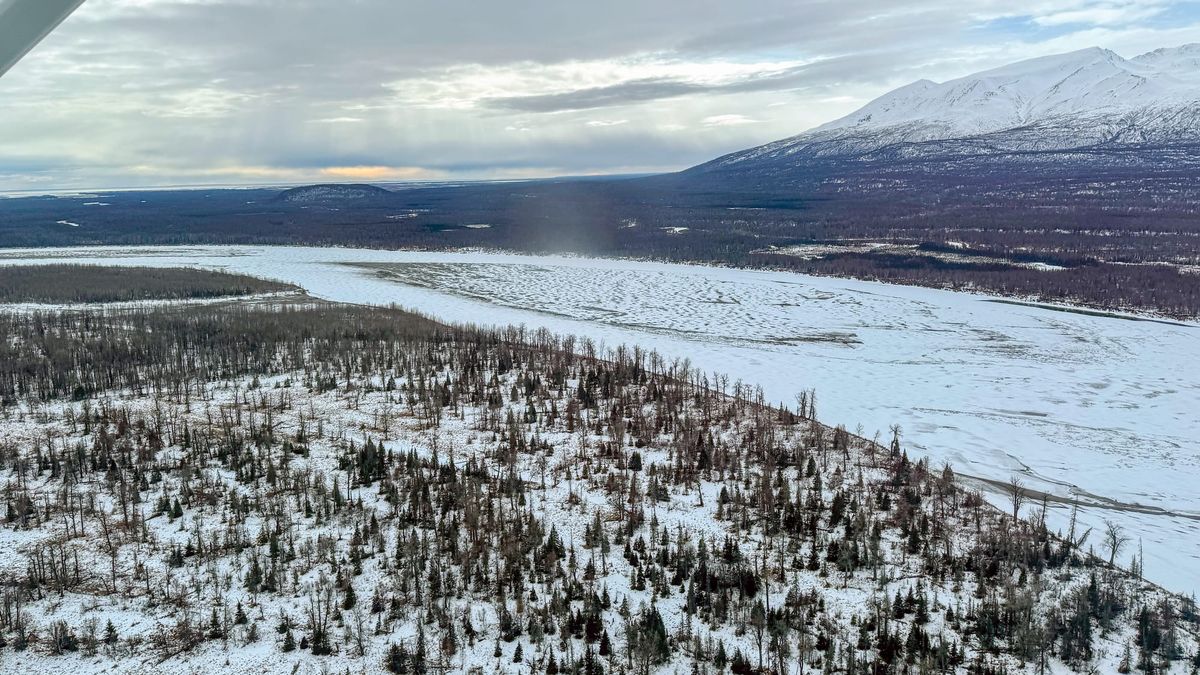
If built, the planned 22.5-mile road would begin on the West Susitna Parkway in Big Lake and extend to the new bridge and several miles beyond. It would create vehicle access to recreation areas as well as lands owned by the Matanuska-Susitna Borough on the west side of the Susitna River.
An environmental assessment for the project is underway and will be available for public review later this year, state Transportation Commissioner Ryan Anderson said in an interview last week. Contractors are now drilling test holes to gather geotechnical information for the bridge. The project is estimated to cost $100 million.
Work on the project slated for the coming winter includes establishing initial access to the bridge site and purchasing and stockpiling materials for later construction, state transportation spokesman Justin Shelby said.
The $100 million cost estimate for the bridge is preliminary, he said. It will be updated after geotechnical work at the site is completed. An estimate on when it will be done was not immediately available.
The bridge is key to any further development of the region, which includes 6 million acres of undeveloped land owned by the state and the Matanuska-Susitna Borough.
The potential land uses are not just recreation and mineral development but also facilitating oil and gas exploration on lands along the west side of Cook Inlet, according to Hilcorp Energy, the region’s major oil and gas producer.
Hilcorp has said onshore lands along the inlet’s west side are prospective for new discoveries, but exploration is hindered by a lack of access, Luke Saugier, the company’s senior vice president for Alaska, told a legislative committee earlier this year. Currently, drill rigs and other equipment for exploration must be barged across the inlet, which imposes high costs and places seasonal limits on activity, Saugier said.
Having a new bridge across the Susitna River and 20 miles of additional road access would reduce costs and simplify the logistics to support new drilling, he said. That’s important because existing gas fields supporting space heating and power generation in Southcentral Alaska are being depleted, and more gas is needed, according to the state Department of Natural Resources and Alaska utility officials.
The state transportation project could also become the first phase of the much longer West Susitna Access Project overseen by the state-run Alaska Industrial Development and Export Authority, or AIDEA.The proposed 99-mile industrial access road would extend northwest to the Skwentna area and end at an airstrip near Rainy Pass used by newly U.S.-based Nova Minerals to support exploration of gold and antimony deposits.
While the state has funding in hand for the initial 22-mile road and bridge, it has not yet secured financing for the industrial road to be built farther west or the environmental review needed for the project to move forward.
While some fishing lodge owners and landowners on rivers in the area, including the Skwentna, Yetna, and Talachulitna, told state development and mining officials at a meeting at the Skwentna Roadhouse last year that they support the project, others said they worry it will have outsized environmental impacts on a region that has remained largely untouched by development.
The Susitna River Coalition, a Talkeetna-based organization of recreational users and residents interested in environmental protection, opposes the project.
“The road will have impacts on the area’s important salmon and migratory bird habitats,” coalition officials said on the organization’s website. “The region is made up of wetlands and includes the western portion of the Susitna Flats Game Refuge, the top waterfowl hunting area. The waterways support abundant salmon populations. The Talachulitna River, which the road would cross, is one of the premier fishing locations in Alaska.”
Some area property owners and the Susitna River Coalition have also raised concerns over safety issues. AIDEA has said the extended industrial road will be open to public use. But allowing that would put private vehicles on what is likely a narrow industrial road with heavy trucks supporting mining operations, opponents said.
Paying for the project is also a challenge.
The state legislature this year approved half of the federal funds state officials say they need to pay for the next steps of the 22-mile recreational section overseen by the transportation department.
That effort includes route research and related environmental reviews. Gov. Mike Dunleavy initially proposed $94.9 million for the work, but the state House Finance Committee rejected the funding request. Republicans in the House later used a floor amendment to restore $47.5 million.
State officials have not published an estimate for the cost of the extended road beyond the first 22.5-mile phase, but the Susitna River Coalition estimates that $350 million will be needed.
Construction of the second, longer section would likely ultimately be paid for and owned by AIDEA. Early plans call for the authority to finance it with bonds backed by mining companies exploring in the region. This is similar to the way the authority financed and built the Red Dog Mine road and port in Northwest Alaska in 1989.
AIDEA wouldn’t sell the road bonds until Nova Minerals finds more ore and builds a mine, officials said, a step that is likely several years away. AIDEA’s bonds would also have to be backed by shipping contracts for use of the road, officials said at the Skwentna meeting last year.
AIDEA officials are also still working on initial planning and permitting for the road. Last year, the authority applied to the U.S. Army Corps of Engineers for a required federal Clean Water Act Section 404 permit, one of the first required steps.
AIDEA spokesperson Robyn Reyes said the Corps is still reviewing the application. That process can take years, Army Corps officials said after the 2025 Skwentna meeting.
Right now, the authority is using 2022 state budget funding to pay for its work on permits for the extended road and has not received any federal funding for the project, Reyes said in an email this week.
-- Contact Mat-Su Sentinel at contact@matsusentinel.com
This story was updated July 20 to clarify the source of the funding approved this year by the legislature and its uses. The story was updated July 21 to further clarify funding sources. This story was updated July 22 to state that Nova Minerals is U.S. based following a recent company relocation.