
‘Zero transparency’: Houston officials oppose land transfer process linked to data centers
The city council passed a pair of resolutions objecting to the process used for the proposal.
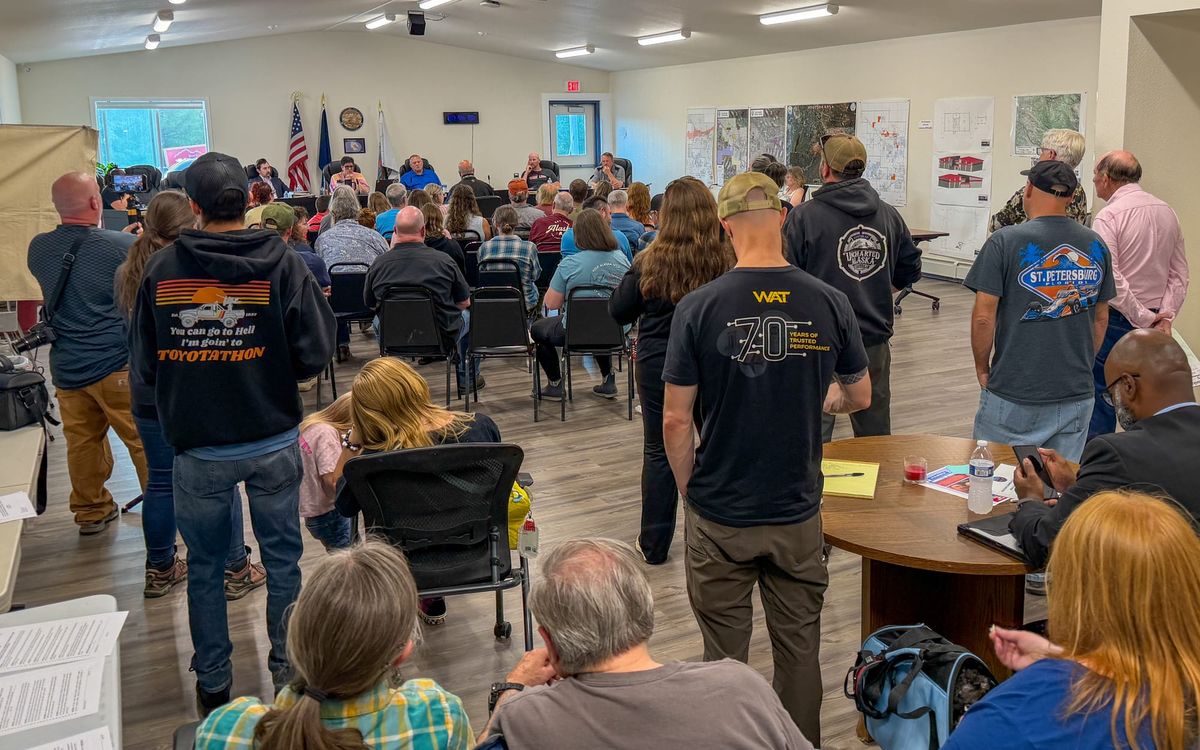
- The Houston City Council voted unanimously to oppose the process behind a proposed transfer of 30 square miles of state land to the state’s development agency, saying the city and residents were left out of early discussions.
- A proposal to block data centers within city limits failed 4-2, with some council members favoring broader zoning rules instead. Mayor Carter Cole said he supports the land transfer itself but criticized how the state handled the process.
- If approved, the land transfer could pave the way for logistics, energy infrastructure, manufacturing and data centers, according to an agency proposal. The plan has triggered concerns about environmental impacts, recreation and the area’s rural character.
- Short on time but need the local news scoop? Get free weekly news in your inbox for Mat-Su, from Mat-Su.
HOUSTON — A proposal to transfer a large swath of state land near Houston to the state’s economic development agency for possible industrial use should never have moved forward without first consulting city officials and residents, Houston City Council members said Thursday.
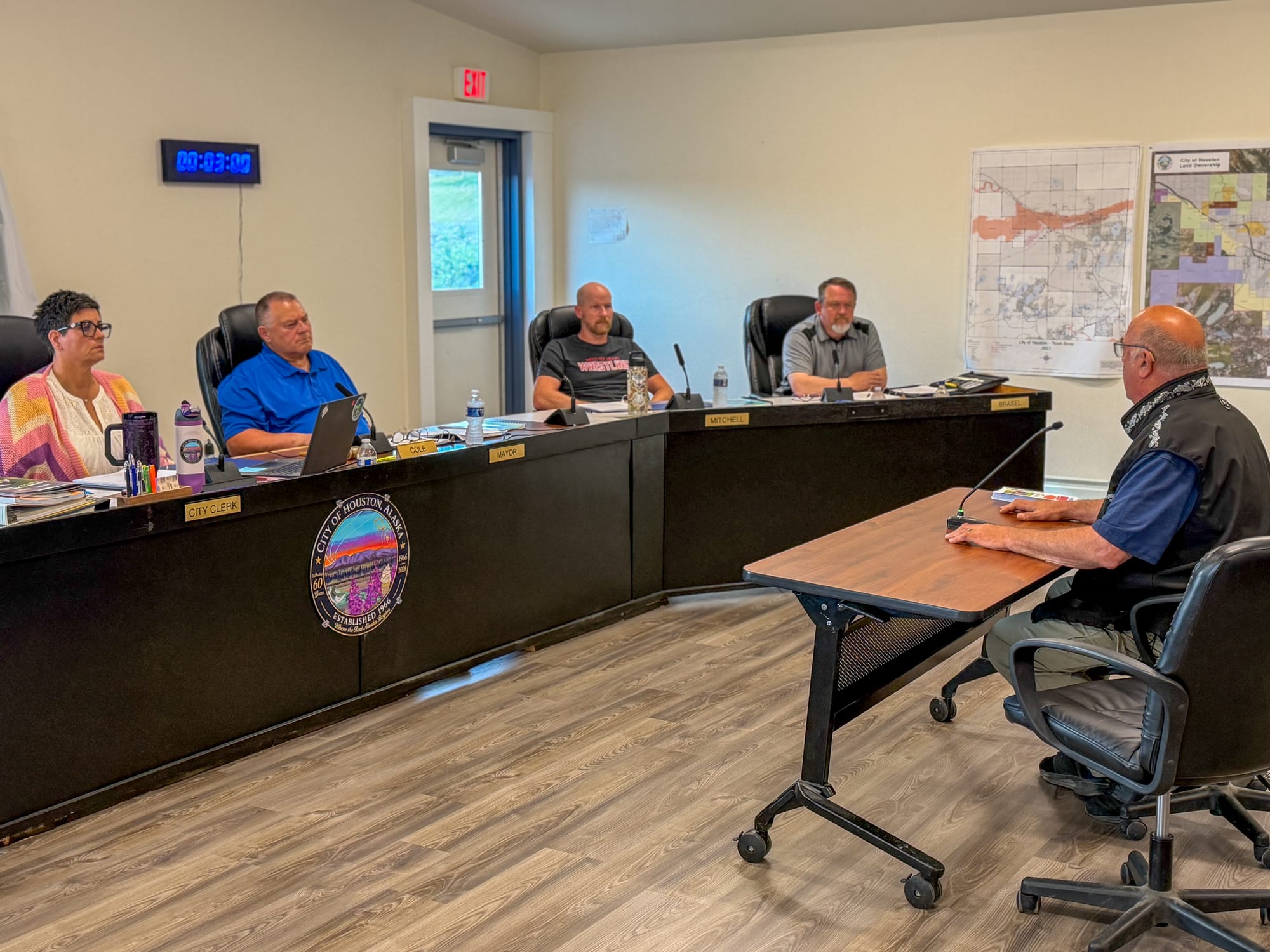
"There was zero transparency. They had made preliminary decisions before we made or even had a decision to make. That does not involve the community. That does not involve the city. This is intentional," council member Jeffrey Brasel said during the meeting.
City and Matanuska-Susitna Borough officials said last month they first learned of the proposed land transfer from a Department of Natural Resources public notice published to a state website July 10 and forwarded by Mat-Su Sentinel as part of news reporting about the plan.
The proposed transfer would move 30 square miles of rural land from the Alaska Department of Natural Resources to the Alaska Industrial Development and Export Authority, or AIDEA.
Possible uses include a logistics hub near the Parks Highway and Alaska Railroad, natural gas and electricity transmission infrastructure, "advanced manufacturing pads" and "scalable data centers," according to the proposal DNR released last month.
The council unanimously approved two resolutions opposing DNR's land transfer process – one for the AIDEA property and one for an unrelated parcel transfer to the state's housing finance corporation – because officials left the city out of the decision-making process.
An ordinance to block data center construction within Houston city limits failed 4-2, with council members Callie Courtney and Lisa Johansen voting yes.
Council members who voted against that ordinance said they support outlawing data centers but want to do so through zoning laws that aren't industry-specific because broad regulations would be better than addressing each type of development separately.
"If our zoning laws are such that nobody can come in and just do whatever they want, then that solves a problem in the future for multiple industries," Council member Kent Mitchell said during the meeting.
Brasel said he plans to propose a resolution imposing a long-term moratorium on data center construction while such zoning rules are crafted.
About 70 people attended Thursday's meeting, but many left during a lengthy report from the city attorney on an unrelated matter, well before the city’s public testimony on the transfer and data centers began.
A state public comment period on the plan closes Wednesday night.
The proposed parcels, currently held by DNR, border Willow, Meadow Lakes and Houston, with a small section crossing into Houston city limits, according to a map DNR distributed that was reviewed by Meadow Lakes Community Council officials. It includes a series of popular mushing, ATV and snowmachine trails.
AIDEA officials said the exact boundaries of the parcel and how it intersects with Houston and other parts of Mat-Su won't be known until after a land survey is complete.
The proposed transfer has drawn widespread backlash from residents in Mat-Su and across Alaska, many of whom said they're particularly worried about the construction of large data centers and their potential environmental impact.
Others said they worry any large-scale industrial construction could affect recreational use or the area's rural lifestyle.
No specific projects, including any data centers, are proposed or approved for the parcels, AIDEA officials said in an opinion column sent to news outlets last month.
"AIDEA's development plan identifies possibilities, not commitments: rail-served logistics, shared utility corridors, advanced manufacturing, local material production, energy infrastructure, workforce housing and, potentially, data centers," the column states. "Listing a possible use lets the public and reviewing agencies see the range under consideration; it does not mean any of it will be built."
The agency plans to work to keep existing recreational trails open for use regardless of what is built, officials wrote in the column.
Houston Mayor Carter Cole said he opposes how the project was announced but not the transfer itself. AIDEA officials told him they would consider syphoning off 10,000 acres for the city of Houston to use for city projects or to protect recreational space, he said.
"If we came up with a good reason why it should be in Houston, it could probably end up in Houston," he said. "If we don't take that action now, we may never get that chance again."
Cole said AIDEA officials offered to attend Thursday's meeting, but he asked them to wait until September, after the public comment period ends.
State Rep. Kevin McCabe, whose district includes Houston, defended AIDEA's proposed land takeover during the meeting, saying he believes the plan could bring development and new revenue to the city.
But if Houston doesn't want it, he said, he's willing to back the city's official position instead.
"What I do support is finding ways to get the city of Houston more revenue, the state more revenue," he said. "If you don't want it and you decide that the land itself, by itself, is more useful for trails, for dog mushing and hiking and all that, that's fully up to you, and I support that 100%, 1,000%."
DNR officials said they're aware of Houston's resolutions objecting to the transfer process but can't respond during the open comment period. The city's resolutions will be reviewed as part of the proposal process if they're officially submitted as comments, DNR spokesperson Lorraine Henry said in a statement.
-- Contact Amy Bushatz at contact@matsusentinel.com