
In Mat-Su, neighborhood schools double as community hubs. Closing them has sweeping impacts.
From emergency shelters and food banks to sports and church services, school buildings across Mat-Su serve as important community connectors, residents and officials said.
What you need to know:
- Mat-Su schools serve as community hubs far beyond the classroom, hosting food pantries, sports programs, churches, public meetings, elections and other activities, particularly in rural areas with few alternatives.
- Recent school closures and budget pressures threaten those community functions. Glacier View’s former school has been preserved temporarily as a community center, while closures such as Larson and Meadow Lakes have created uncertainty for sports, food assistance and other programs that relied on school facilities.
- Schools provide a critical safety net for local families and children. With nearly 17% of Mat-Su children experiencing food insecurity, school-based meal programs and volunteer food pantries help fill gaps while also connecting families with broader community support.
- Short on time but need the local news scoop? Get free weekly news in your inbox for Mat-Su, from Mat-Su.
TALKEETNA – LouAnne Carroll-Tysdal knew some children in her rural Mat-Su community sometimes went hungry. But the problem hit home when her granddaughter returned hungry from a sleepover.
Her friend's family, she said, couldn’t always eat when they wanted because they wouldn't have enough for later.
“She told me a story about the friend's house she went to, where they had to be very careful about what they ate because there wasn't much food in the cabinet – it came out in bits and pieces,” she said. “Her friend also didn't do well participating in sports because she didn't have food for meals.”
The experience is one of the reasons Su Valley Jr/Sr High School is now home to the Upper Susitna Food Pantry's no-questions-asked food closet, a program overseen by Carroll-Tysdal, who now serves as the nonprofit's executive director. About 50 of the school’s about 230 students regularly use the pantry, taking bags of food home for their families, she said.
Basic nutrition is just one way school communities across the Matanuska-Susitna School District support the families and neighborhoods around them.
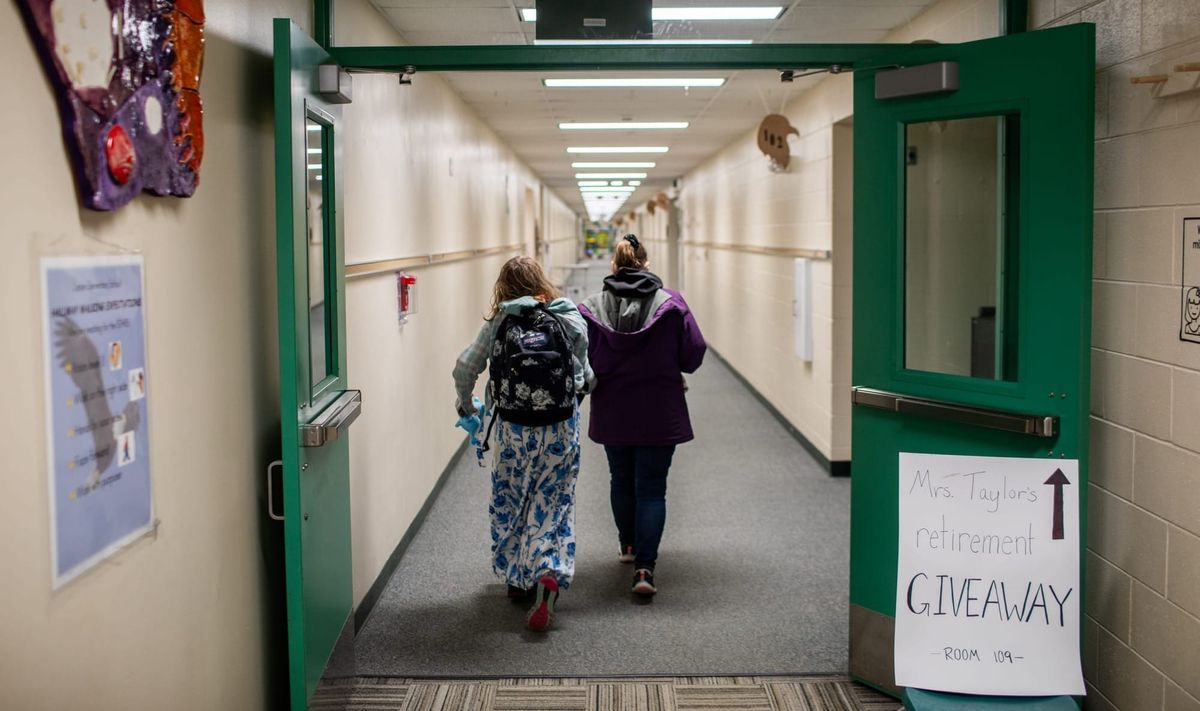
But it's not the only way. In many parts of Mat-Su, school buildings also serve as de facto community centers, providing space for after-school sports clubs, religious groups, voting booths, public meetings and other vital points of civic connection.
That role has grown increasingly important, organizers and user groups said, following the budget cuts and falling enrollment-fueled closures of Glacier View School and Meadow Lakes and Larson Elementary Schools last year, and the looming possibility of more to come.
Statewide, nine additional schools closed this year under similar funding and enrollment pressure, bringing to 28 the total school closures across the state over the last three years.
Preserving a community space
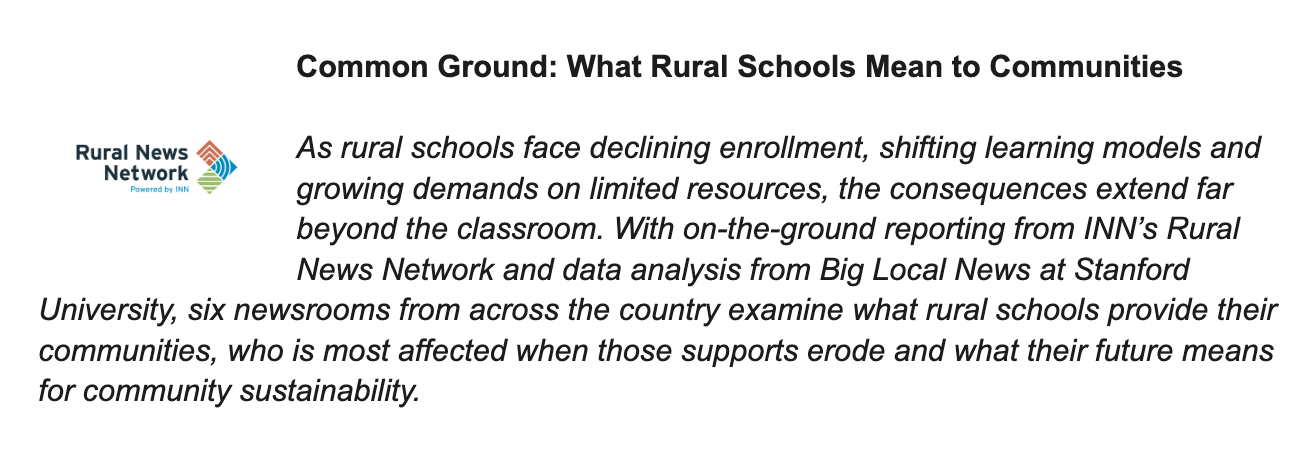
Just off the Matanuska Glacier, 61 miles from the nearest grocery store in Palmer, student handprints and artwork still adorn the walls of the Glacier View Community Center, months after the rural enclave’s only school was converted into a community space.
The Matanuska-Susitna Borough School District closed the facility at the end of the 2025-26 school year amid declining enrollment and a funding crunch. About 10 students had to find other ways to attend school. Most turned to homeschooling rather than ride a bus more than an hour to another district school, former staff members said in an interview last month.
In May, the Matanuska-Susitna Borough Assembly voted to hire a part-time manager and reopen the building for community use. It is the only borough service funded by taxpayers in an area where property owners say they collectively contribute more than $500,000 to Mat-Su’s areawide property tax pool.
The building is the only publicly owned facility where the community of about 350 can gather, said Amber Allen, a former administrative secretary at the school who also worked as a lunch monitor and substitute teacher. It serves as a polling station and an emergency shelter, and hosts community council sessions, movie nights, student recitals and other meetings. Residents recently met there to discuss a proposed hydroelectric project they say could have a dramatic environmental impact on the area.
“It really is kind of like the epicenter of the community,” Allen said. “Let's say we didn't have the school building to house the elections — where would we go?”
The assembly approved $140,000 to keep the building open with a part-time employee until next July, when the funding cycle resets.
But residents are still grappling with how the facility should be run, how often it should be open for free public access, when and how people can borrow books left behind by the school district, and whether community members should have to pay to use the building.
Allen and other community members worry that unless they demonstrate the center’s value through active use before budget debates resume in the spring, the assembly could eliminate its funding.
“We have until then to figure out what we're doing, and how the heck we’re going to do it,” she said.
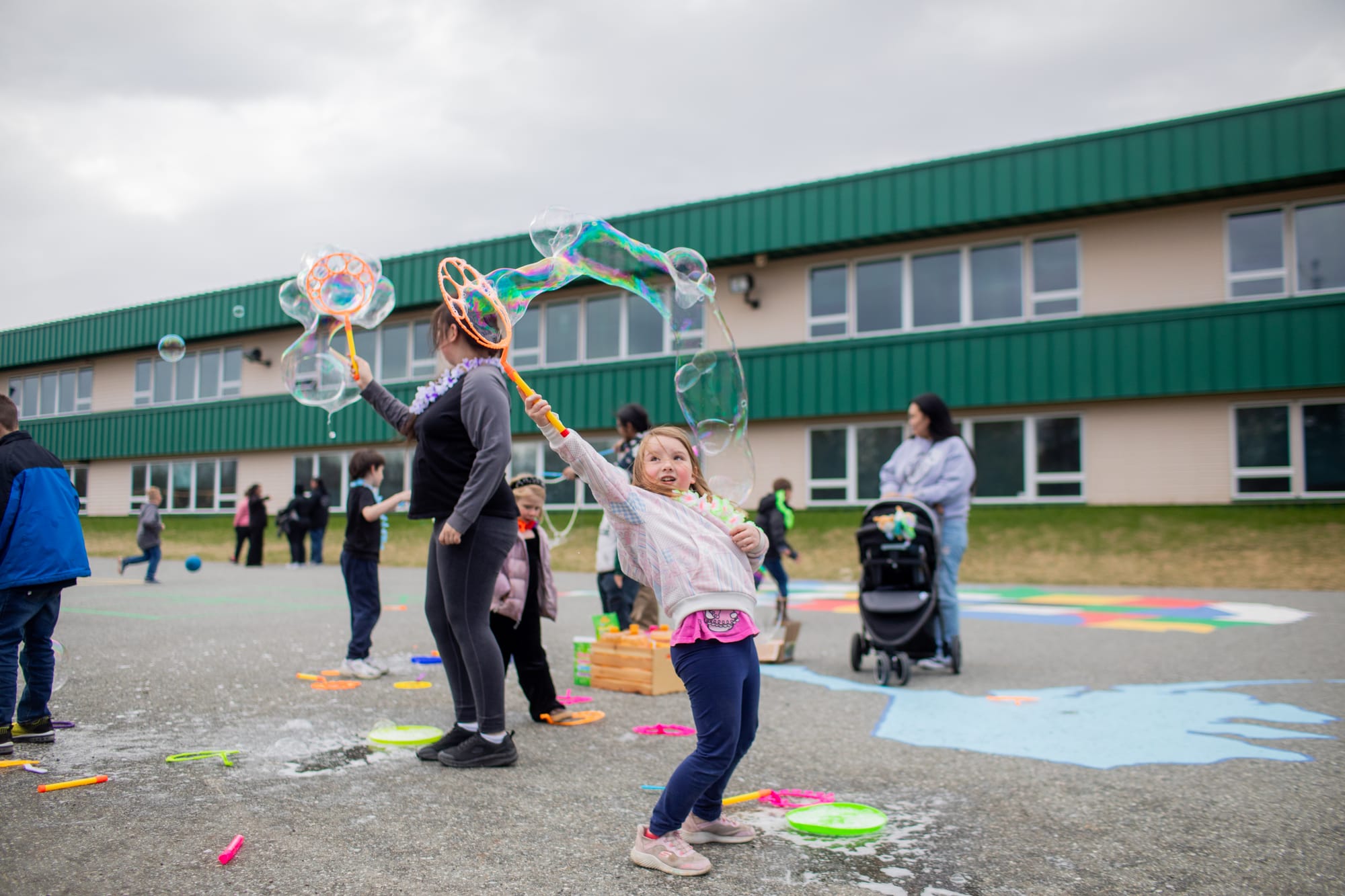
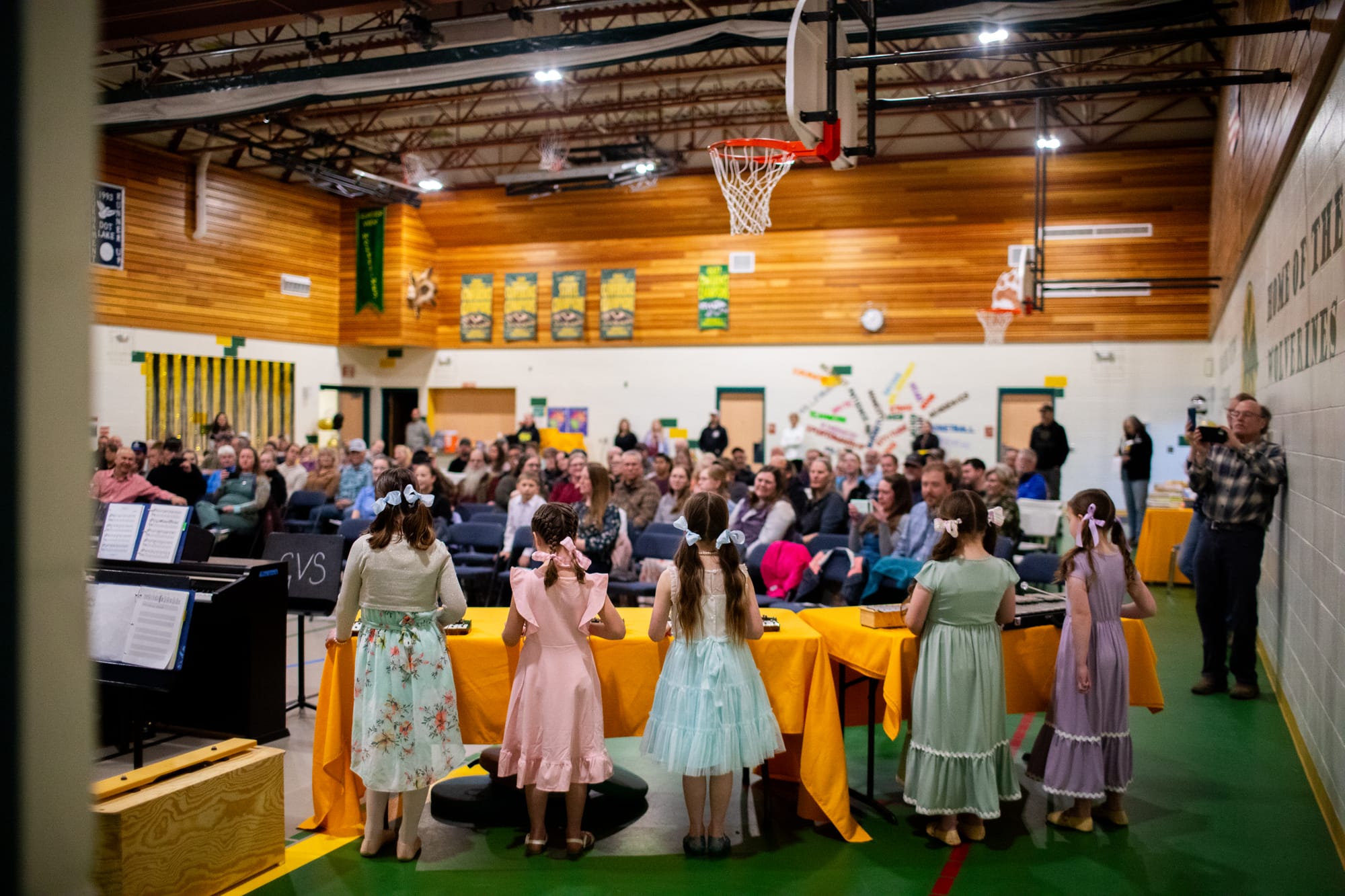
(Left) Elizabeth St. John, a second grader at Larson Elementary, plays with bubbles during the school's farewell luau on May 20, 2026. (Elise Giordano/Mat-Su Sentinel). (Right) Glacier View School's first and second graders play alongside the large piano ensemble during their spring program on May 5, 2026. (Mat-Su Sentinel/Elise Giordano)
Creating positive connection points
While Glacier View is the only Mat-Su school officially operating as a community center, it is not the only school building that functions as one, district Superintendent Randy Trani said.
“There’s this history that communities have with those facilities,” he said. “They serve a community purpose that is additional to just a K-12 school.”
Despite the system’s $25 million in cuts and school closures this year triggered by lagging state funding and falling enrollment, Trani recently created two public affairs positions to better highlight what he sees as the good things happening across the district and build community support for the school system, he said.
“Negativity sells, and the algorithms feed it to us,” he said. “We are making a really concerted effort district-wide to just flood the airwaves with the thousands of good things. … The world has changed, where if we don't change with it, one of the consequences is we'll close more schools because we don’t have good messages out there.”
The district’s facility rental program offers another way to connect schools with the broader community by making school buildings available as affordable rental spaces, Trani said.
The district charges fees to help cover wear and tear and cleanup. They range from $12 to $60 per event, plus $30 per hour for janitorial support, depending on the space rented and whether the user is a nonprofit organization.
During the 2025-26 school year, the district logged 740 rentals from a wide variety of organizations, though officials said the actual number was likely higher because some rentals were arranged directly with individual schools and not officially registered.
One registered user is Radiant Church, a Protestant congregation that rents Teeland Middle School for Sunday morning services. Pastor Caleb Richardson said using the space comes with challenges, including weekly setup and teardown, but saves the congregation the expense of owning a facility it would use for only a few hours each week.
Radiant was one of more than a dozen religious groups that rented district facilities during the 2025-26 school year, according to district data. Richardson said his congregation of about 300 people, which has also rented space at Valley Pathways and Palmer High School, is grateful for the opportunity to use school buildings as community spaces and looks for ways to give back. The church now has a barbecue trailer it uses to provide free food at school gatherings across the area and hopes to expand its community outreach over time, he said.
“One of the things the church is — it's a community of people. I don't think it's meant to be isolated,” he said. “We're meant to be in the city for the city. We exist here, so how can we serve?”
That sense of connection between schools and their communities is not as common elsewhere, Richardson said. Before starting the Mat-Su congregation, he helped launch similar churches in Juneau and Fairbanks, where he said the process to rent schools was more difficult.
“When we moved here, one of the things that was so encouraging is that schools and community seem to be more tied together,” he said.
Supporting neighbors through sports
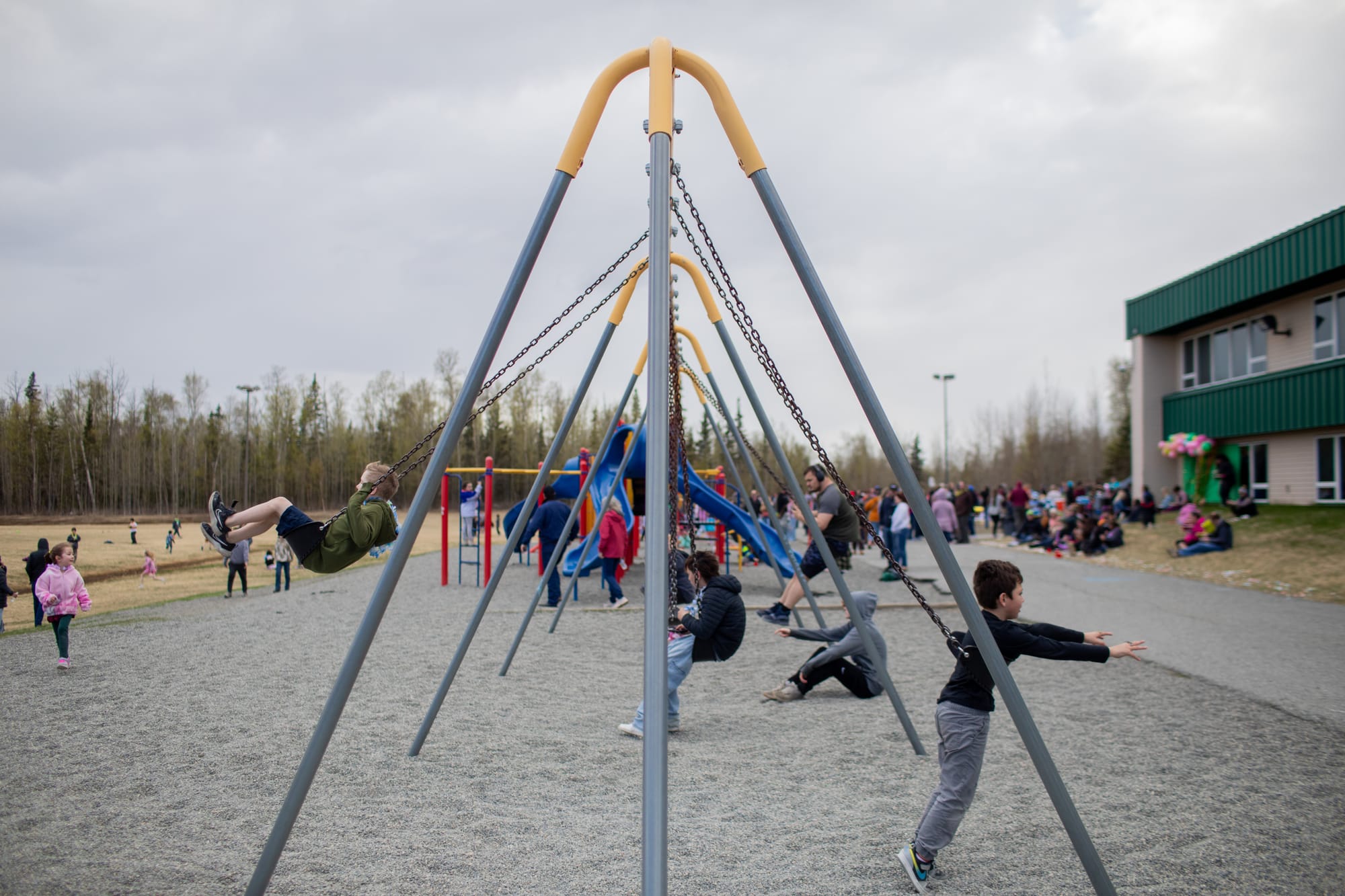
While churches and religious groups use school buildings to provide spiritual connections, other organizations rent them to serve local youth in a different way: sports.
Across Mat-Su, at least 50 youth and adult sports organizations have rented a school facility or field since 2023, accounting for nearly 1,100 games, practices or sports-related meetings as of July, according to district data. Organizations request space through the district's online reservation system.
Before it closed last spring, Larson Elementary School fielded at least 50 sports-related event requests during that period. Nearly half came from youth baseball programs, with the remainder spread across tennis, fast-pitch softball, basketball, volleyball and soccer.
Extracurricular sports are important for youth because they teach kids how to work through success and failures in a supportive setting, said Dave Combs, president of the Palmer Little League and Alaska Glacier Bears baseball.
“It's learning how to deal with that," Combs said. "If you don't learn it here, where else in this community do you learn that? That's grit. That's perseverance."
The schools give sports an affordable place to do that, Combs said. Larson’s central location along the Bogard corridor worked for Glacier Bears families across the Valley in a way other sites don't. About 90 kids ages 10 to 14 belong to the competitive youth baseball program, which feeds directly into high school athletics, he said.
“Those winter sports that need the gyms get the priority, which they should. I have zero issues with that. But it also limits the places for us to even practice,” Combs said.
Tennis Afterschool Zone, or TAZ, was also a frequent user of Larson's facilities. Jacob Rankin, regional manager of Recreational Tennis Alaska, said TAZ caps each weekly class at 20 kids. The program at Larson routinely came close to that limit, drawing roughly 40 kids across its sessions last fall, he said.
Rankin said TAZ is more interested in getting a racket in kids' hands than building a competitive youth team.
"Especially on the recreational side, tennis is a very social thing. It's low stakes, especially at the beginning," Rankin said., "We all feel a little more social when we're active. The isolation is a real threat that we have today."
Rankin said his organization, like others, begins requesting winter gym space in early summer. He discovered Larson might not be available only after he started the process last month. Without that space, he expects closer to 30 kids total across the Valley's remaining TAZ sites.
Larson’s building reopened to students this week as the new home of Birchtree Charter School. While Mat-Su charter school facilities have not typically been available for after-hours rentals, district officials said Birchtree’s new location will be. The rebranded facility was not yet listed in the district’s reservation system at this time of this story, although both Larson and Meadow Lakes were still listed as of early this month.
Rankin said the uncertainty created by school closures and confusing rental information extends beyond a single building. Larson isn't the only school the district has closed, and it may not be the last, he said.
“What happens to our competitive sports programs? What happens to our youth programs?” Rankin said. “Where do the kids go?”
Feeding the community
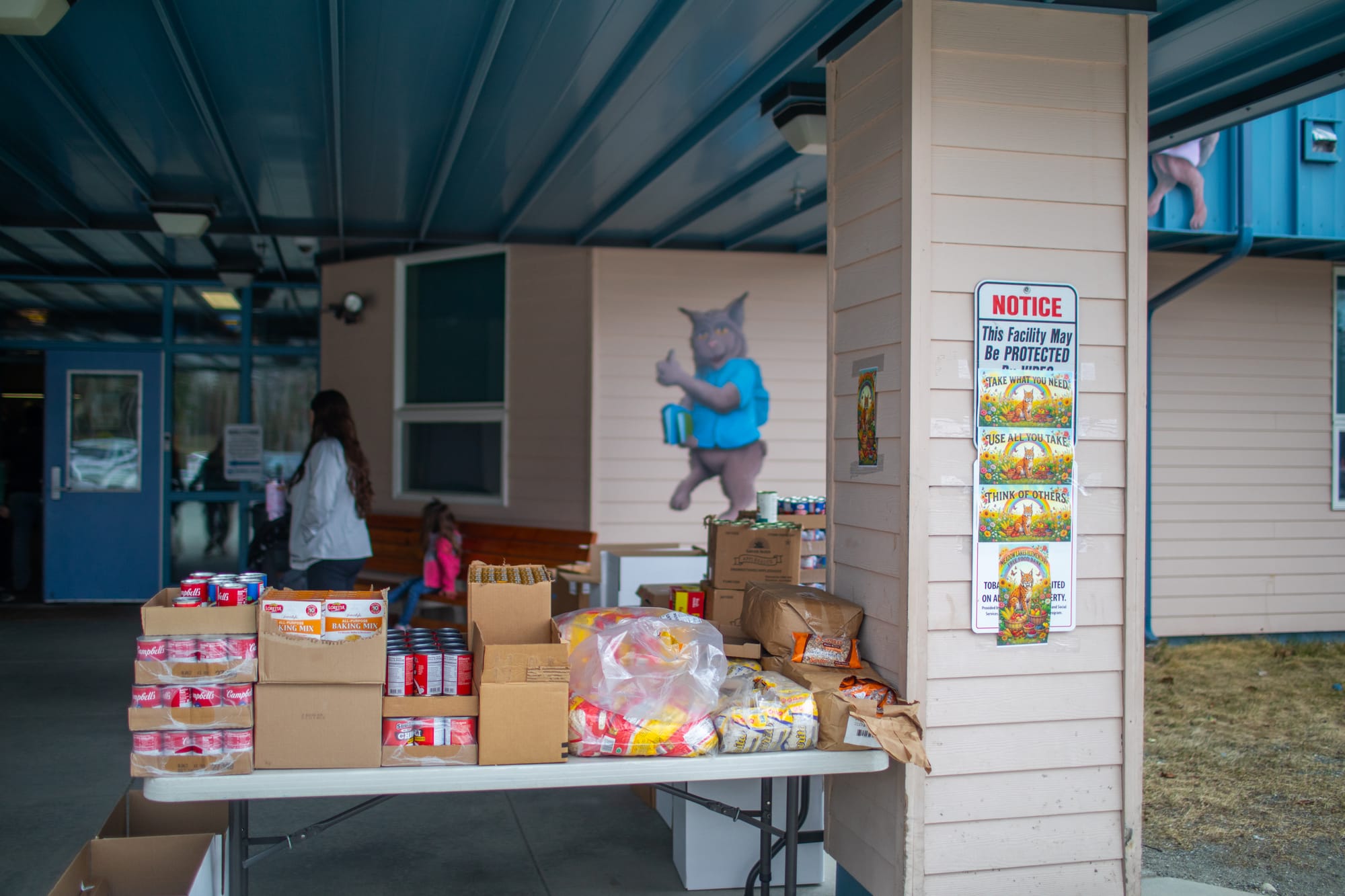
When Meadow Lakes Elementary School hosted a final party before closing for good last year, staff placed the remnants of its food pantry on a table outside the front door so families could take what they needed one last time. The program was a passion project for the school’s counselor, former Meadow Lakes staff said. As of this week, it had not moved to a new school location.
Other schools, such as Su Valley, also host informal food closet programs stocked by volunteers, staff and administrators to keep students fed so they can grow and focus on learning, organizers said.
Just where they are and how often they function is not tracked by the district because the programs operate on a school-by-school basis, administrators said. They are available to the district’s thousands of full-time students, and hundreds of homeschool students who visit the buildings for activities or to take individual courses.
Nearly 17% of children in Mat-Su are considered food insecure, according to 2024 estimates from nonprofit Feeding America, the latest available. That rate was on the low end compared to the state's other large districts. The rate was 19.6% in Kenai, 18.8% in Fairbanks and 18.4% in Anchorage and 16.4% in Juneau.
The district’s nutrition services program uses federal subsidies to provide free and reduced-price meals during the school year and free food boxes at stops around Mat-Su during the summer.
More than 6,800 students received free or reduced-price meals on school days during the 2025-26 school year, the latest date for which data is available. And this year, nine district schools with about 1,500 students will give both breakfast and lunch for free each day under a federal nutrition program.
But volunteers at schools across the district said those programs often aren't enough.
In Wasilla and Palmer, the student-led Sandwich Project distributes hundreds of take-home weekend meals and snacks each year. A brown bag program at schools in Talkeetna, Willow and Trapper Creek, spearheaded by the Upper Susitna Food Pantry, fills a similar gap for students in those communities.
Mat-Su district officials said they don’t keep a tally of which schools host such programs because the efforts are informal and vary widely based on local needs.

Back at Su Valley Jr./Sr. High School, Carroll-Tysdal said operating the food pantry inside the school does more than help feed hungry kids — it also provides a point of connection to the broader community.
“When kids come to school, we pretty quickly figure out if they're hungry, if they don't have running water, if they need extra help,” she said. “They don't fall through the cracks, because there are programs and pieces throughout this community that are put into place to help those families thrive, and one of the reasons that happens is because they come to a place — one place, the school.”
-- Contact Amy Bushatz at contact@matsusentinel.com
This reporting is part of a collaboration with the Institute for Nonprofit News' Rural News Network and Big Local News at Stanford University. Six nonprofit newsrooms were involved: BenitoLink, KAXE, Mat-Su Sentinel, Mississippi Today, Oxford Free Press and The Texas Tribune. Support from the Walton Family Foundation made this project possible.