
Palmer officials to explore new $50 million civic center
The center would bring most Palmer city services under one roof.
What you need to know:
- Palmer officials are considering a $50 million civic center that would consolidate the police and fire departments, council chambers and most city staff on a new 10-acre site.
- The proposal comes as Palmer considers annexation and faces space shortages and costly repairs at several aging city facilities, including the police station and City Hall.
- Funding and public support remain major hurdles. Officials say money is tight and voters are unlikely to approve new bonds, so the city could seek grants, donations and state and federal funding if the project moves forward.
- Short on time but need the local news scoop? Get free weekly news in your inbox for Mat-Su, from Mat-Su.
PALMER — Palmer officials want to explore whether to build a new $50 million civic building to house the city’s police force, fire department, council chambers and most city staff as part of a plan to consolidate city services and sell off dilapidated facilities.
The building is envisioned for a 10-acre parcel the city would purchase from a private owner, Palmer Police Cmdr. Luke Szipszky told the City Council last month.
The land targeted for the project is near the southern section of the city, officials said in interviews. Szipszky and Palmer City Manager Kolby Hickel Zerkel declined to identify its exact location or name its current owner to protect potential price and purchase negotiations.
The proposal comes as Palmer moves toward serious discussions about expanding the city’s borders through annexation, a step that would increase the city’s tax base and the number of employees it needs to serve an influx of new residents.
Any annexation plan must be approved by the City Council and the state’s boundary commission before either going to the Legislature or heading to a vote of residents who live in the proposed annexation area.
Whether such a project is feasible will ultimately come down to funding and community feedback, Szipszky and Zerkel said. The city’s public library reconstruction costs, paired with ongoing state budget woes, mean money is tight and voters are unlikely to approve new bonds, Zerkel said.
“It comes down to how we start this process and start the public engagement process. What kind of level of service and convenience does the community want? Do they want a one-stop shop, or do they not mind getting city services in different buildings? If the majority of people want a civic building, that might be the route to go,” Zerkel said in an interview. “I also am mindful that this is a very large project. I just don't know if Palmer, in its current state right now, can financially afford that.”
If a new civic center is not an option, the city will instead need to update its decades-old facilities to handle current demands and the new staff that will be needed if annexation moves toward reality, officials said.
For example, the Palmer Police Department building is in dire need of upgrades, including as much as $150,000 in exterior fixes for degraded siding and paint, Szipszky said. The department has already outgrown both its current space and the additional offices that will become available in 2028 when the Alaska State Troopers move out of the building.
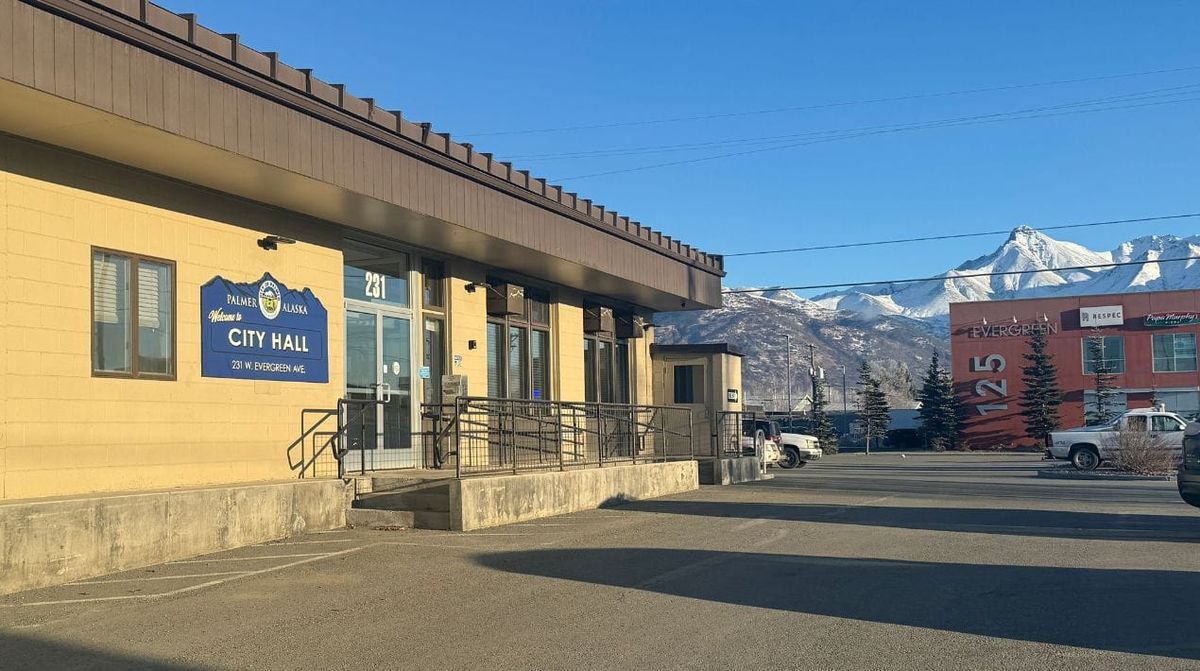
City Hall is also out of space for new staff members and is already likely repurposing the mayor’s current office for an upcoming new hire, Zerkel said. And the building that houses the city’s community development staff sits on property that will eventually need to revert to the airport, as does an adjacent city fire training facility.
Zerkel said if the civic center project were to move forward, she’d look for grants, donations and state and federal funding to help support it. The city’s current facilities, including city hall and the police station, could be sold or leased to other users, Zerkel and Szipszky said.
Szipszky said he knows the timing for this discussion is bad because of the ongoing $12 million library project and recent controversies surrounding the airport and golf course.
There’s never an good time to talk about an expensive new project, he said.
“It's bad timing to ask the public for support and money,” he said. “But at some point we have to do this, otherwise these buildings are going to be in so much disrepair that there's going to be no way to overcome it without just draining all of us of money.”
-- Contact Amy Bushatz at contact@matsusentinel.com